Respuesta rápida — Pompeya desde Sorrento
- Lo más barato: tren Circumvesuviana — 5 €, 30 min hasta la estación de Pompei Scavi
- Entrada: 18 € adultos, gratis menores de 18 — reserva online para saltarte la cola
- Tiempo necesario: 2,5–3 h para lo esencial, 4–5 h para una visita completa
- Mejor opción: tour guiado desde 45 € — sin colas + arqueólogo = vale cada céntimo
- Combinado: Pompeya + cráter del Vesubio, medio día cada uno — añade un traslado privado, no hay autobús público hasta la cima
Sepultada bajo metros de ceniza volcánica en el año 79 d. C. y conservada de forma extraordinaria durante casi dos milenios, Pompeya es uno de los yacimientos arqueológicos más importantes del mundo. Un tour a Pompeya desde Sorrento es una de las excursiones de un día más populares del sur de Italia, y con razón. El yacimiento está a tan solo 27 kilómetros, fácilmente accesible en tren o traslado privado, y un tour guiado da vida a la ciudad antigua de una manera que pasear por libre simplemente no puede igualar. Si vienes desde Nápoles, empieza con un traslado de Nápoles a Sorrento y continúa hacia Pompeya desde allí. Tanto si dispones de tres horas como de un día entero, esta guía cubre todas las opciones, desde el económico trayecto en Circumvesuviana hasta una experiencia privada guiada por un arqueólogo con acceso sin colas.


Tres formas de llegar de Sorrento a Pompeya
Opción 1: tren Circumvesuviana (económica)
El tren de cercanías Circumvesuviana es la ruta más barata y popular de Sorrento a Pompeya. Los trenes salen aproximadamente cada 30 minutos desde la estación de Sorrento; la parada que necesitas es Pompei Scavi – Villa dei Misteri, justo en la entrada del yacimiento arqueológico. El trayecto dura unos 30 minutos y cuesta alrededor de 5 euros por trayecto. Los trenes son básicos —sin aire acondicionado, asientos de plástico duro— y pueden ir abarrotados en las mañanas de verano, cuando todos los turistas de la península sorrentina tienen la misma idea. Mantén los objetos de valor cerca, llega cinco minutos antes para conseguir asiento y lleva una botella de agua para el viaje. Pese a la experiencia sin lujos, la Circumvesuviana es fiable y perfectamente adecuada. Combínala con la compra online de la entrada al propio yacimiento y tendrás una excursión de un día a Pompeya por libre por menos de 30 euros por persona, difícil de superar en cualquier lugar de Europa.
Opción 2: tour guiado en grupo (mejor relación calidad-precio)
Un tour guiado en grupo desde Sorrento agrupa el transporte, la entrada sin colas y un guía arqueólogo titulado en un único precio, normalmente entre 45 y 65 euros por persona. La recogida en autocar suele ser desde Piazza Tasso o los principales hoteles del paseo marítimo de Sorrento. El tamaño del grupo varía —la mayoría de los operadores lo limitan a 25— y la parte guiada dentro de las ruinas dura unas 2 a 2,5 horas. La ventaja respecto a ir por libre es enorme: en lugar de contemplar muros sin techo, escuchas cómo el thermopolium (mostrador de comida rápida) servía guiso caliente de lentejas, cómo las pasaderas en los cruces mantenían a los romanos por encima de las aguas residuales que corrían por las calles, y cómo los grafitis políticos de las paredes se leen como un antiguo hilo de Twitter. Tras la parte guiada, sueles disponer de 30 a 60 minutos de tiempo libre antes de que el autocar regrese a Sorrento. Para la mayoría de los visitantes, este formato ofrece el mejor equilibrio entre precio, comodidad y profundidad.
Opción 3: tour privado (experiencia premium)
BlueKeys ofrece una experiencia privada en Pompeya que incluye traslado privado desde Sorrento puerta a puerta, entrada prioritaria y un guía arqueólogo dedicado que adapta el itinerario a tus intereses y tu ritmo. Los precios parten de unos 90 euros por persona para un grupo de cuatro. El formato privado significa que controlas la hora de inicio, dedicas el tiempo que quieras a cada parada y puedes pedir zonas concretas: las excavaciones de la Regio V recientemente reabiertas, la Casa de los Vetios con sus frescos restaurados, o una inmersión profunda en el Jardín de los Fugitivos con los niños más pequeños. El vehículo tiene aire acondicionado, el conductor te espera y el viaje de vuelta puede incluir una parada para comer en una trattoria local. Si viajas en familia, tienes consideraciones de movilidad o simplemente quieres la mejor experiencia posible, el privado es la opción ideal.
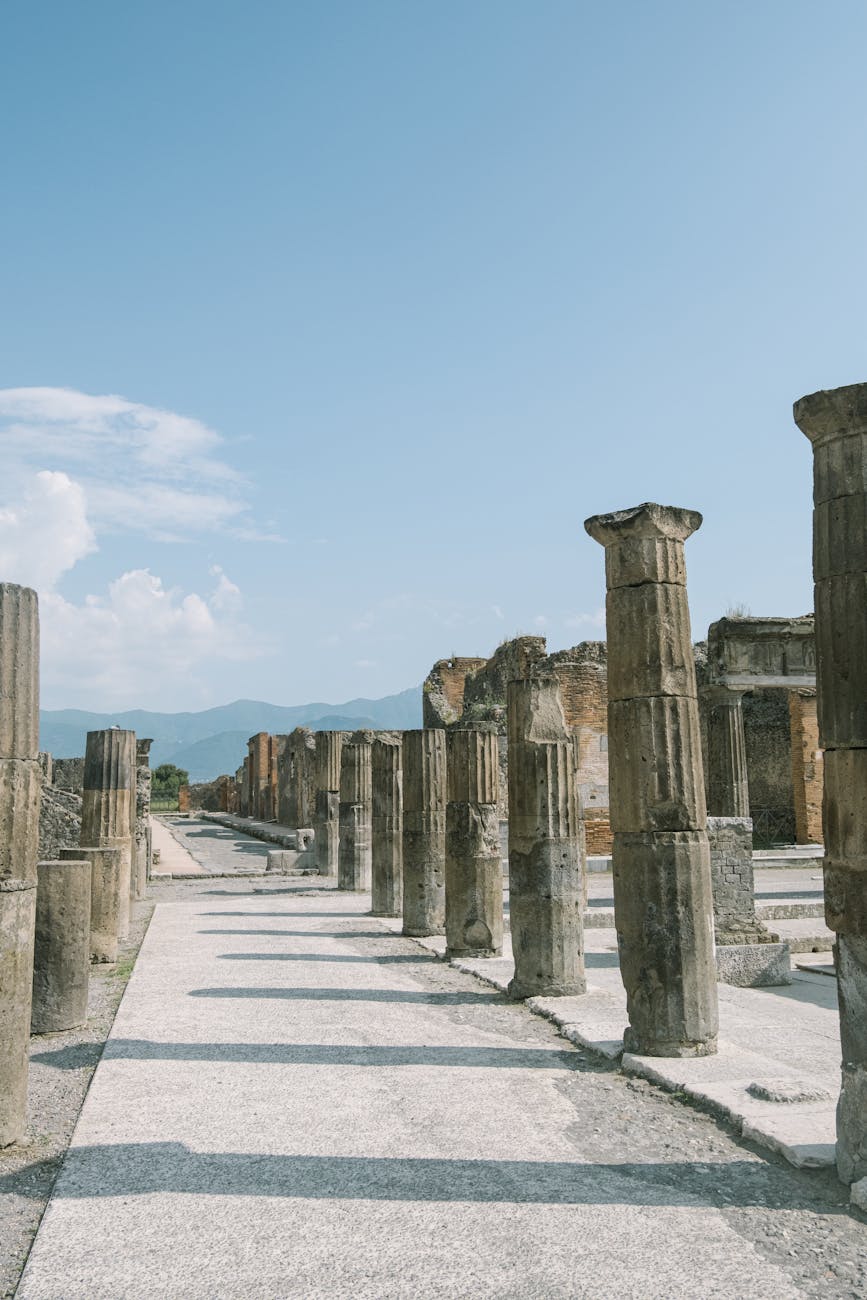
Tabla comparativa: tus opciones de un vistazo
| Opción | Tiempo de viaje | Coste por persona | ¿Guía incluido? | ¿Sin colas? | Ideal para |
|---|---|---|---|---|---|
| Tren Circumvesuviana | 30 min | 5 € + 18 € entrada | No | No | Viajeros con presupuesto ajustado, visitantes repetidores |
| Solo traslado privado | 30–40 min | 120–144 € (coche) + 18 € entrada | No | No | Comodidad sin horario fijo |
| Tour guiado en grupo | 30–50 min | 45–65 € | Sí (compartido) | Sí | Mejor relación calidad-precio para primerizos |
| Tour guiado privado | 30 min | 90–150 € | Sí (privado) | Sí | Familias, intereses específicos |
| Combinado Pompeya + Vesubio | Día completo | 120–180 € | Sí + cráter | Sí | Una jornada única en la vida |

Entradas y acceso
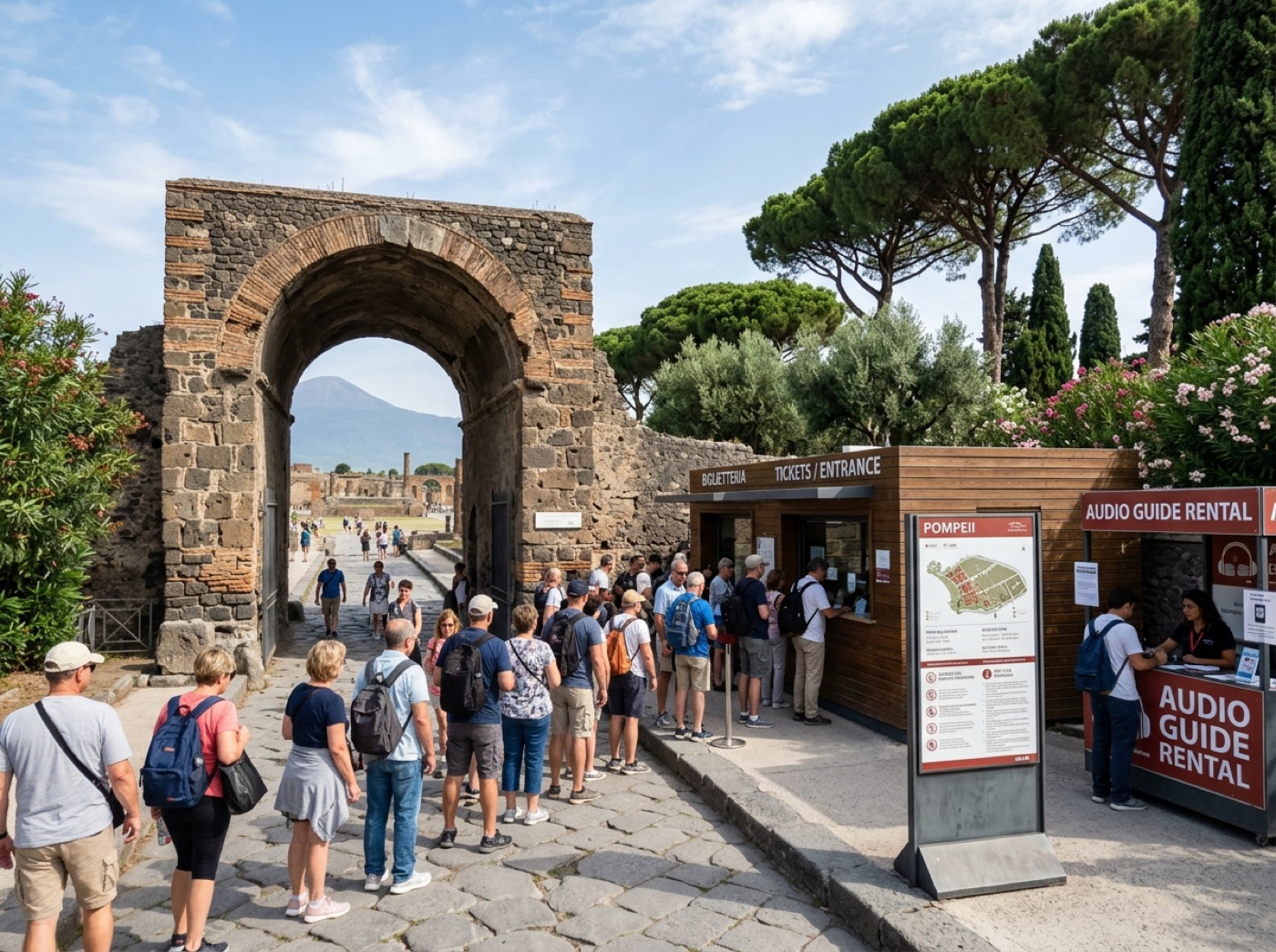
La entrada general a Pompeya cuesta 18 euros para adultos (reducida a 2 euros para ciudadanos de la UE de 18 a 25 años). Los menores de 18 entran gratis. Las entradas pueden comprarse online en la web oficial pompeiisites.org o en la entrada, pero las colas pueden ser largas en temporada alta, a veces de 30 a 45 minutos. Un tour guiado con acceso sin colas ahorra un tiempo considerable.
Horario de apertura: de abril a octubre: de 9:00 a 19:00 (última entrada a las 17:30). De noviembre a marzo: de 9:00 a 17:00 (última entrada a las 15:30). Cerrado el 1 de enero, el 1 de mayo y el 25 de diciembre.

Consejos para saltarte la cola
Las largas colas en Pompeya no son inevitables: se pueden evitar con un poco de planificación. Así puedes entrar directamente:
- Reserva las entradas online con antelación: la web oficial pompeiisites.org vende entradas con horario asignado. Elige la franja más temprana disponible, imprime o guarda el código QR y dirígete directamente al carril prioritario de Porta Marina.
- Usa la entrada de Piazza Anfiteatro: la mayoría de los visitantes entran por la puerta principal de Porta Marina, cerca de la estación de tren. La entrada de Piazza Anfiteatro, en el lado este, es mucho más tranquila, sobre todo antes de las 10:00. Empiezas por el anfiteatro y recorres el yacimiento al revés, una ruta perfectamente válida.
- Reserva un tour guiado: todo tour a Pompeya desde Sorrento de confianza incluye entrada prioritaria. Tu guía se encarga de la logística y tú te saltas toda la cola.
- Llega a la hora de apertura: la primera hora después de las 9:00 es la franja dorada. A media mañana, los grandes grupos de cruceros procedentes de Nápoles inundan la entrada principal.
- Visita entre semana: el sábado y el domingo son los días de más afluencia, junto con cualquier festivo italiano. De martes a jueves en temporada media es lo ideal.

Qué ver en 3 horas: un itinerario con lo esencial
Tres horas bastan para cubrir las paradas imprescindibles sin agobios. Sigue esta ruta desde la entrada de Porta Marina y verás lo mejor de Pompeya en un recorrido lógico:
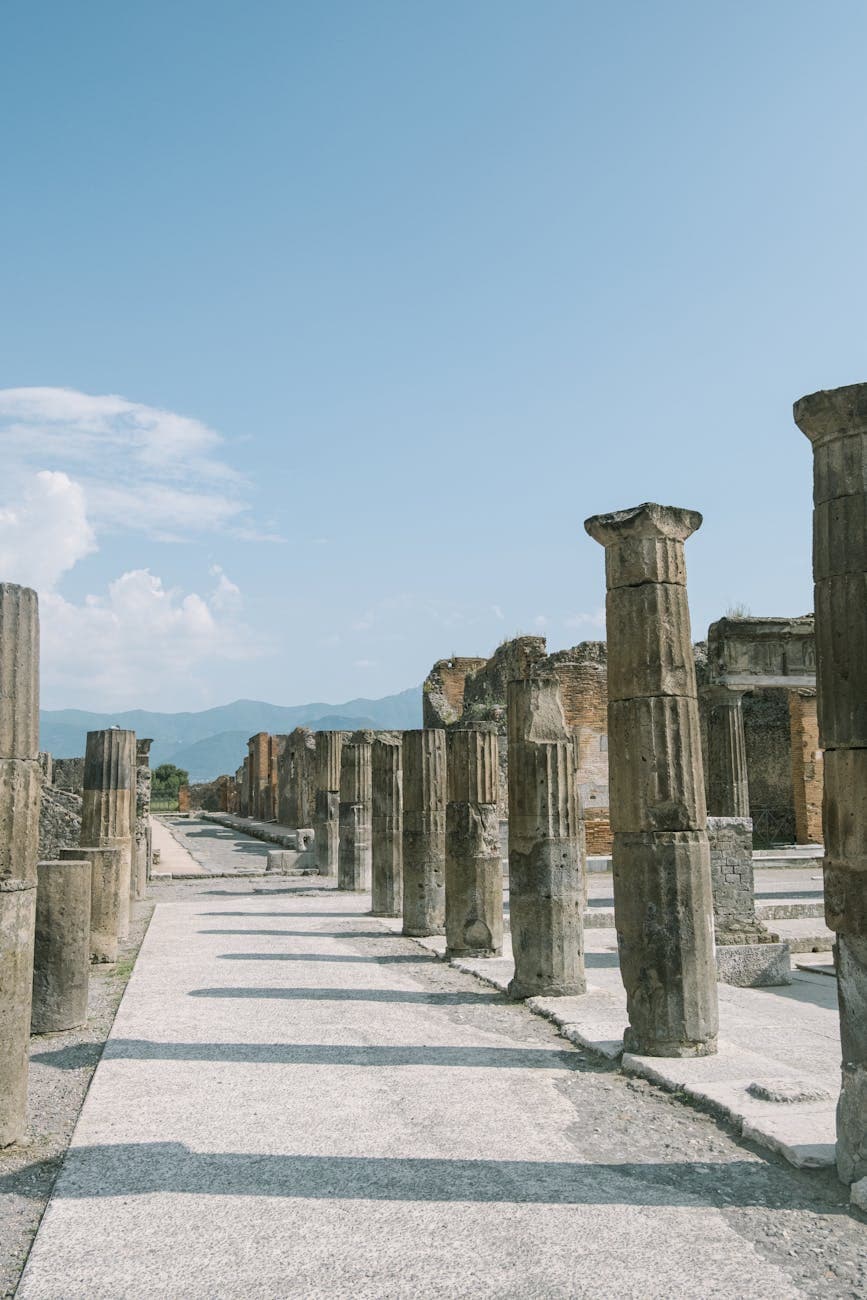
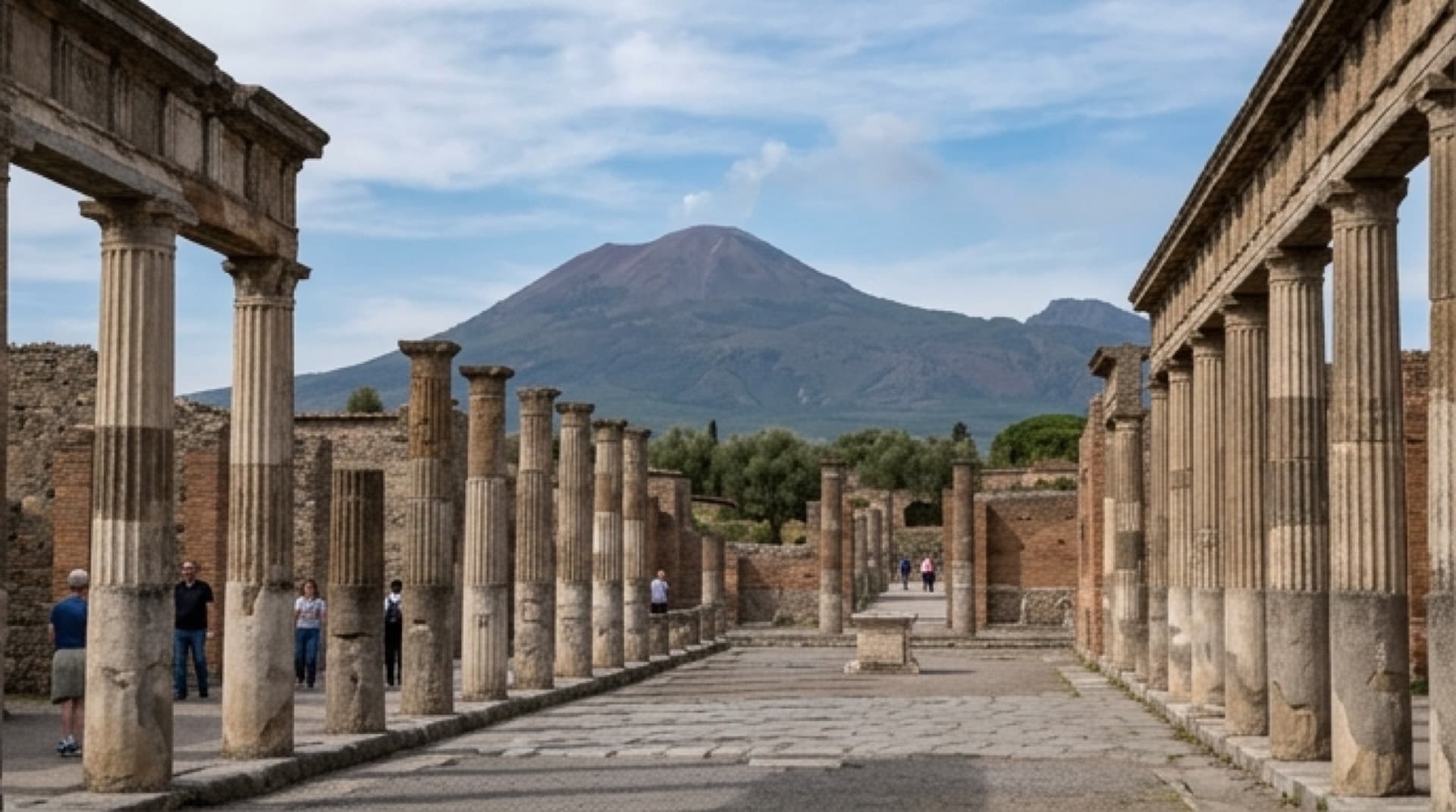
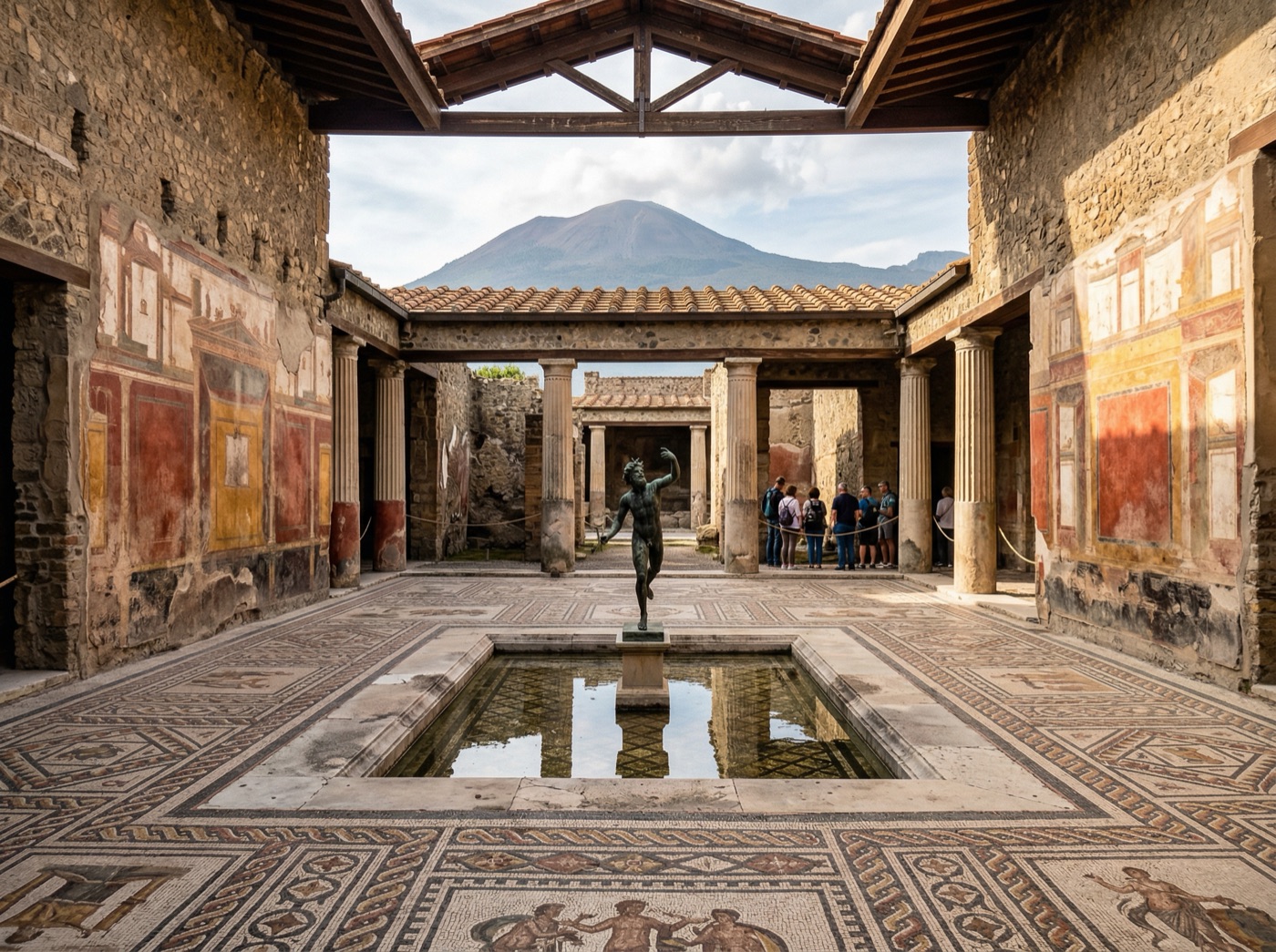
- El Foro (15 min): entra por Porta Marina y camina directamente hacia el Foro. Esta plaza abierta era el corazón palpitante de Pompeya: mercado, tribunales y templos, todo en uno. Sitúate en el extremo sur para la icónica vista del Vesubio enmarcado por las columnas del Templo de Júpiter.
- Termas del Foro (10 min): justo al norte del Foro, estas termas están extraordinariamente intactas. Fíjate en las bóvedas, los canales de calefacción bajo el suelo y los nichos donde los romanos guardaban sus togas mientras se bañaban.
- El Lupanar (10 min): el burdel más famoso de Pompeya está a un corto paseo por Via del Lupanare. Los frescos explícitos sobre cada puerta servían de menú visual para los clientes que no hablaban latín. Siempre concurrido: el estrecho pasillo avanza despacio.
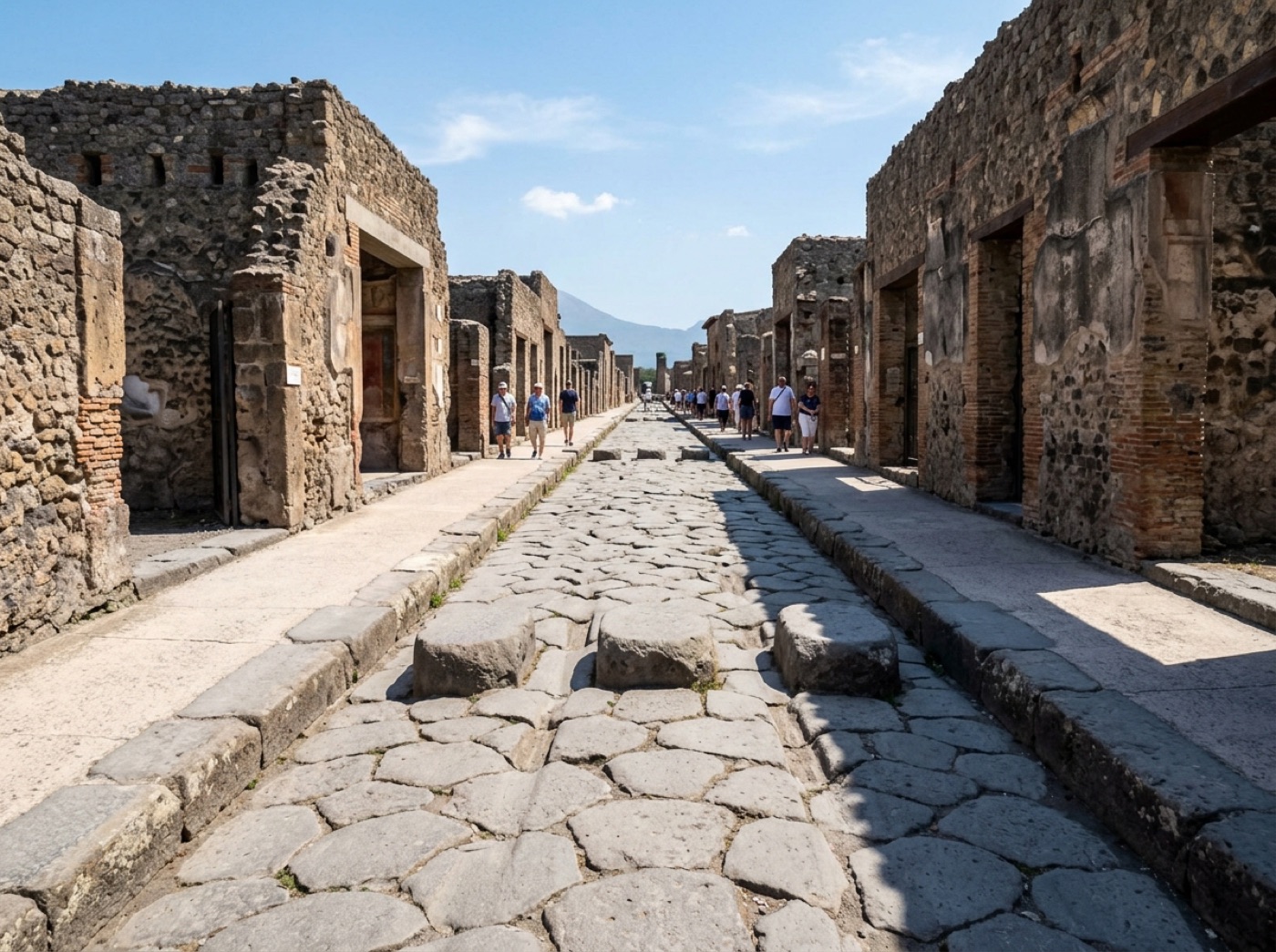
- Via dell'Abbondanza (20 min): camina hacia el este por la principal calle comercial. Busca los thermopolia (mostradores de comida rápida con recipientes de terracota empotrados), las roderas de las ruedas de los carros desgastadas en la piedra y las pasaderas elevadas que permitían a los peatones cruzar sin pisar las aguas residuales.
- La Casa del Fauno (15 min): una de las residencias privadas más grandiosas de Pompeya, que ocupa una manzana entera de la ciudad. El fauno danzante de bronce original se alza en el atrio (el que hay en el yacimiento es una réplica; el original está en el museo arqueológico de Nápoles). Aquí se encontró el Mosaico de Alejandro.
- El Jardín de los Fugitivos (15 min): continúa hacia el este hasta esta sobrecogedora exposición de moldes de yeso: trece personas sorprendidas por la erupción, conservadas en las posturas en que murieron. Una parada de poderosa sobriedad, especialmente conmovedora para las familias.
- El Anfiteatro (15 min): construido hacia el año 70 a. C., es uno de los anfiteatros de piedra más antiguos del mundo romano, con aforo para 20.000 espectadores. Sube los escalones para disfrutar de una vista panorámica de todo el yacimiento.
- La Villa de los Misterios (20 min): regresa hacia el oeste, en dirección a la entrada de Porta Marina. Justo a las afueras de las murallas de la ciudad, esta villa contiene algunos de los frescos romanos mejor conservados: una vívida y misteriosa escena de iniciación pintada en un intenso rojo pompeyano.
Distancia total a pie: aproximadamente 3,5 kilómetros. Tiempo total incluyendo breves paradas de descanso: unas 2,5 a 3 horas.
¿Deberías reservar un tour guiado?
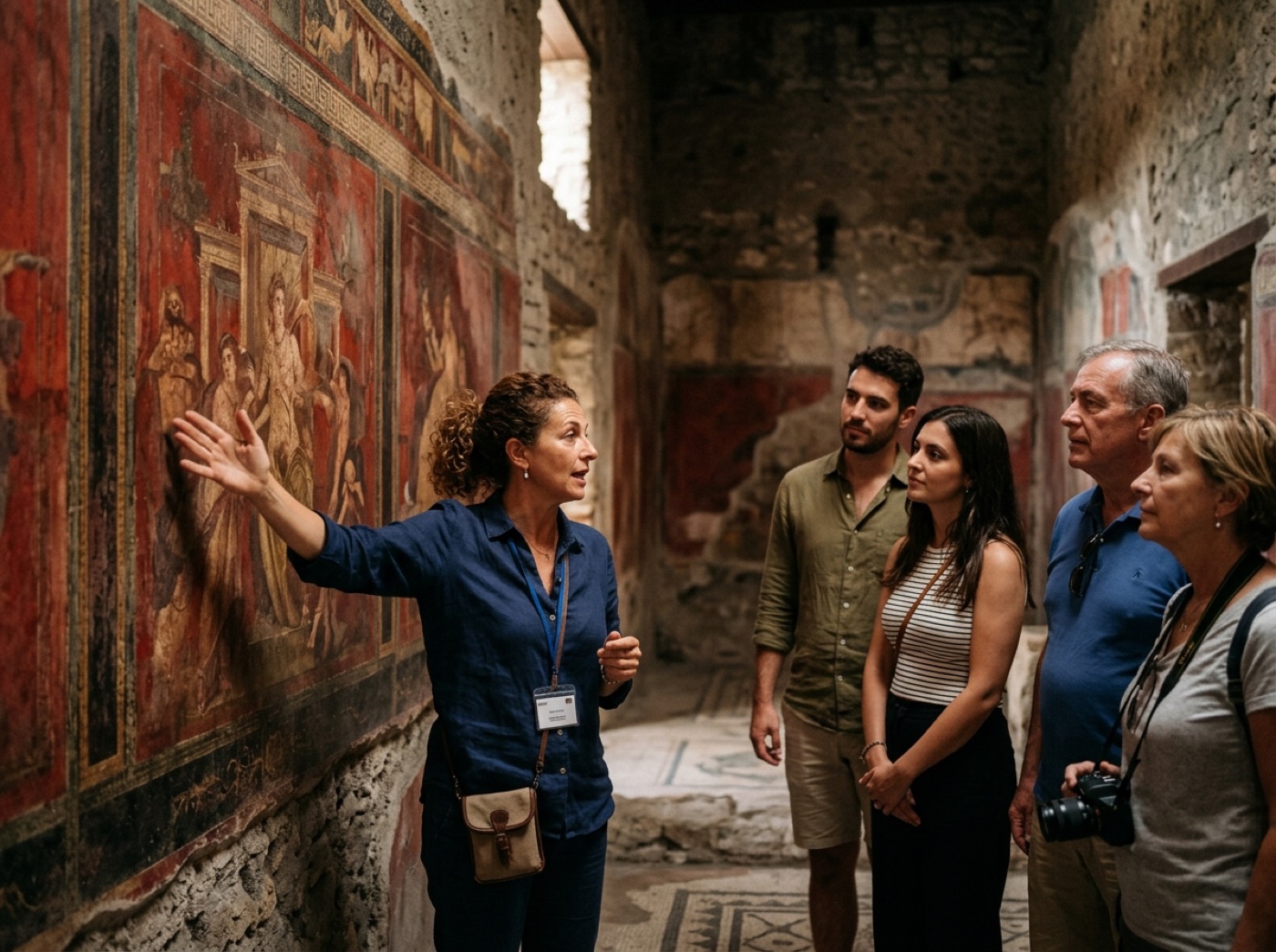
Sin duda. Pompeya sin guía es como visitar una biblioteca sin saber leer. Las ruinas son fascinantes de contemplar, pero un guía bien informado —idealmente un arqueólogo titulado— transforma la experiencia. Explica cómo funcionaba la ciudad, señala detalles que de otro modo pasarías de largo (las roderas desgastadas en las calzadas por las ruedas de los carros, las pasaderas en los cruces, las tuberías de plomo del sistema de agua) y da vida a las historias humanas de la erupción.
Un tour a Pompeya desde Sorrento con BlueKeys incluye un guía arqueólogo privado que adapta el recorrido a tus intereses y tu ritmo. ¿Niños pequeños? El guía se centra en los gladiadores y el mosaico del perro guardián. ¿Apasionados de la historia? Espera una inmersión profunda en el urbanismo romano y los grafitis políticos de las paredes.
Combinado Pompeya + Vesubio
Combinar Pompeya con una subida al monte Vesubio compone uno de los días más memorables que puedes pasar en el sur de Italia. El volcán que destruyó la ciudad se alza a tan solo 10 kilómetros al norte, y recorrer las ruinas y el cráter el mismo día conecta la historia de una forma que visitar cualquiera de los dos por separado no consigue.
Una jornada combinada típica comienza con un tour matutino temprano por Pompeya (de 9:00 a 12:00), seguido de un breve trayecto en coche hasta el aparcamiento del Vesubio, a 1.000 metros de altitud. Desde allí, una caminata moderada de 30 minutos cuesta arriba por un sendero de grava bien mantenido te lleva hasta el borde del cráter, a 1.281 metros. La entrada cuesta 10 euros, a pagar en el lugar. En un día despejado, la panorámica se extiende desde Pompeya y la bahía de Nápoles hasta Capri, Ischia y la península sorrentina.
El aparcamiento del Vesubio no es accesible en transporte público: no hay autobús de Pompeya a la cima. Un traslado privado desde Sorrento es la solución más sencilla. El tour combinado de BlueKeys cubre ambos lugares, incluyendo transporte, entrada sin colas en Pompeya, una entrada al cráter del Vesubio y un guía para ambos. Cuenta con regresar a Sorrento entre las 16:00 y las 17:00, con buena parte de la tarde libre para cenar en la marina.
Si dispones de más tiempo, considera añadir Herculano (Ercolano) en lugar del Vesubio o junto a él. Más pequeño pero aún mejor conservado que Pompeya, Herculano muestra vigas de madera intactas, mobiliario carbonizado y edificios de dos plantas. Ambos lugares están en la línea de la Circumvesuviana. Un tour de día completo que cubra Pompeya y Herculano es posible, pero intenso: cuenta con caminar de 10 a 15 kilómetros en total.

Consejos prácticos para visitar Pompeya
- Agua: lleva al menos un litro por persona, más en verano. Hay un puñado de fuentes de agua potable dentro del yacimiento, pero están muy separadas entre sí. La deshidratación es la primera razón por la que los visitantes acortan su visita.
- Calzado: usa calzado resistente y cerrado con buena suela. El terreno es una mezcla de antiguos adoquines, grava suelta, losas irregulares y profundas roderas de carros. Las sandalias y las chanclas son la receta para torcerse un tobillo. Las zapatillas de suela gruesa funcionan bien.
- Sombra y protección solar: apenas hay sombra natural dentro de las ruinas. Lleva un sombrero, gafas de sol y crema solar de alta protección. En julio y agosto, la temperatura sobre las calles de piedra expuestas puede superar los 40 grados centígrados. Un pequeño paraguas sirve también de sombrilla.
- Llega temprano: procura llegar lo más cerca posible de la apertura, a las 9:00. Hacia las 11:00 en temporada alta, el yacimiento se llena de grandes grupos de autobús procedentes de Nápoles y de las terminales de cruceros.
- Audioguía: si no reservas un tour guiado, la audioguía está disponible por 8 euros en la entrada. Mejor que nada, aunque ni de lejos tan amena como un arqueólogo en directo.
- Comida: la cafetería del yacimiento es limitada y cara. Lleva algo de picar y un bocadillo. Hay mejor oferta de restaurantes fuera de la entrada de Porta Marina y a lo largo de Via Plinio, en la moderna localidad de Pompei.
- Accesibilidad: buena parte del yacimiento es irregular y no accesible para sillas de ruedas, pero existe una ruta parcialmente accesible: pregunta en la entrada por el mapa específico.

Mejores meses para visitar: de abril a octubre
Pompeya abre todo el año, pero la experiencia varía enormemente según el mes. La siguiente tabla cubre la temporada turística principal, de abril a octubre.
| Mes | Máx. media | Afluencia | Notas |
|---|---|---|---|
| Abril | 18 °C | Moderada | Mes ideal: clima suave, afluencia manejable, flores silvestres entre las ruinas |
| Mayo | 23 °C | Moderada–Alta | Aumentan los viajes escolares; las mañanas siguen siendo agradables, tardes cálidas |
| Junio | 27 °C | Alta | Empieza el verano; horario de apertura más amplio, ve antes de las 10:00 o después de las 15:00 |
| Julio | 30 °C | Muy alta | Pico de calor y afluencia; lleva agua extra, sombrero imprescindible |
| Agosto | 31 °C | Muy alta | El mes con más afluencia; el Ferragosto (15 de agosto) especialmente abarrotado; obligatorio empezar temprano |
| Septiembre | 27 °C | Alta | La afluencia disminuye a partir de mediados de mes; aún cálido, excelente luz para fotos |
| Octubre | 22 °C | Moderada | Temporada media; temperaturas agradables, colas más cortas, lluvia ocasional |
Mejores meses en general: abril y octubre ofrecen la combinación ideal de buen tiempo, menos afluencia y acceso completo al yacimiento. Si tienes que visitarlo en pleno verano, reserva la franja horaria más temprana disponible y planifica salir de las ruinas antes del mediodía.

Qué ver en Pompeya: la lista completa
Más allá del itinerario con lo esencial de arriba, los visitantes dedicados que dispongan de cuatro a cinco horas pueden añadir estas paradas:
- La Casa de los Vetios: reabierta tras una larga restauración, esta casa de comerciantes presenta algunas de las pinturas murales romanas mejor conservadas, incluyendo frescos de jardín y escenas mitológicas.
- Las Termas Estabianas: más antiguas y grandes que las del Foro, con techos de estuco bien conservados y secciones separadas para hombres y mujeres.
- Excavaciones de la Regio V: la zona de excavación más reciente, abierta al público por fases desde 2018. Entre los hallazgos figuran un puesto de comida con vívidos frescos de un gallo y patos, y una sala con un carro ceremonial intacto.
- La Casa del Poeta Trágico: pequeña pero famosa por el mosaico de su entrada que reza «Cave Canem», cuidado con el perro.
- La Necrópolis fuera de Porta Ercolano: una calle de elaboradas tumbas justo a las afueras de las murallas de la ciudad, que muestra cómo los romanos honraban a sus muertos.
Reserva tu tour a Pompeya
Explora todos los tours a Pompeya desde Sorrento o reserva la experiencia privada en Pompeya de BlueKeys: entrada sin colas, guía arqueólogo y traslado privado desde Sorrento puerta a puerta. Para información oficial del yacimiento y entradas anticipadas, visita pompeiisites.org.