TL;DR — Risposta Rapida
Scegliete Amalfi se volete il miglior equilibrio tra prezzo, trasporti e atmosfera locale. Scegliete Positano se glamour, beach club e viste da Instagram contano più del budget. La maggior parte dei visitatori lascia Amalfi più soddisfatta — costa il 40% in meno ed è molto più facile da girare.
| Positano | Amalfi | |
|---|---|---|
| Hotel medio (alta stagione) | €250–500 / night | €120–300 / night |
| Centro città | Molto ripido — 200+ scalini | Prevalentemente pianeggiante |
| Spiaggia principale | ★★★★ Spiaggia Grande (sabbia) | ★★★ Marina Grande (ciottoli) |
| Collegamenti bus | Limitati, affollati in estate | Frequenti verso Sorrento e Salerno |
| Rotte traghetto | Capri, Amalfi, Salerno | Capri, Positano, Salerno, Minori |
| Rapporto qualità/prezzo ristoranti | Turistici, €18–35/piatto | Più locali, €12–25/piatto |
| Vita notturna | Cocktail bar, Music on the Rocks | Più tranquilla, aperitivo in piazza |
| Shopping | Lino di design, sandali artigianali | Limoncello, ceramiche, carta |
| Per famiglie | Difficile (scalini, passeggini) | ★★★★ Pianeggiante, adatto ai passeggini |
| Per coppie | ★★★★★ Romantico, viste al tramonto | ★★★★ Affascinante, meno affollato |
| Gite a Ravello | 1h+ in bus (cambio necessario) | 25 min in bus, diretto |
| Parcheggio | €5–8/hour, molto limitato | €3–5/hour, Luna Rossa garage |
| Transfer da Napoli | ~90 min, from €156 | ~75 min, from €168 |
| Dimensione del centro | Piccolo — 1 strada + scalinate | Più grande — piazza + centro storico |
| Il nostro verdetto | Splurge 1–2 notti | Base migliore per 3+ notti |
Positano e Amalfi sono le due località più famose della Costiera Amalfitana, e ogni anno migliaia di viaggiatori si trovano di fronte allo stesso dilemma: dove alloggiare? Dopo anni di vita su questa costa, lavorando con ospiti in entrambe le località, la risposta dipende interamente dal tipo di vacanza che desiderate. Questa guida confronta le due città su ogni aspetto rilevante — atmosfera, spiagge, cibo, trasporti, vita notturna, shopping, famiglie, coppie e prezzi reali — per darvi un verdetto chiaro e onesto.

L'atmosfera
Positano: glamour sulla scogliera
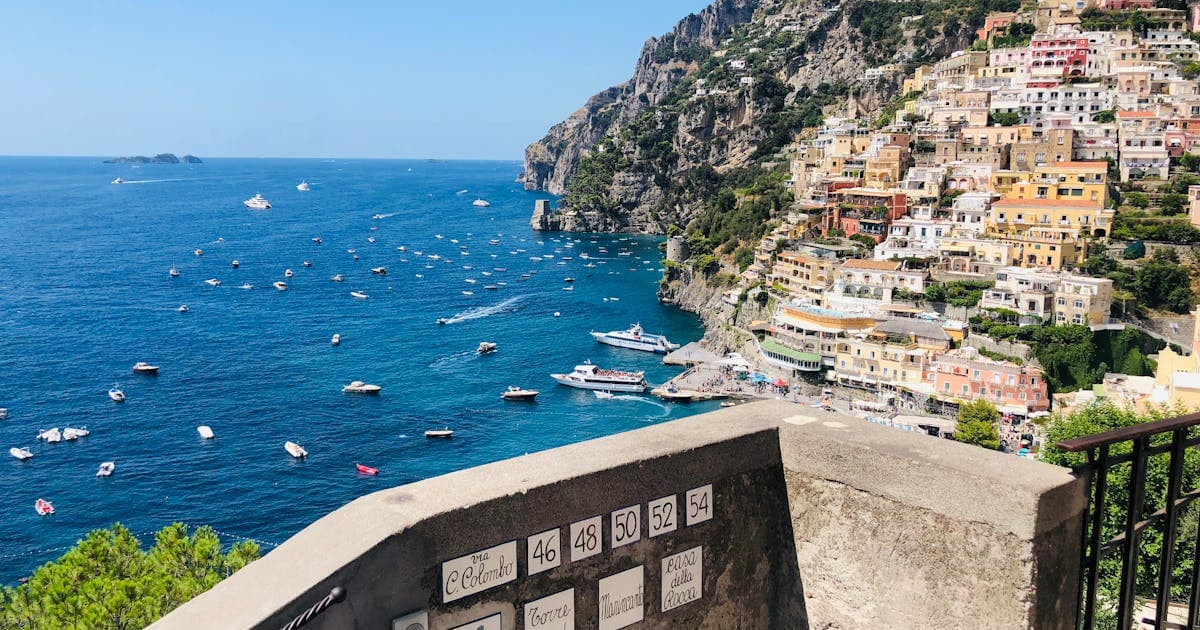
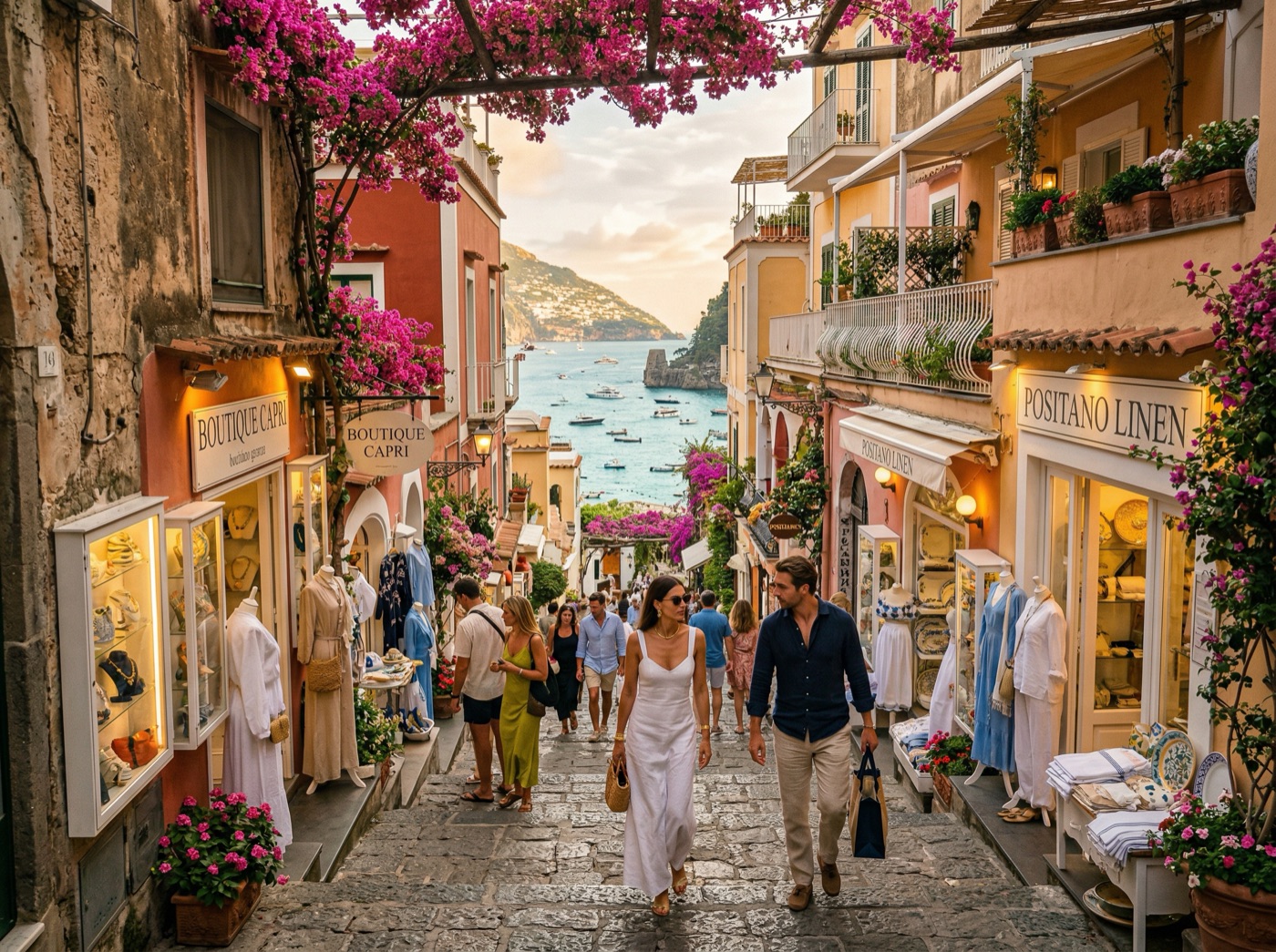
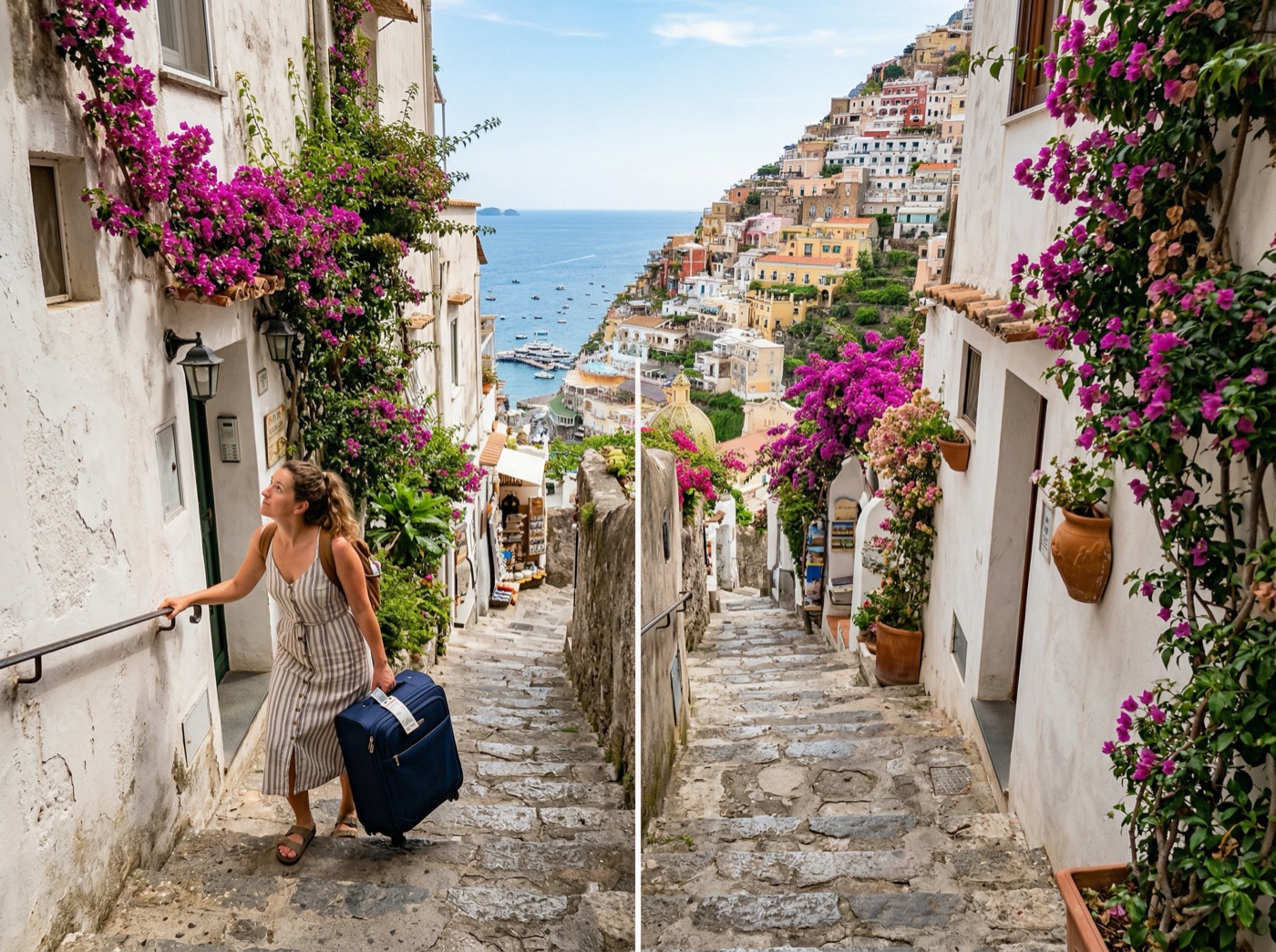
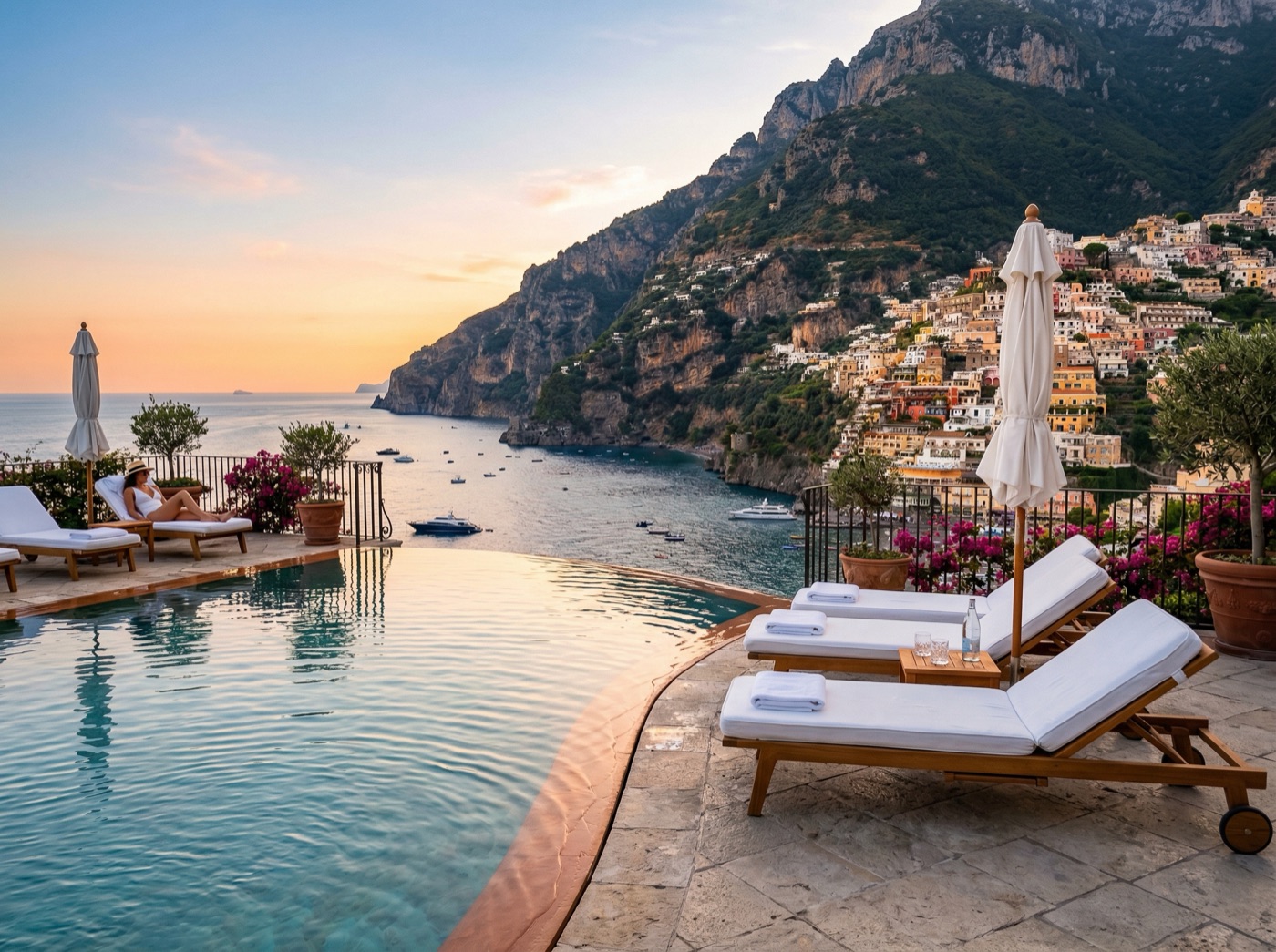
Positano è verticale. La città scende a cascata lungo una ripida scogliera tra case color pastello, bouganville e stretti vicoli a gradini. È innegabilmente fotogenica — probabilmente il borgo più fotografato d'Italia — e ne è consapevole. L'atmosfera è chic e vacanziera: boutique hotel, negozi di lino firmato, beach club e cocktail bar con vista tramonto. Positano attira un pubblico facoltoso e la città ha un'aria decisamente aspirazionale. John Steinbeck la descrisse come un "luogo da sogno" nel 1953, e la reputazione si è solo intensificata con Instagram.
Amalfi: storia e vita di strada
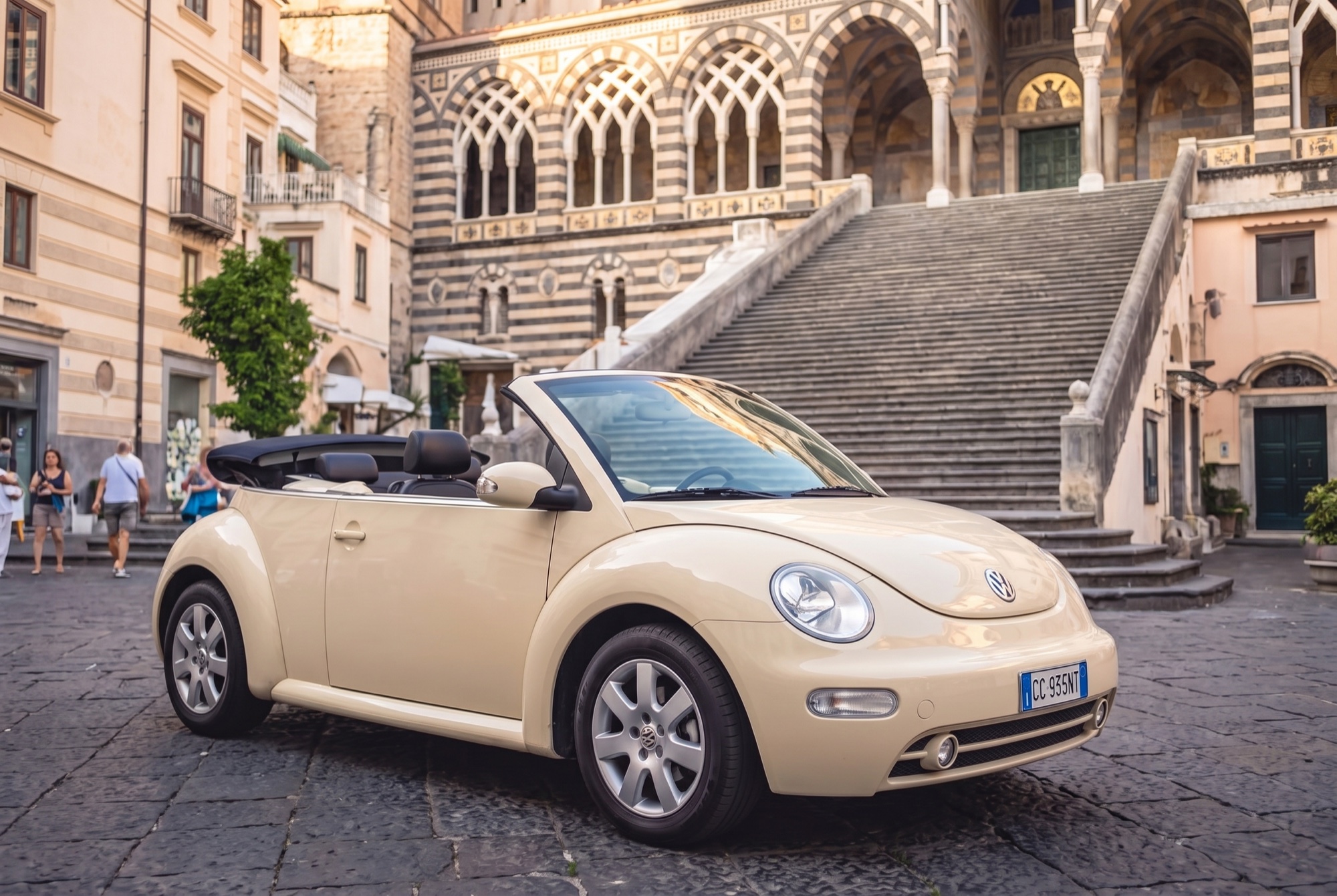
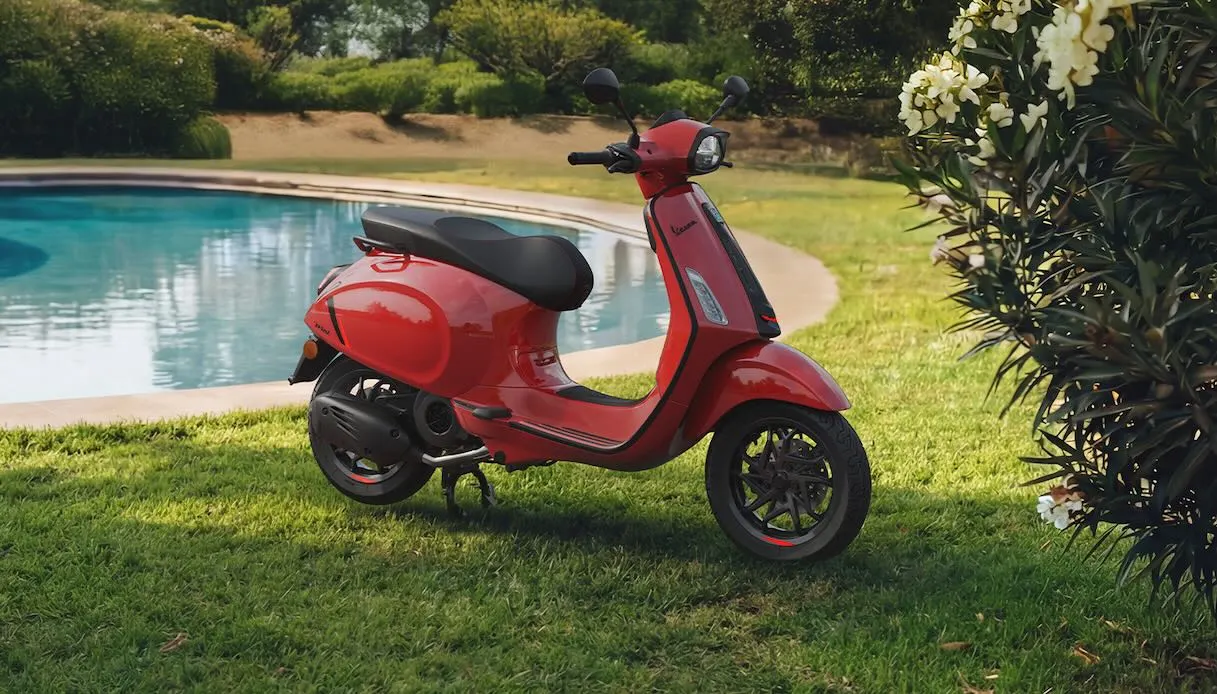
Amalfi è più pianeggiante, vivace e radicata nella storia. Un tempo capitale di una potente repubblica marinara rivale di Venezia, la città conserva un forte carattere locale che a Positano talvolta manca. Il centro è il Duomo di Amalfi, con la sua caratteristica facciata a righe e la grande scalinata che sale dalla piazza principale. Dietro la cattedrale, i vicoli del centro storico sono autenticamente vissuti, con trattorie a gestione familiare, pasticcerie che vendono sfogliatelle e anziani che chiacchierano sugli usci. Amalfi sembra una vera città — non un set cinematografico.
Architettura e monumenti
Positano
Positano's architecture is its landscape. The pastel buildings cascading down the cliff are the attraction. Beyond the photogenic setting, there is one notable church — Santa Maria Assunta, with its distinctive majolica-tiled dome visible from everywhere in town. The Byzantine Black Madonna icon inside is worth a look. Otherwise, Positano is more about the setting than individual monuments.
Amalfi
Amalfi has significantly more to see. The 9th-century Duomo di Amalfi and its Cloister of Paradise (Chiostro del Paradiso) are genuinely impressive — Moorish arches, sarcophagi, and faded frescoes. The Arsenale della Repubblica is a medieval shipyard turned museum, documenting Amalfi's seafaring empire. The Paper Museum (Museo della Carta) demonstrates the town's 13th-century paper-making tradition in a working water mill. And a 15-minute walk up the Valle dei Mulini leads to atmospheric ruins of old paper mills being reclaimed by jungle-like vegetation — one of the coast's most photographed hidden spots.
Spiagge
Le spiagge di Positano
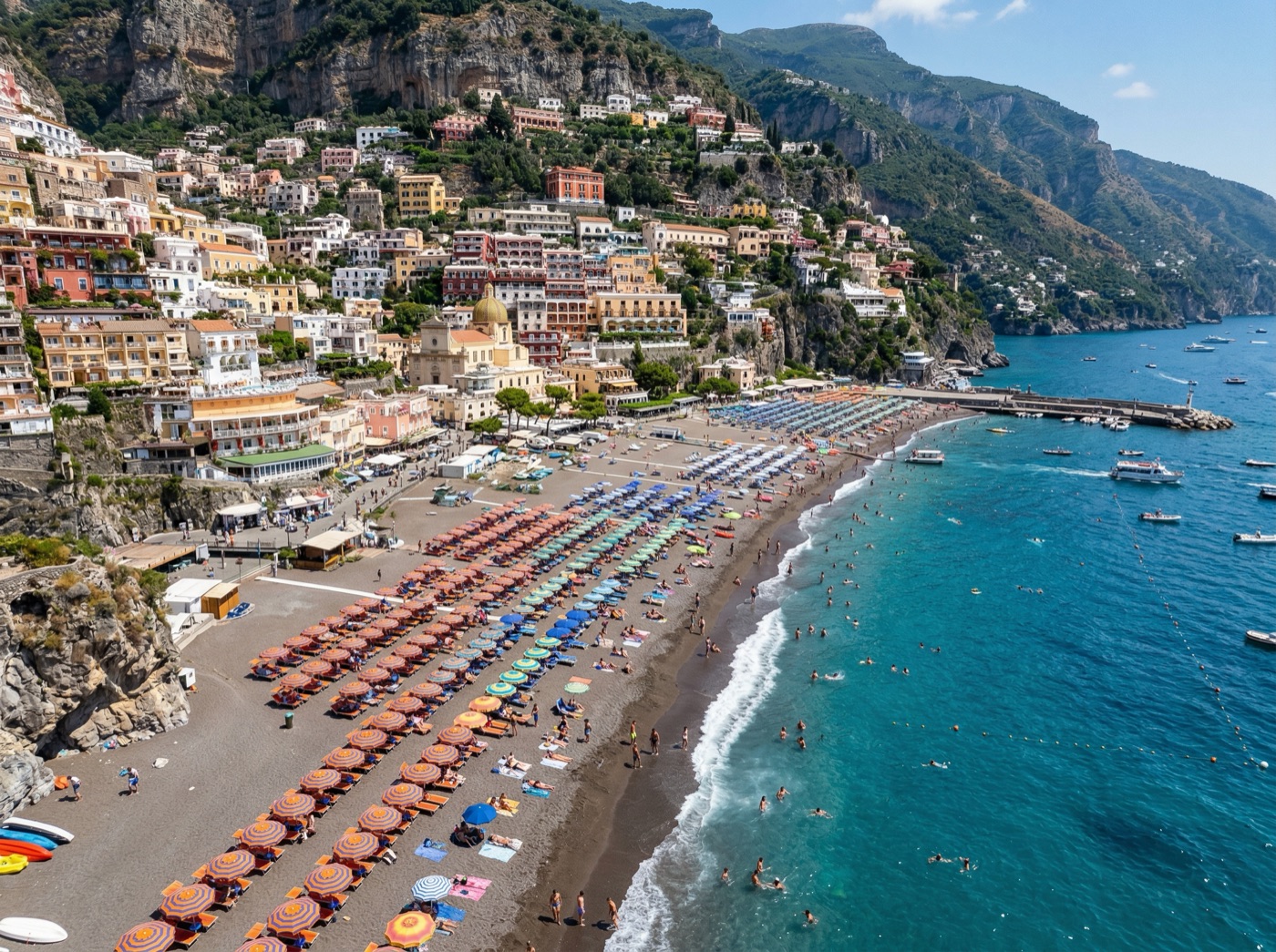
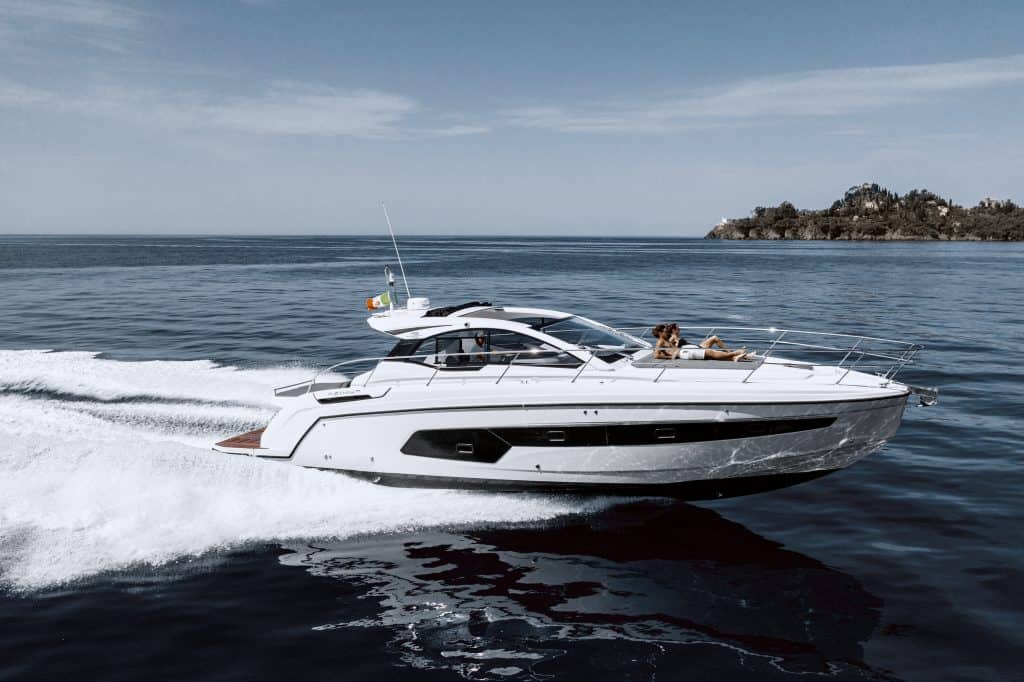
Positano has the edge on beaches. Spiaggia Grande is the main beach — a wide crescent of dark sand and pebbles directly below the town centre. Sunbed hire costs €15–25 depending on the row. It is busy in summer but undeniably scenic. For something quieter, Fornillo Beach is a short walk west along a cliffside path. Fornillo has a more laid-back feel, with a handful of beach bars and clearer water for swimming. Several other small coves — Laurito, Arienzo, and the Li Galli islands — are accessible only by boat. A private boat charter from €800/day is the best way to discover them.
Le spiagge di Amalfi
Amalfi's main beach (Marina Grande) is smaller and more functional than Positano's. Sunbeds cost €10–20 but space fills quickly in high season. For better swimming, walk 10 minutes west along the coastal path to Duoglio beach — clearer water, fewer crowds. The neighbouring village of Atrani (a 5-minute walk around the headland) has a charming, uncrowded beach with a handful of local bars. Amalfi is also the departure point for boat trips to the Emerald Grotto and more remote beaches along the coast.
Per le famiglie
Winner: Amalfi, by a wide margin.
Positano is genuinely difficult with young children. The entire town is stairs — we counted over 200 steps from the main road to the beach. If you are travelling with a pushchair, you will carry it. The steep lanes are tiring for toddlers, and the beach is a long descent (and an even longer climb back). Older children and teenagers will enjoy it, but for families with under-5s, Positano is impractical.
Amalfi's flat town centre makes it vastly easier with small children. The piazza is stroller-friendly, the beach is a short walk from the main square, and restaurants are more accommodating to families. Gelato shops line the main street, and the short bus ride to Ravello's Villa Cimbrone gardens is an easy half-day outing that children enjoy. For family accommodation, browse family-friendly stays on the Amalfi Coast.
Per coppie e luna di miele
Winner: Positano for a 1–3 night splurge. Amalfi for a 5+ night romantic base.
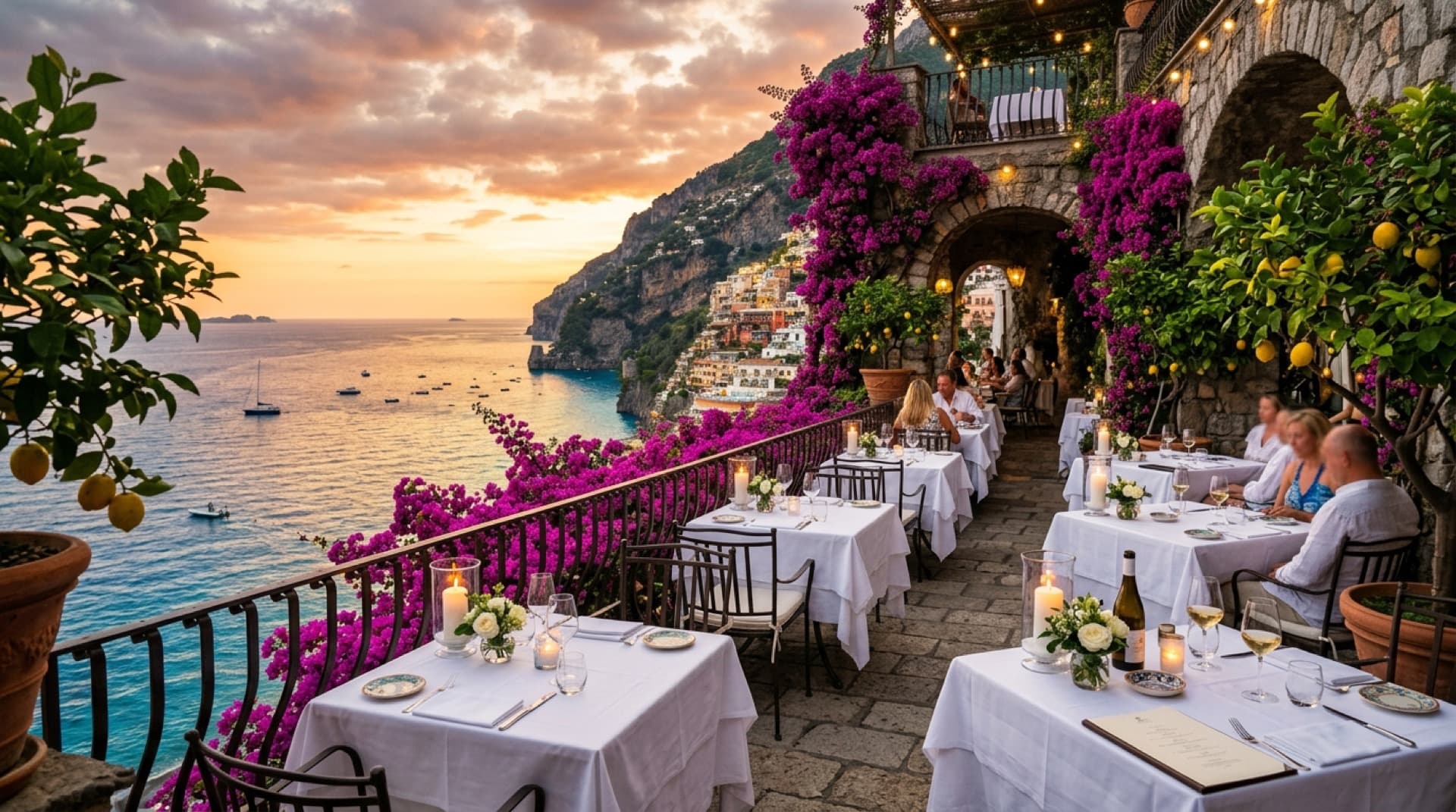
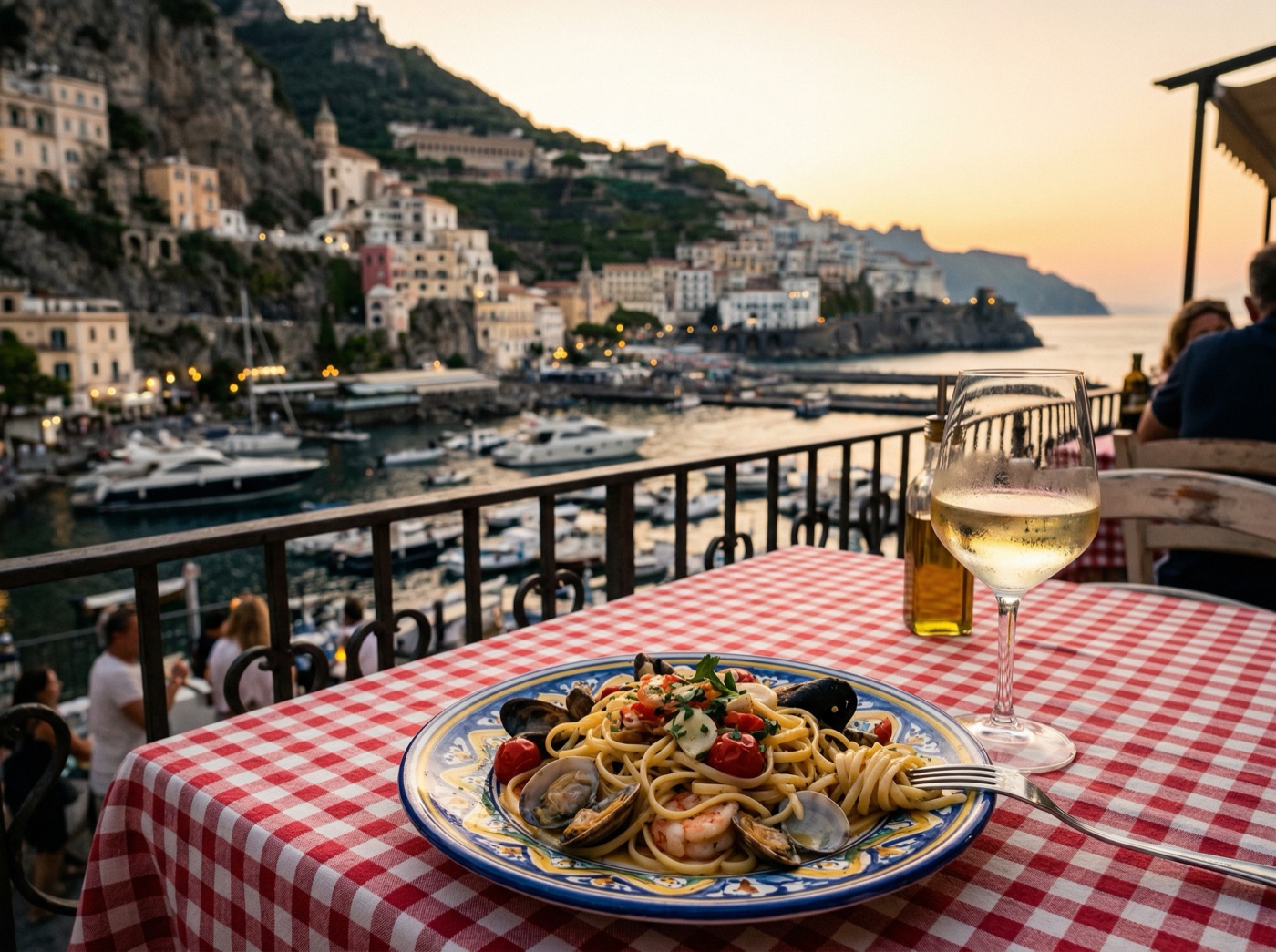
Positano is the classic honeymoon destination, and it earns the reputation. Sunset from a terrace overlooking the bay, dinner at a candlelit restaurant with the sea below, cocktails at a clifftop bar — the romance is built into the architecture. Hotels like Le Sirenuse and Villa Treville are world-famous honeymoon hotels, and even mid-range options tend to have spectacular views.
Amalfi is less obviously romantic but offers a different kind of intimacy. Walking the narrow lanes of the old quarter at dusk, sharing a plate of scialatielli ai frutti di mare at a table in a quiet piazza, watching the fishing boats come in at sunset from the harbour wall — it is romantic in a quieter, more authentic way. For longer stays, Amalfi gives you the romantic evenings without the constant feeling that you are paying for the setting.
Ristoranti e cibo
Mangiare a Positano
Positano has excellent restaurants, but they tend to be expensive and tourist-oriented. Expect to pay €18–35 for a main course at a mid-range restaurant. Standouts include Da Vincenzo (classic Neapolitan cooking, mains from €18), Next2 (seafood with views, mains from €22), and La Tagliata (a family restaurant up in the hills with fixed-price feasts at €35 including wine). For a casual lunch, the beach-side restaurants on Spiaggia Grande serve fresh seafood and cold Peroni — not gourmet, but perfectly positioned. Budget tip: the panini stands on Via dei Mulini sell excellent sandwiches for €5–8.
Mangiare ad Amalfi
Amalfi offers better value for money and a wider range of dining options. Main courses at good restaurants run €12–25. Trattoria da Maria and Da Gemma are long-established favourites serving traditional coastal cooking. The bakery Andrea Pansa on the main square has been making pastries since 1830 — their sfogliatella (€2.50) is among the best on the coast. For something special, the tiny neighbouring village of Atrani has several restaurants that feel genuinely local rather than tourist-facing. Try Le Arcate for a seafood dinner on the beach with your feet in the sand.
Vita notturna
Nightlife a Positano
Positano has the better nightlife, though "nightlife" on the Amalfi Coast means cocktail bars, not clubs. Music on the Rocks is the coast's most famous bar — built into a cave at the base of the cliffs, it hosts DJ nights in summer with the sea crashing below. Elsewhere, Franco's Bar on the hill serves excellent Negronis with panoramic views, and the Hotel Le Sirenuse's Aldo's Cocktail Bar is a see-and-be-seen spot. Most bars close by 1am, and the vibe is relaxed sophistication rather than a party scene.
Nightlife ad Amalfi
Amalfi is quieter in the evenings. The main piazza fills with aperitivo drinkers from 7pm — order a Spritz (€8–10) and watch the passeggiata. Gran Caffè in the piazza is the classic spot. The waterfront has a few wine bars, and Atrani's Lo Smeraldino offers drinks on the beach after dark. Amalfi does not try to compete with Positano on nightlife, and if you want late-night entertainment, you will be disappointed. But if you prefer a glass of local Furore wine in a quiet piazza over a crowded cocktail bar, Amalfi delivers.
Shopping
Shopping a Positano
Positano is famous for its handmade leather sandals — artisans like Safari and Da Costanzo will make a custom pair while you wait (€50–120). The Moda Positano linen clothing is sold in dozens of boutiques along Via dei Mulini. Ceramics, limoncello, and local art fill the smaller shops. Shopping in Positano is pleasant but expensive — the same ceramics cost 30–50% less in Vietri sul Mare or even in Amalfi.
Shopping ad Amalfi
Amalfi's speciality is handmade paper — the Amatruda family has been producing it since the 14th century, and their shop sells beautiful stationery, journals, and prints. Limoncello from local producers is slightly cheaper here than in Positano. The hand-painted ceramics are similar to Positano's but generally better value. The main shopping street (Via Lorenzo d'Amalfi) has a good mix of tourist souvenirs and genuinely artisan products.
Natura e trekking
Both towns are gateways to spectacular walks, but Amalfi offers more variety.
From Positano: The famous Path of the Gods (Sentiero degli Dei) ends in Positano — more accurately, it ends in Nocelle (above Positano), from where you descend 1,700 steps to the town. The walk itself starts in Bomerano and takes about 4 hours. It is the single most popular hike on the coast, and justifiably so — the views are extraordinary.
From Amalfi: The Valle dei Mulini (Valley of the Mills) is a short walk through atmospheric ruins of medieval paper mills. The longer Valle delle Ferriere walk (3 hours round trip) leads to a waterfall and rare fern habitat — surprisingly lush and jungle-like. Amalfi is also the starting point for the walk up to Ravello via the ancient footpath Scala-Minuta, which takes about 45 minutes and avoids the bus entirely.
Parcheggio e auto
If you are renting a car, both towns are difficult for parking, but Amalfi is slightly less painful.
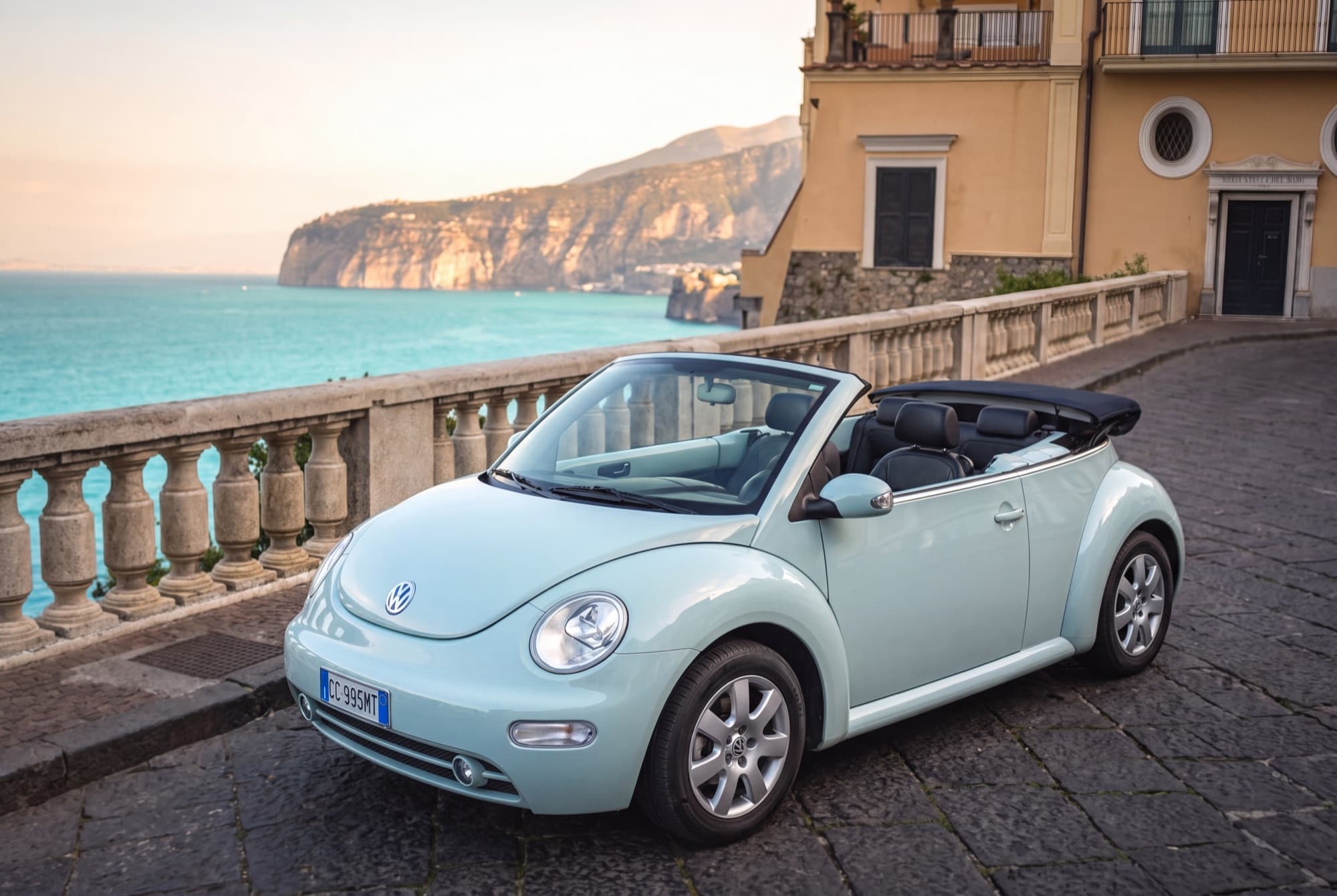
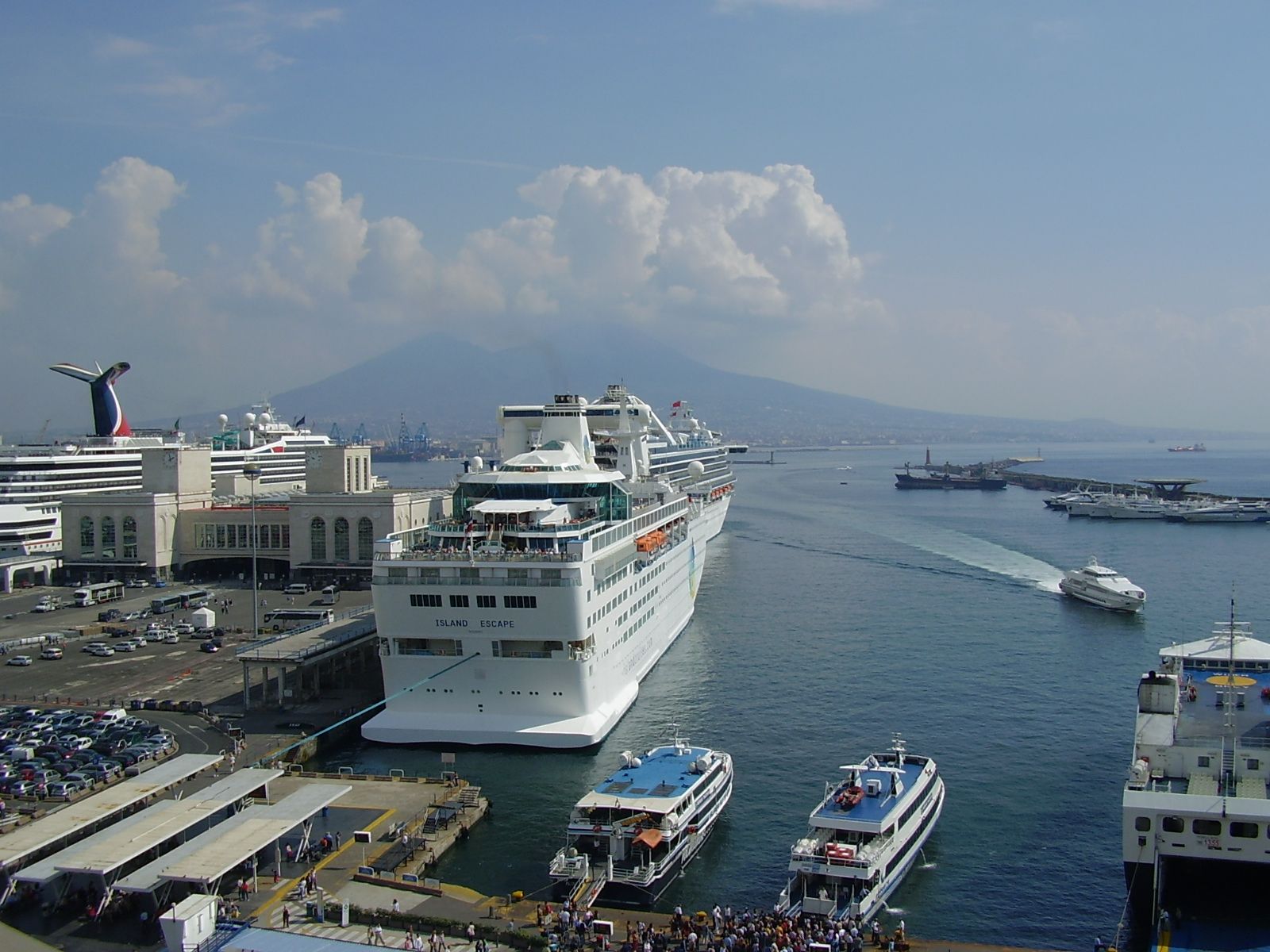
Positano: Street parking barely exists. The few spaces are contested year-round. The main car park near the top of the town charges €5–8 per hour in summer. Our strong advice: leave the car in Sorrento and take the bus, ferry, or a private transfer to Positano.
Amalfi: The Luna Rossa underground garage near the port charges €3–5 per hour (€25–35/day). It fills by mid-morning in July–August but is usually manageable in shoulder season. There are also car parks along the approach road from Salerno. Amalfi is still not a car-friendly town, but it is marginally less stressful than Positano for drivers.
Come spostarsi
Trasporti a Positano
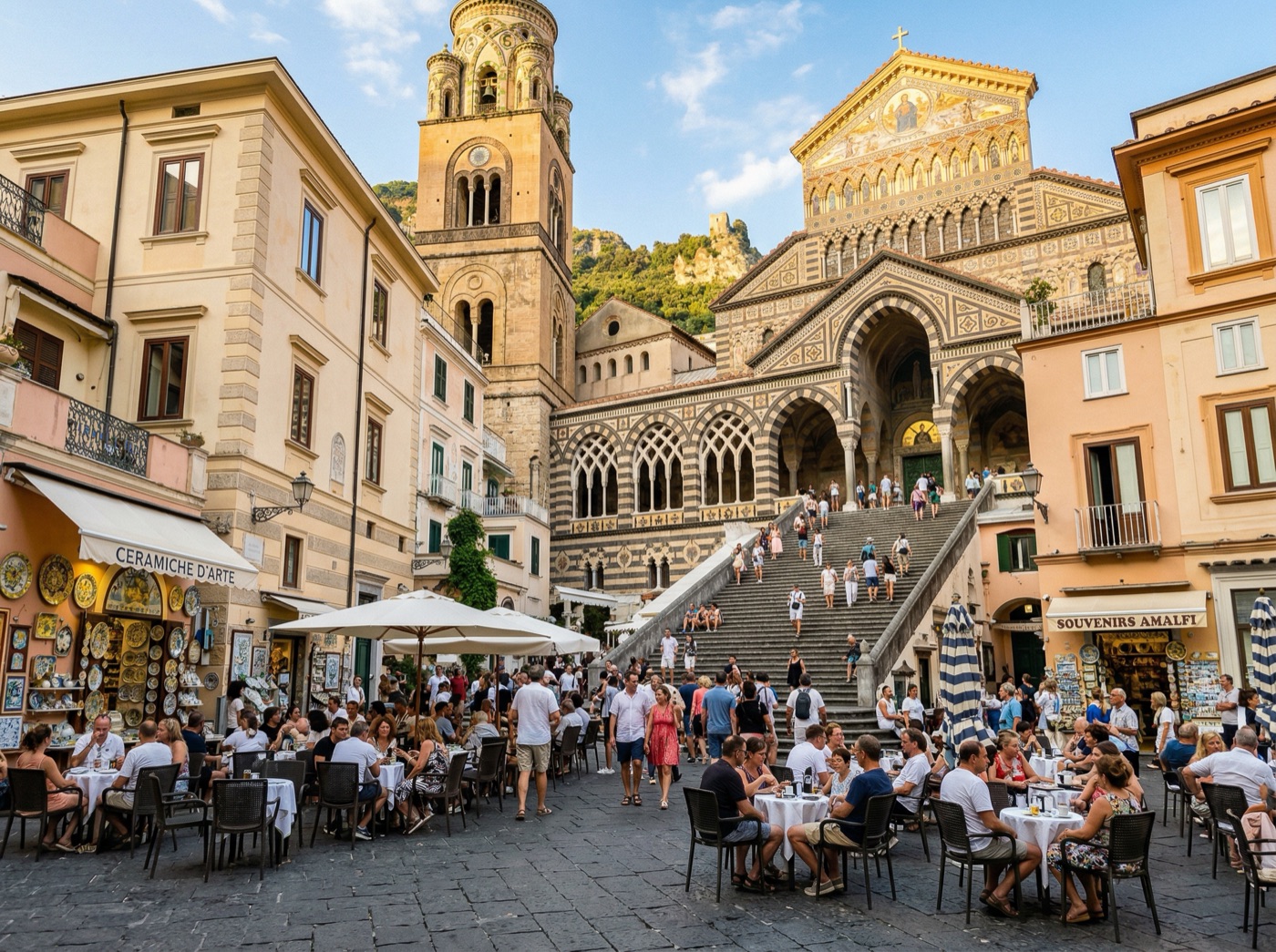
Getting to and from Positano can be challenging. The town is served by SITA buses along the SS163 coast road, but the buses are frequently full in summer — queues of 30–50 people standing in the heat are normal at the Sponda stop in July. There is no train station. The nearest ferry port connects Positano to Amalfi (€10, 25 min), Capri (€22, 50 min), and Salerno (€12, 70 min) — ferries run seasonally from April to October. Within the town, everything involves stairs — hundreds of them. This makes Positano difficult for anyone with mobility issues or small children in pushchairs.
The easiest option from Naples Airport or Station is a private transfer to Positano — fixed price from €156, door-to-door, no luggage hassle on crowded buses.
Trasporti ad Amalfi
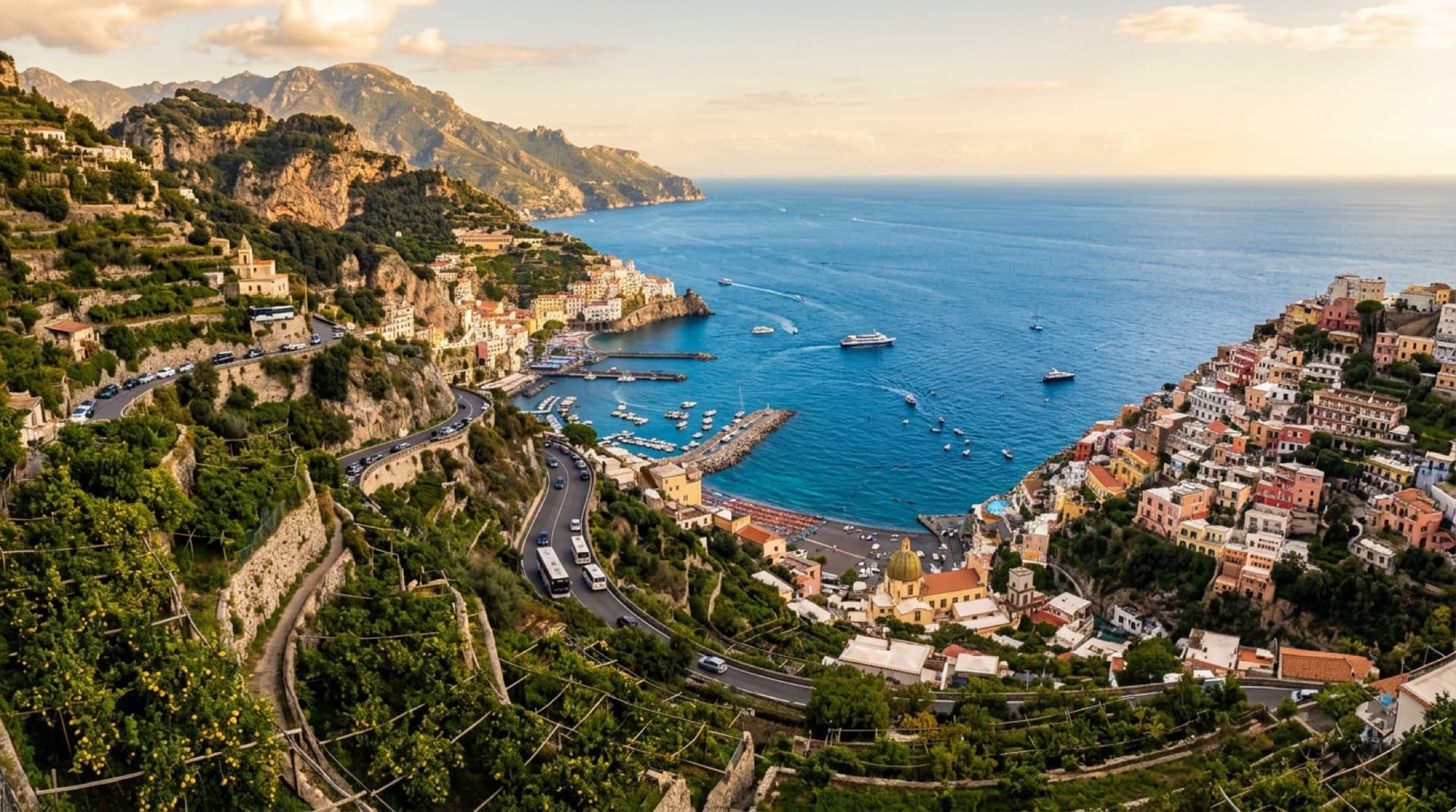
Amalfi is more centrally located and better connected. SITA buses run frequently to Sorrento (via Positano, 90 min, a few euros) and to Salerno (35 min, pochi euro). Ferries operate to Positano, Capri, Salerno, and Minori. The town centre is relatively flat compared to Positano, making it easier to walk around with luggage. Amalfi is also the gateway to Ravello, which is a 25-minute bus ride (€1.30) or a scenic uphill walk via the ancient stone steps.
From Naples, a private transfer to Amalfi takes about 75 minutes (from €168). You can also book a transfer from Sorrento to Amalfi or compare all transfer routes and prices on BlueKeys.
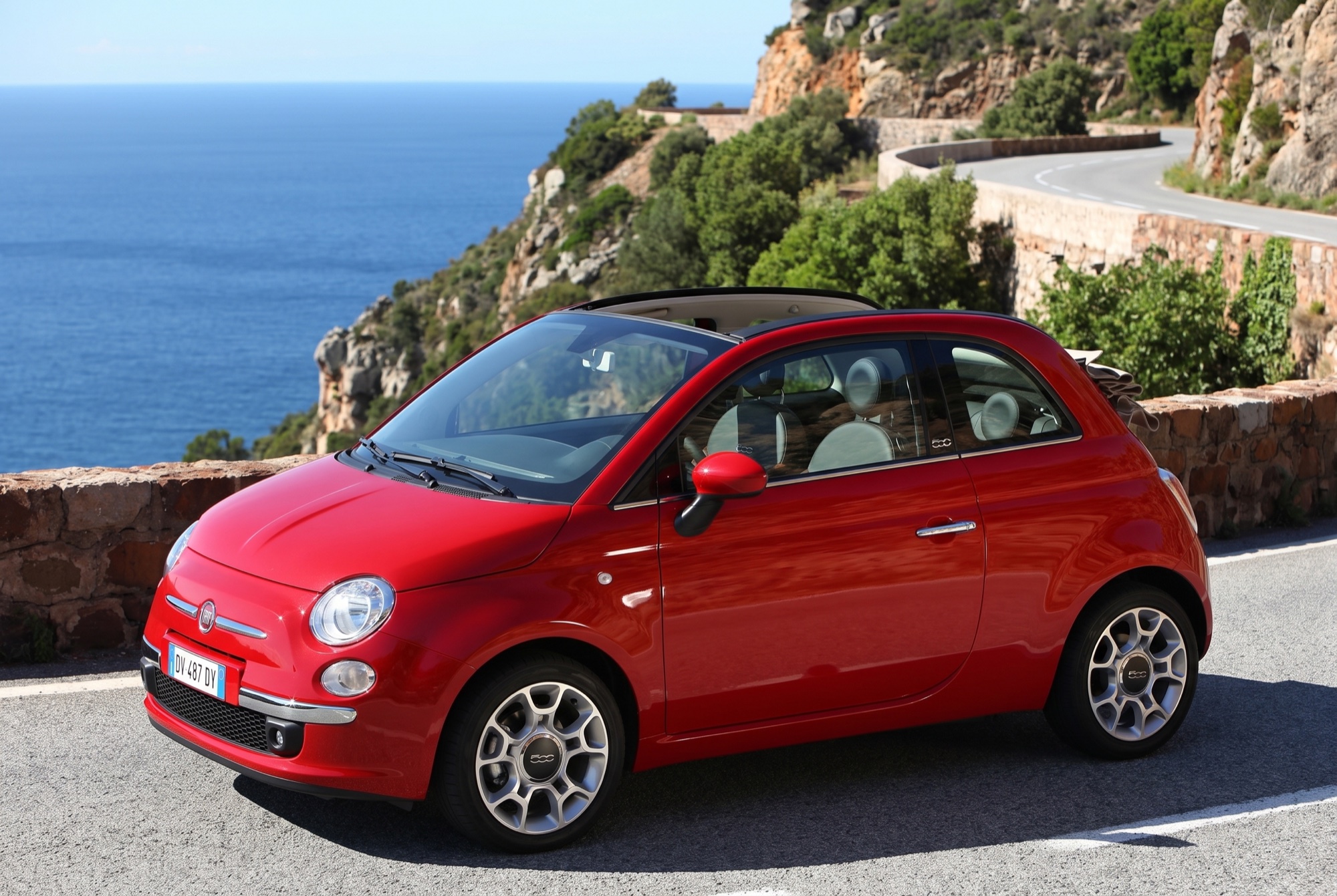
Prezzi: budget giornaliero completo
Positano is consistently more expensive than Amalfi. Here is a realistic daily budget for two adults in peak season (July–August):
| Spesa | Positano | Amalfi |
|---|---|---|
| Mid-range hotel | €300–500 / night | €150–300 / night |
| Pranzo per due | €40–60 | €25–40 |
| Cena per due | €70–120 | €45–80 |
| 2 lettini + ombrellone | €30–50 | €20–40 |
| 2 aperitivi | €24–30 | €16–20 |
| Bus SITA (a/r) | pochi euro | pochi euro |
| Totale giornaliero (due adulti) | €470–760 | €260–480 |
For the best deals on accommodation in both towns, browse BlueKeys stays on the Amalfi Coast. Booking directly through BlueKeys typically saves 10 to 15 percent compared to major OTAs, and all properties are locally vetted.
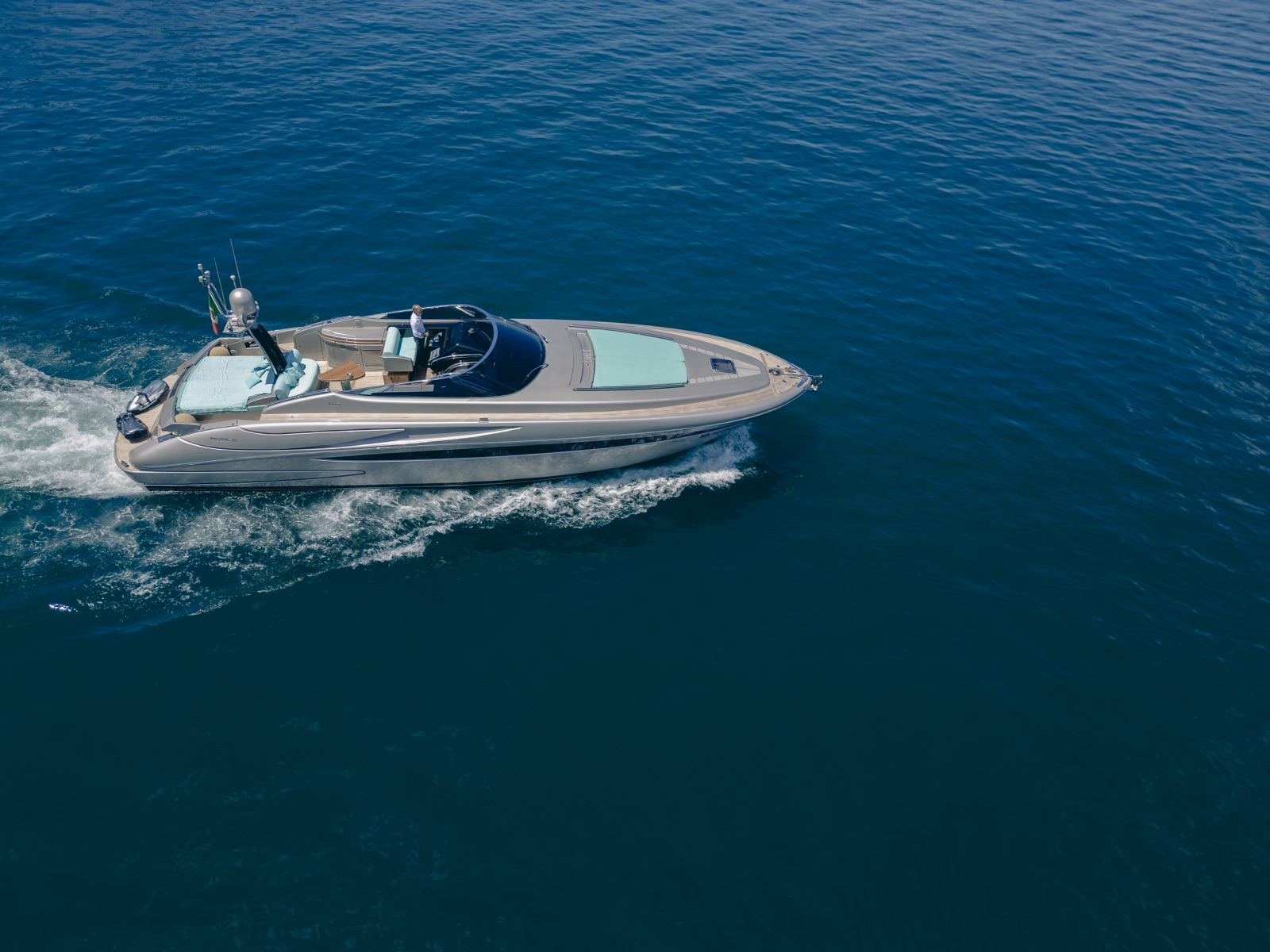
Quando visitare: mese per mese
| Mese | Meteo | Folla | Prezzi | Verdetto |
|---|---|---|---|---|
| Apr | 16–19°C, qualche pioggia | Bassa | Basso–medio | Buono per trekking, troppo fresco per nuotare |
| May | 20–24°C, prevalentemente soleggiato | Media | Medio | ★★★★★ Mese migliore in assoluto |
| Jun | 24–28°C, sunny | Media–alta | Medio–alto | ★★★★ Ottimo, tutti i traghetti attivi |
| Jul | 28–32°C, hot | Molto alta | Picco | ★★ Caldo, affollato, caro |
| Aug | 28–33°C, molto caldo | Estrema | Peak | ★ Da evitare se possibile |
| Sep | 24–28°C, warm | Moderate | Mid–high | ★★★★★ Miglior rapporto qualità/prezzo + clima |
| Oct | 18–22°C, some rain | Low | Low | ★★★ Fascino fuori stagione, meno traghetti |
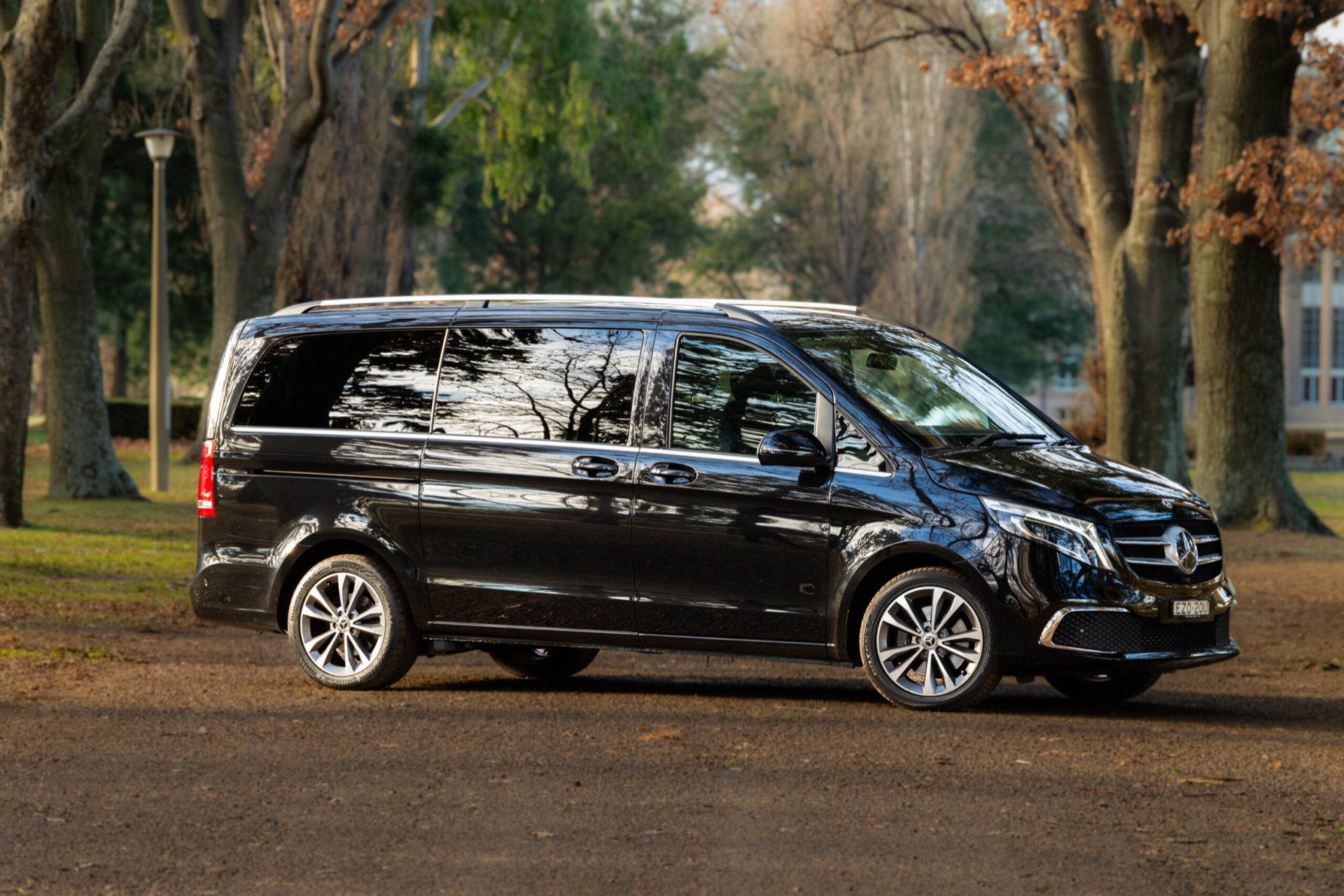
Festival ed eventi
Positano: The town hosts the Positano Premia la Danza dance festival in September, attracting international performers. The Festa della Madonna Assunta on 15 August sees a spectacular fireworks display over the sea. New Year's Eve celebrations on the beach draw a large crowd.
Amalfi: Amalfi has stronger historical events. The Regata delle Antiche Repubbliche Marinare (Historic Regatta) takes place every four years when Amalfi hosts — a colourful boat race against Genoa, Pisa, and Venice. The Festa di Sant'Andrea on 30 November involves a dramatic torchlit procession through the old town. The Capodanno Bizantino (Byzantine New Year) on 1 September celebrates Amalfi's ancient maritime heritage with parades and fireworks. For culture lovers, Amalfi wins decisively.
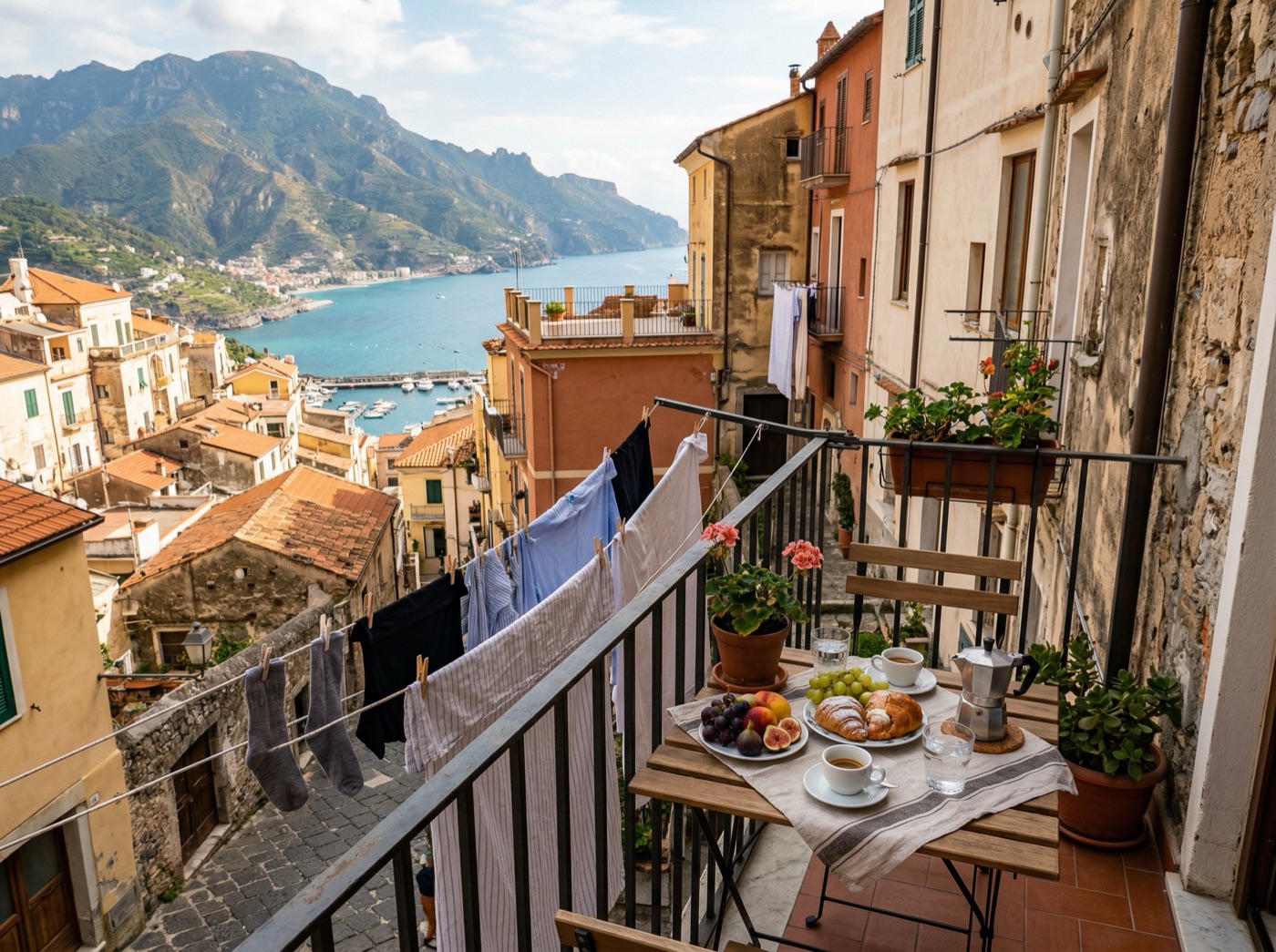
Quale città fa per voi?
Scegliete Positano se...
- You want a glamorous, beach-focused holiday
- You are a couple or honeymooners seeking romance and sunset views
- You enjoy boutique shopping, cocktail bars, and a see-and-be-seen atmosphere
- You are willing to pay premium prices for the setting
- You are reasonably fit (the stairs are relentless)
- You are staying for 1–3 nights and want maximum impact
Scegliete Amalfi se...
- You prefer history, culture, and local atmosphere
- You are travelling with children or elderly relatives
- You want better transport connections for day trips to Ravello, Salerno, and beyond
- You are travelling on a moderate budget
- You want a walkable, less vertical town with a working local life
- You are staying 3+ nights and want a practical, liveable base
La terza opzione: alloggiare fuori da entrambe
Experienced Amalfi Coast travellers often skip both Positano and Amalfi in favour of Praiano (€80–150/night, stunning sunsets, Path of the Gods start point), Conca dei Marini (quiet, great value), or Furore (a hidden fjord village). These quieter villages have lower prices, better parking, and equally stunning views. BlueKeys has properties across the entire Amalfi Coast, including several in these hidden-gem locations.
Verdetto locale: quale città prenotare davvero?
Having lived and worked on the Amalfi Coast for years, managed dozens of properties in both towns, and personally hosted hundreds of guests, this is the honest answer:
Book Amalfi if you have 3–7 nights. It is the better base. You can reach Positano by ferry in 25 minutes for a day trip, see the famous view, have lunch, and be back by afternoon without paying Positano prices. Amalfi gives you a working Italian town — a real cathedral, a real market, real trattorias where locals eat — alongside all the coastline's best boat tours and beaches.
Book Positano if you have 1–2 nights and a specific budget. One or two nights in Positano is a genuinely special experience. The sunsets, the steps, the beach clubs — it is unlike anywhere else in Italy. But a full week there becomes repetitive and expensive. Use it as a treat, not a base.
Book both if you have a week. The ideal Amalfi Coast holiday: 4 nights in Amalfi as your base (day trips to Ravello, boat tour, Path of the Gods), then 2 nights in Positano as a finale. You get the best of both worlds, and the contrast makes Positano feel even more special.
Avoid peak July–August in either town unless you book 6+ months ahead. Both towns are genuinely overwhelmed in high summer. The best weeks on the Amalfi Coast are late May to mid-June (warm, quieter, full ferries running) and the first three weeks of September (still warm, tourist numbers drop sharply after 1 September).
Gite da entrambe le città
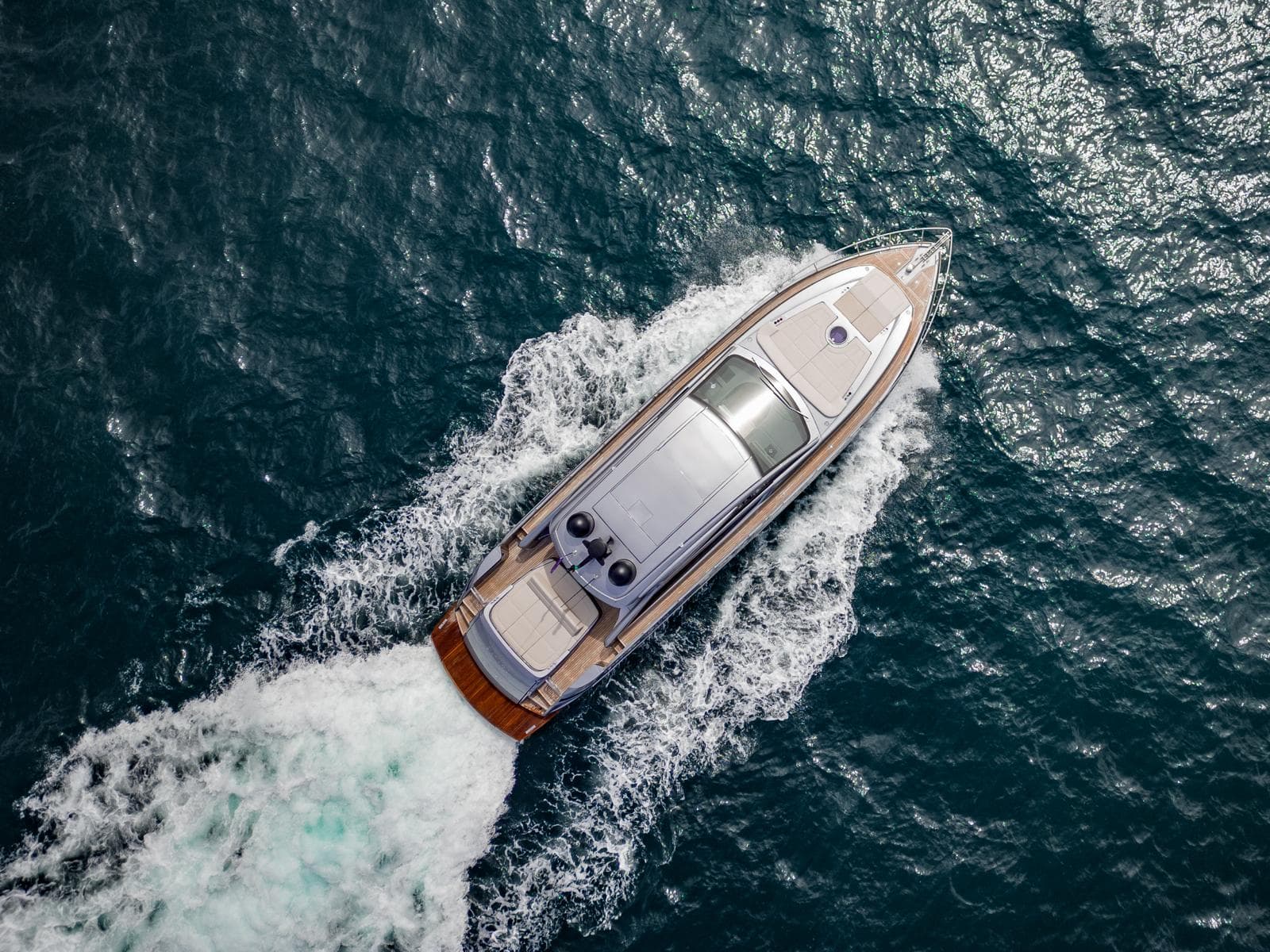
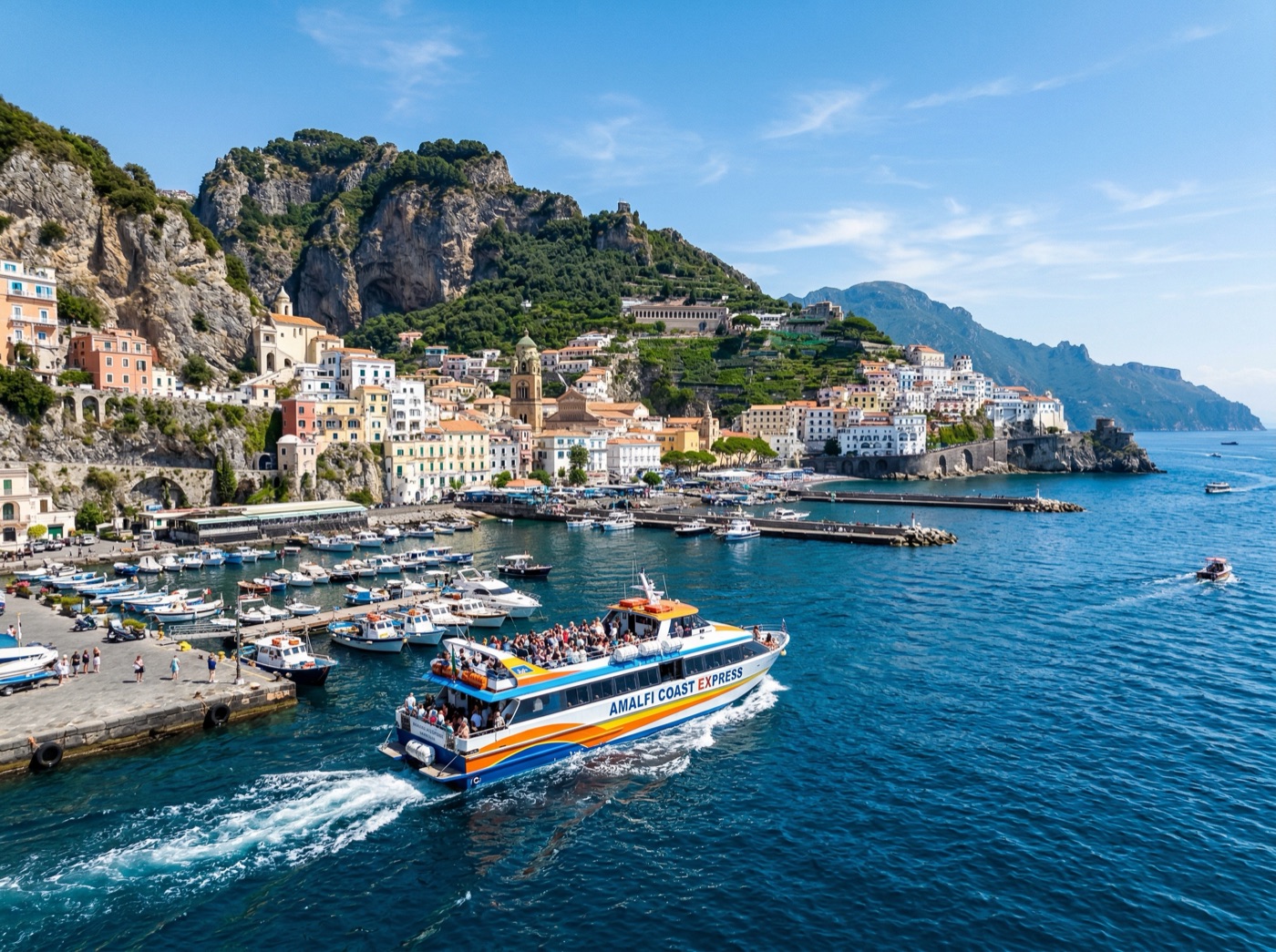
Wherever you stay, the coast's best attractions are within easy reach. Book a boat tour along the Amalfi Coast (from €65/person), a boat tour from Positano, or a boat excursion from Amalfi. A sunset cruise is unforgettable from either town. For a unique experience, try a cooking class in Sorrento or a hike along the Path of the Gods. BlueKeys offers curated tours and experiences departing from both Positano and Amalfi.
Trovate il vostro alloggio perfetto
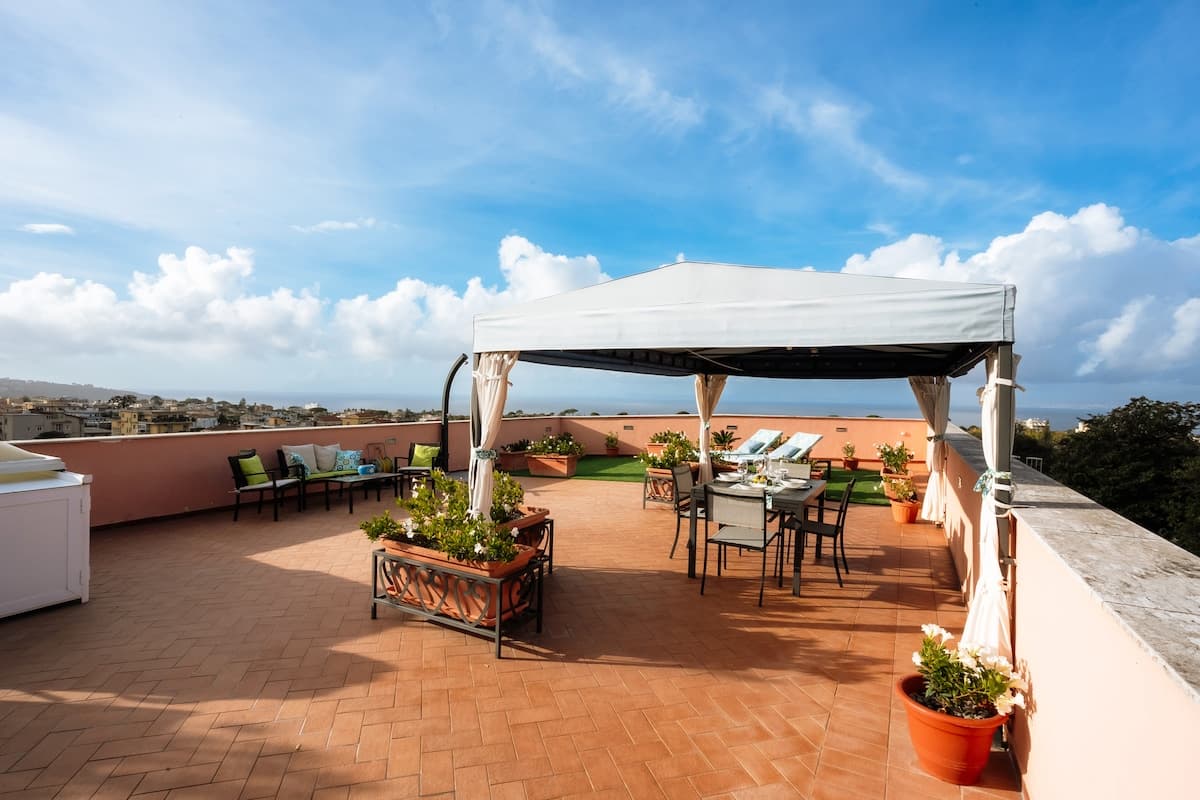
Sfogliate gli alloggi BlueKeys in Costiera Amalfitana — ville e appartamenti selezionati a Positano, Amalfi e negli incantevoli borghi tra le due località. Prenotate direttamente per le tariffe migliori e il supporto concierge locale.