Quick answer — Sorrento Peninsula e-bike tours
- 5 guided e-bike tours covering the entire Sorrento Peninsula
- Prices from €70/person — all tours include e-bike, helmet & local guide
- Difficulty: Easy to moderate — the electric motor handles the hills
- Duration: 3–6 hours depending on the route
- Best months: April–June and September–October
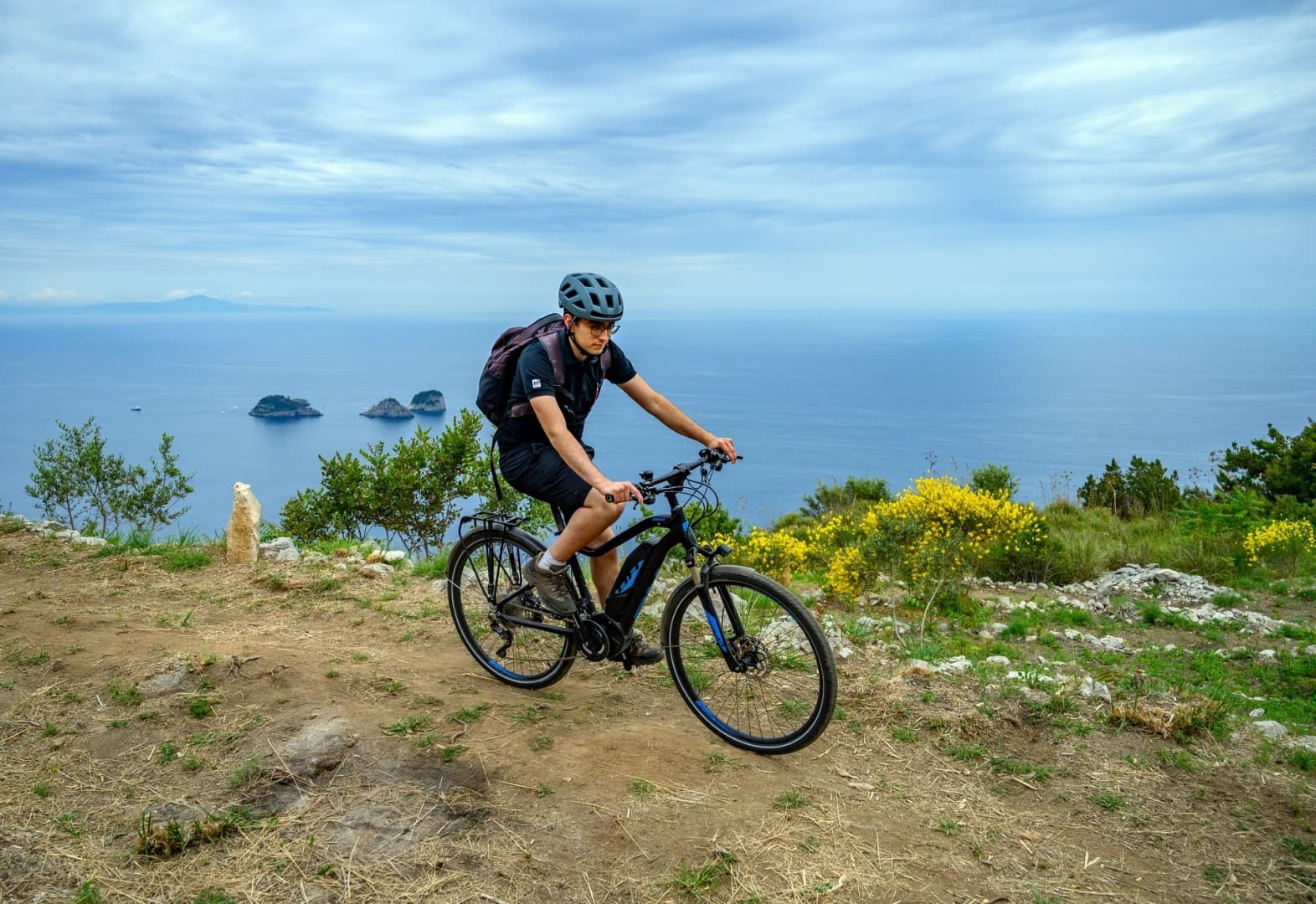
I have been writing about the Amalfi Coast for years, and until I climbed onto an e-bike in Sorrento last spring, I thought I knew this peninsula. I was wrong. The Sorrento Peninsula is a place built on gradients — terraced lemon groves stacked above the sea, hairpin lanes climbing toward ridge-top villages, footpaths carved into cliff faces centuries before anyone thought of tarmac. On foot, it is exhausting. By car or bus, most of it is simply inaccessible. But on an e-bike, the entire landscape opens up. The pedal assist flattens the hills just enough to let you look around instead of down at the road, and you can slip through gaps in the stone walls that no vehicle wider than a handlebar could ever manage.
There are currently five e-bike experiences running from Sorrento, each revealing a different character of the peninsula. I have ridden all five over the past two seasons, and what follows is my honest account of each — what you will see, what you will eat, and which one suits your trip.

Route Stops — What You Will See on Each Tour
| Tour | Price | Key stops | Food included |
|---|---|---|---|
| Hidden Sorrento (€70) | 3h | Old town backstreets, Roman tunnel, Capri headland, market gardens | No (water only) |
| Amalfi Coast (€90) | 3h | SS163 road, panoramic clifftop viewpoints, Positano free time | No (water only) |
| Massa Lubrense (€130) | 3h | Ancient alleys, lemon grove, Termini cliff terrace, Capri view | Aperitif included |
| Traditional Flavours (€150) | 4h | Lemon grove, Provolone del Monaco dairy, olive oil frantoio | Cheese + oil tasting |
| Taste and Nature (€250) | 6h | Lemon grove, nature reserve, wine cellar, Don Alfonso 1890 | Full Michelin-star lunch |
The Hidden Side of Sorrento
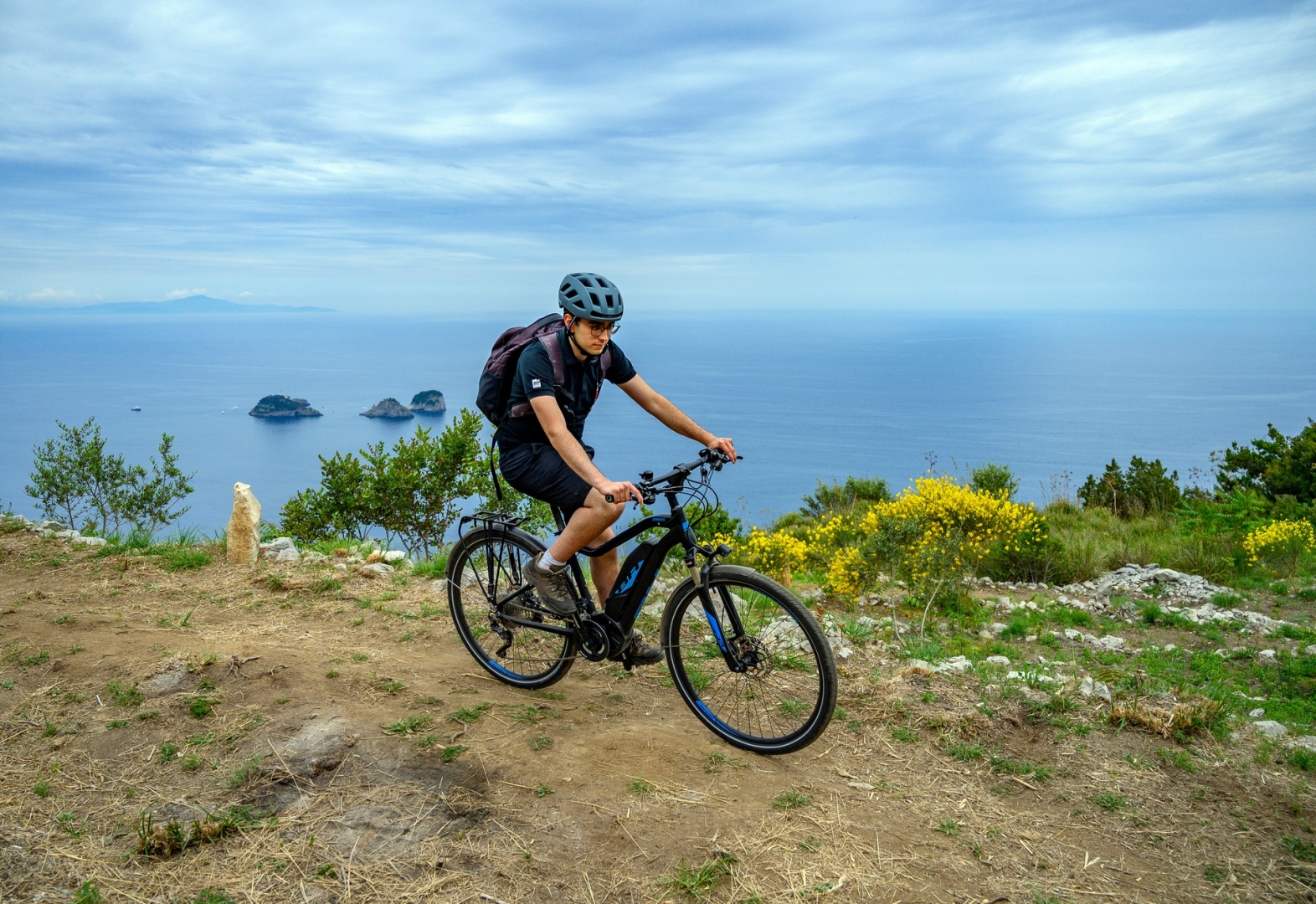
Most visitors experience Sorrento as a strip — Piazza Tasso, Corso Italia, the cliff-edge hotels, the ferry port. They leave without realising that behind the main street, a labyrinth of ancient alleyways and agricultural paths extends inland and downhill toward the sea. The Hidden Sorrento Peninsula e-bike tour takes you into this parallel world, and at €70 per person it is the most accessible entry point to cycling here.
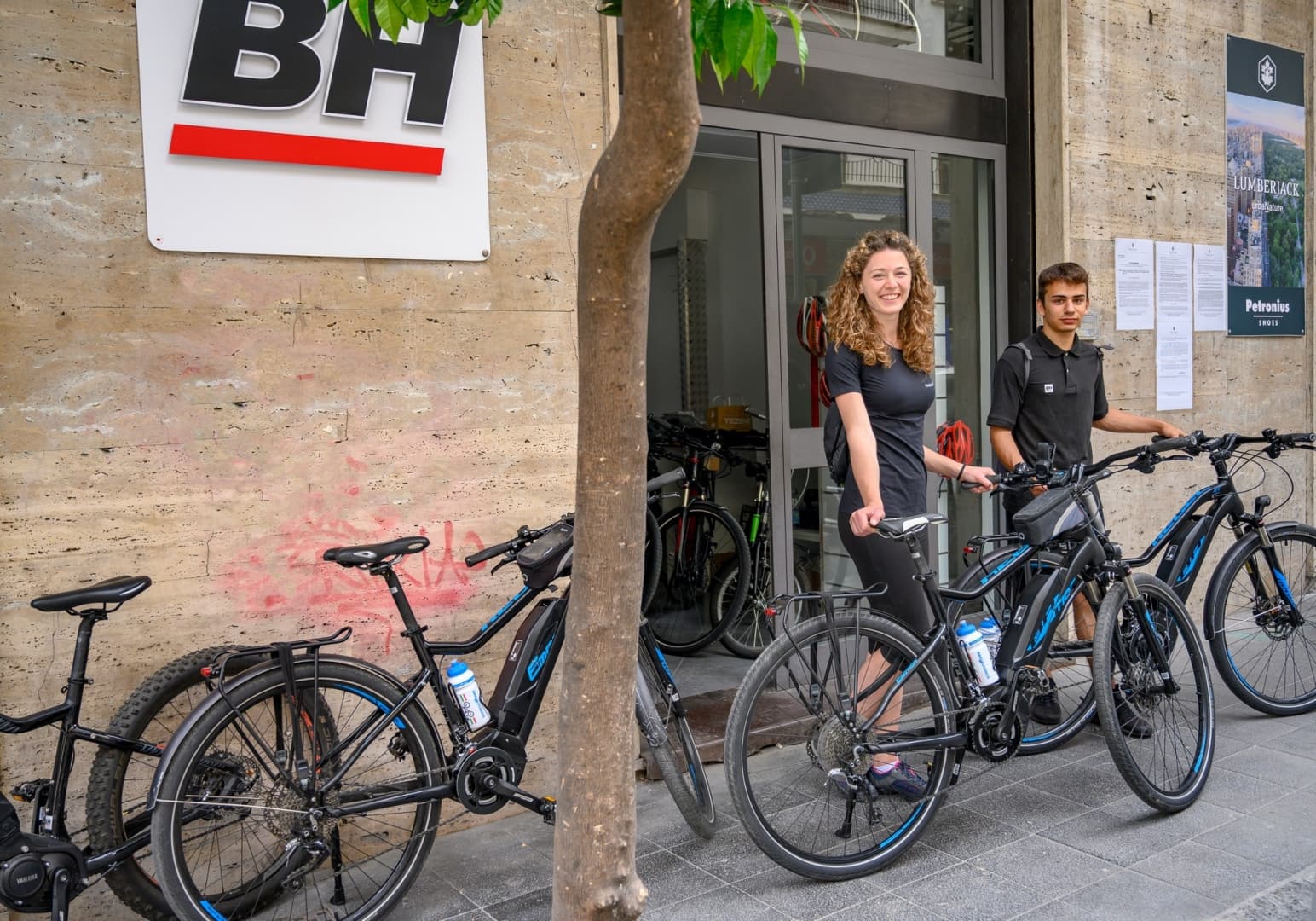
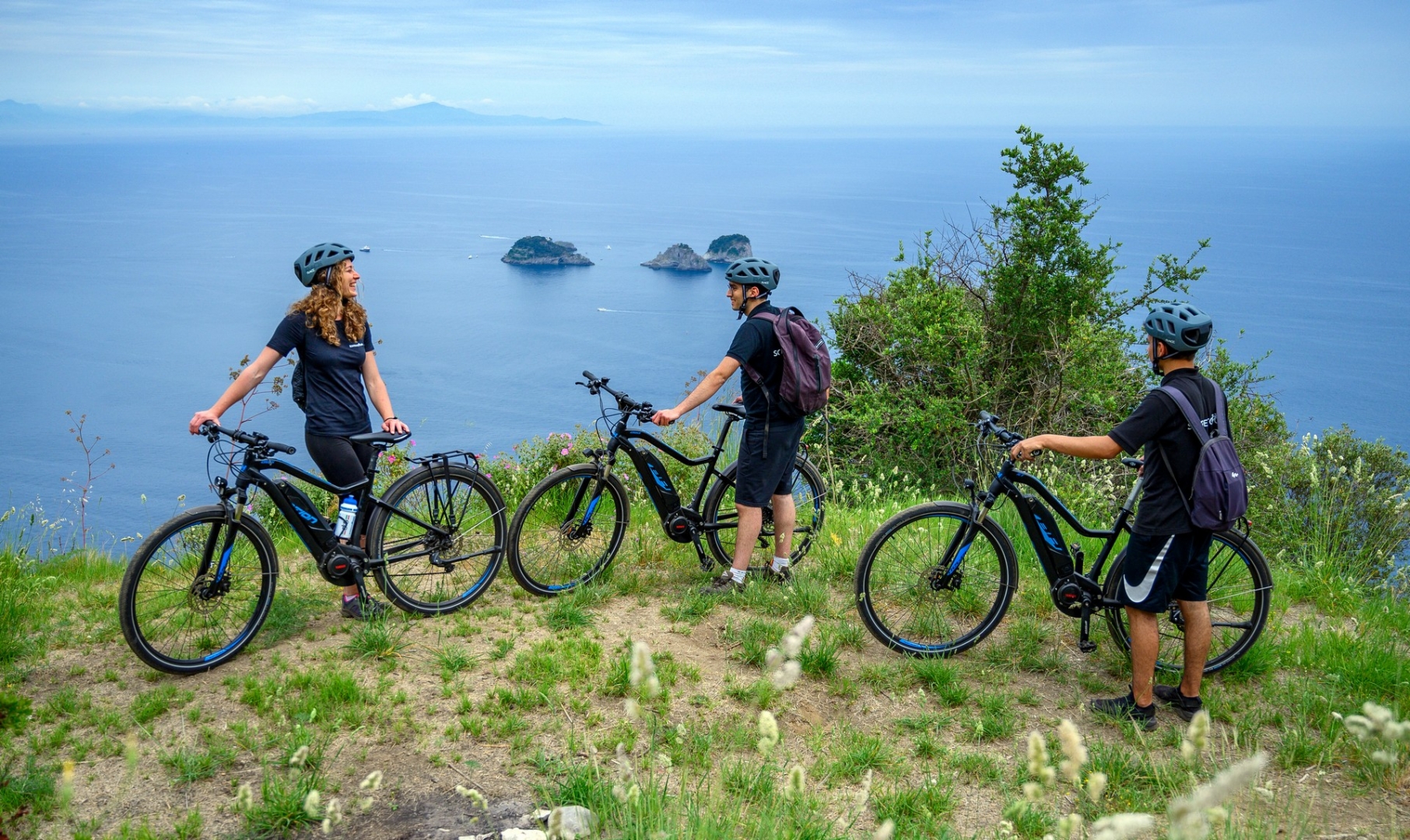
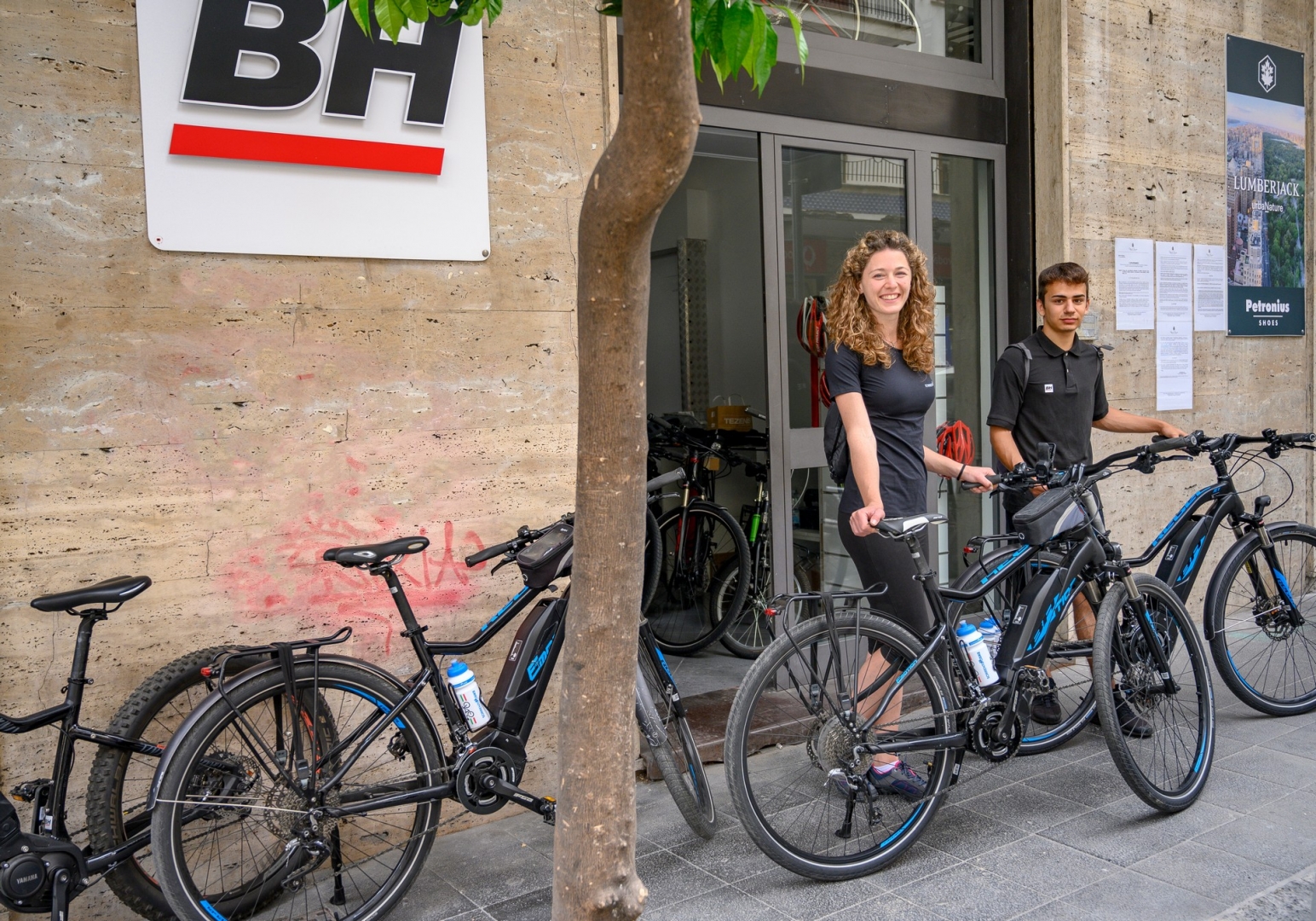
We set off from the guide's workshop near Piazza Tasso and within two minutes we were rolling down a cobbled lane I had walked past a hundred times without noticing. The route threads through the backstreets of Sorrento's old town — not the tourist pedestrian zone but the residential streets where laundry hangs between balconies and old men play cards in doorways. Then you drop below the town level through a gap in a stone wall, and suddenly you are on a dirt path between dry-stone terraces, the sea glinting between the olive branches below.
The ride covers roughly 20 kilometres but feels shorter because the e-bike motor smooths out the constant ups and downs. Our guide, who grew up in these lanes, stopped at a family-run lemon grove where the owner handed us slices of sfusato amalfitano straight from the tree — the skin so thick and fragrant it barely resembled any lemon I had seen in a supermarket. We rode through a Roman-era tunnel cut into the tufa rock, emerged onto a headland with a direct view across to Capri, and looped back through Sorrento's green belt of market gardens where restaurants source their produce every morning.
This is the tour I recommend to anyone visiting Sorrento for the first time. It reframes your understanding of the place before you have even unpacked.
Massa Lubrense — Lemons, Views & Aperitivi
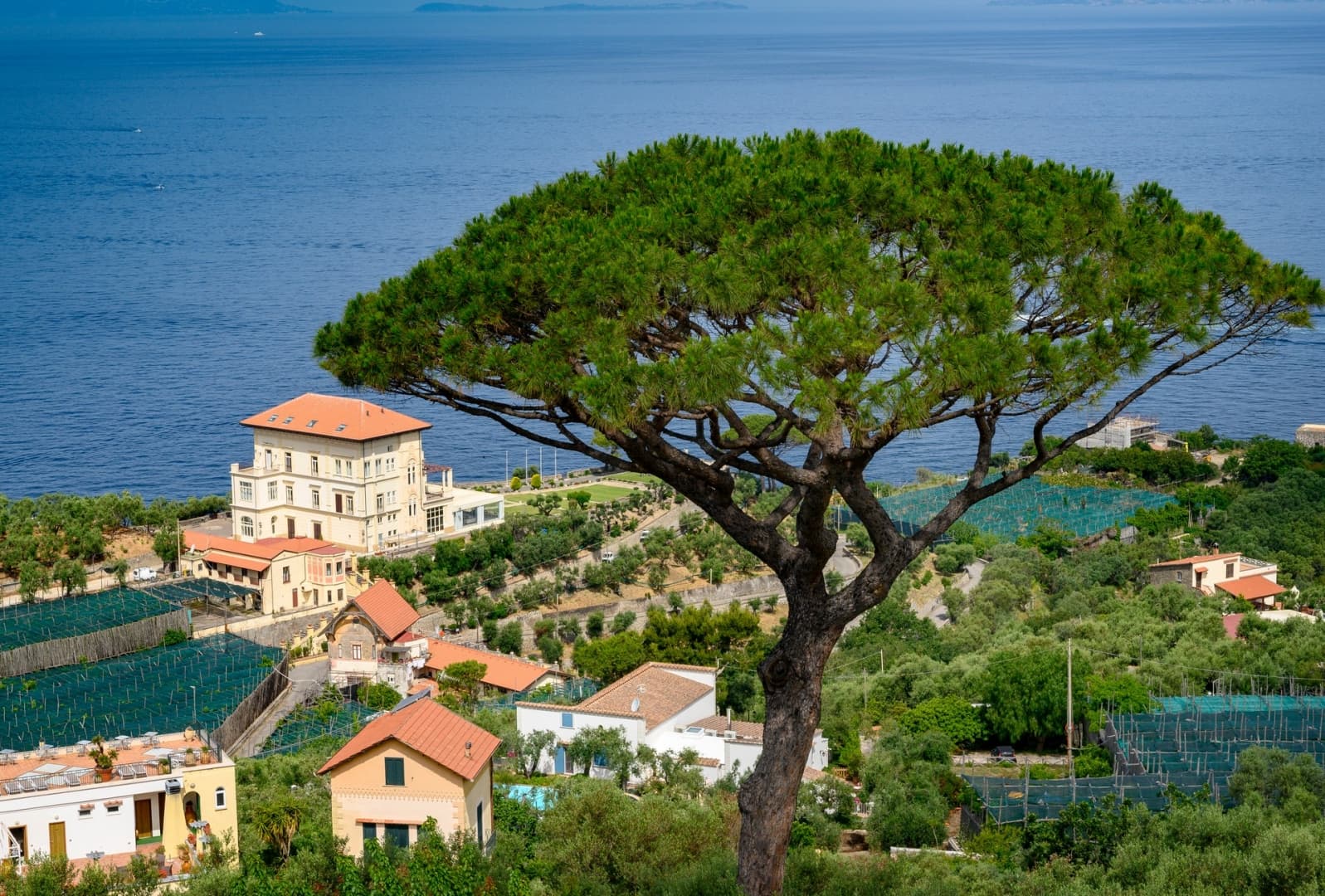
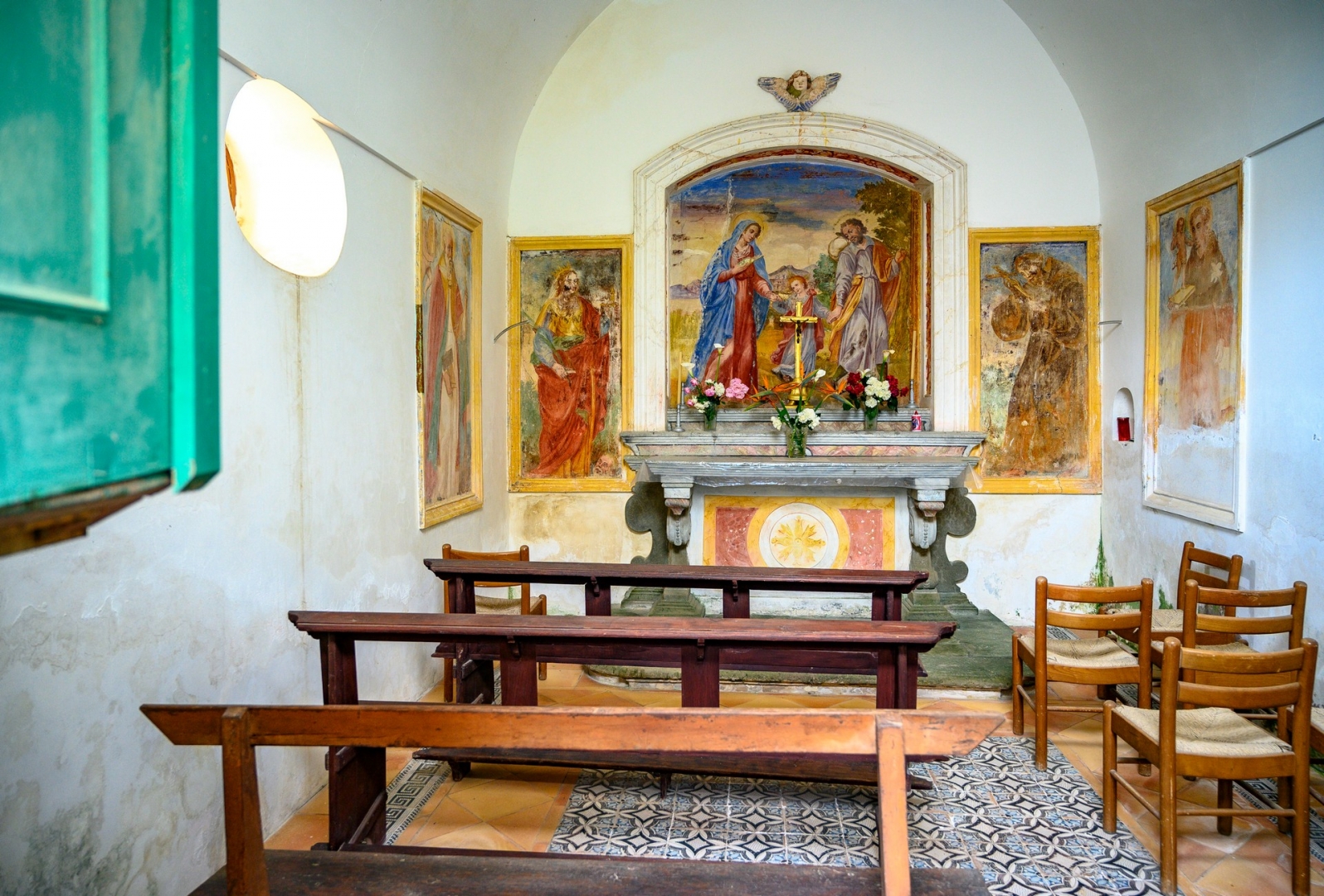
If you only know Sorrento and Positano, you have missed the quietest and arguably most beautiful corner of this coast. Massa Lubrense occupies the tip of the Sorrento Peninsula — a cluster of hamlets scattered across a hillside that slopes down toward Capri, just six kilometres of open water away. There are no resort hotels, no cruise-ship crowds, no souvenir shops. What there is: terraced lemon groves as far as you can see, a silence broken only by cicadas and church bells, and some of the most staggering coastal panoramas in southern Italy.
The Massa Lubrense e-bike tour runs at €130 per person and is a longer, more immersive half-day ride. From Sorrento, the route climbs gently through the hamlet of Sant'Agata sui Due Golfi — the village perched on the ridge between the Bay of Naples and the Bay of Salerno, where you can see both bodies of water simultaneously. From there, the road descends toward the tip of the peninsula through a succession of tiny villages: Termini, Nerano, Marina del Cantone.
The highlight comes near the end of the ride: a terrace bar perched on the edge of the cliff at Termini, where the guide orders aperitivi and you sit in the late-morning light with the island of Capri so close you can make out individual boats in the marina. I have seen a lot of views on this coast. This one belongs in the top three.
Where to Eat Along the Routes
Even on tours without included meals, the peninsula is rich with food stops. Here are the best options near each route:
- Hidden Sorrento route: Stop at the Agruminato lemon garden for fresh-squeezed lemonade (€3) and lemon cake. On the return, the backstreet bakeries near Via degli Aranci sell sfogliatella and delizia al limone from €2.50.
- Amalfi Coast route: Free time in Positano — grab a slice of pizza al taglio at Chez Black on the beach (from €4) or a granita di limone at any harbour bar (€3). For a sit-down meal, Trattoria da Vincenzo on Viale Pasitea serves fresh pasta with seafood from €14.
- Massa Lubrense route: The aperitif is included, but if you want to extend the experience, Ristorante Lo Stuzzichino in Sant'Agata serves exceptional local cuisine from €12 for a primo.
- Traditional Flavours route: Cheese and oil tastings are included. For extra eating, the dairy farm sells fresh mozzarella and ricotta to take away from €4.
- Taste and Nature route: The full Don Alfonso 1890 lunch is included — one of the best meals you will eat on this coast.
From Farm to Fork — Provolone del Monaco & Olive Oil
The Sorrento Peninsula produces two protected-origin foods that most visitors never encounter: Provolone del Monaco DOP, a sharp, semi-hard cow's milk cheese aged in sea caves along the coast, and a local olive oil pressed from the indigenous Minucciola olive. The Traditional Flavours e-bike tour at €150 per person is built around visiting the farms where these products are made, and it is the closest thing to a cycling food pilgrimage I have experienced in Italy.
The route heads inland from Sorrento, climbing through chestnut and walnut forests to a dairy farm on the slopes above Vico Equense. Here, we watched the cheesemaker pull fresh curd by hand, shape it into the distinctive pear form of the Provolone, and tie it with raffia for hanging. From the dairy, we rolled downhill through olive groves to a frantoio (oil press) where the harvest was underway. The oil was so fresh it was cloudy and green, with a peppery kick that made me cough — the mark of genuine high-polyphenol extra virgin.
Lunch at Don Alfonso 1890
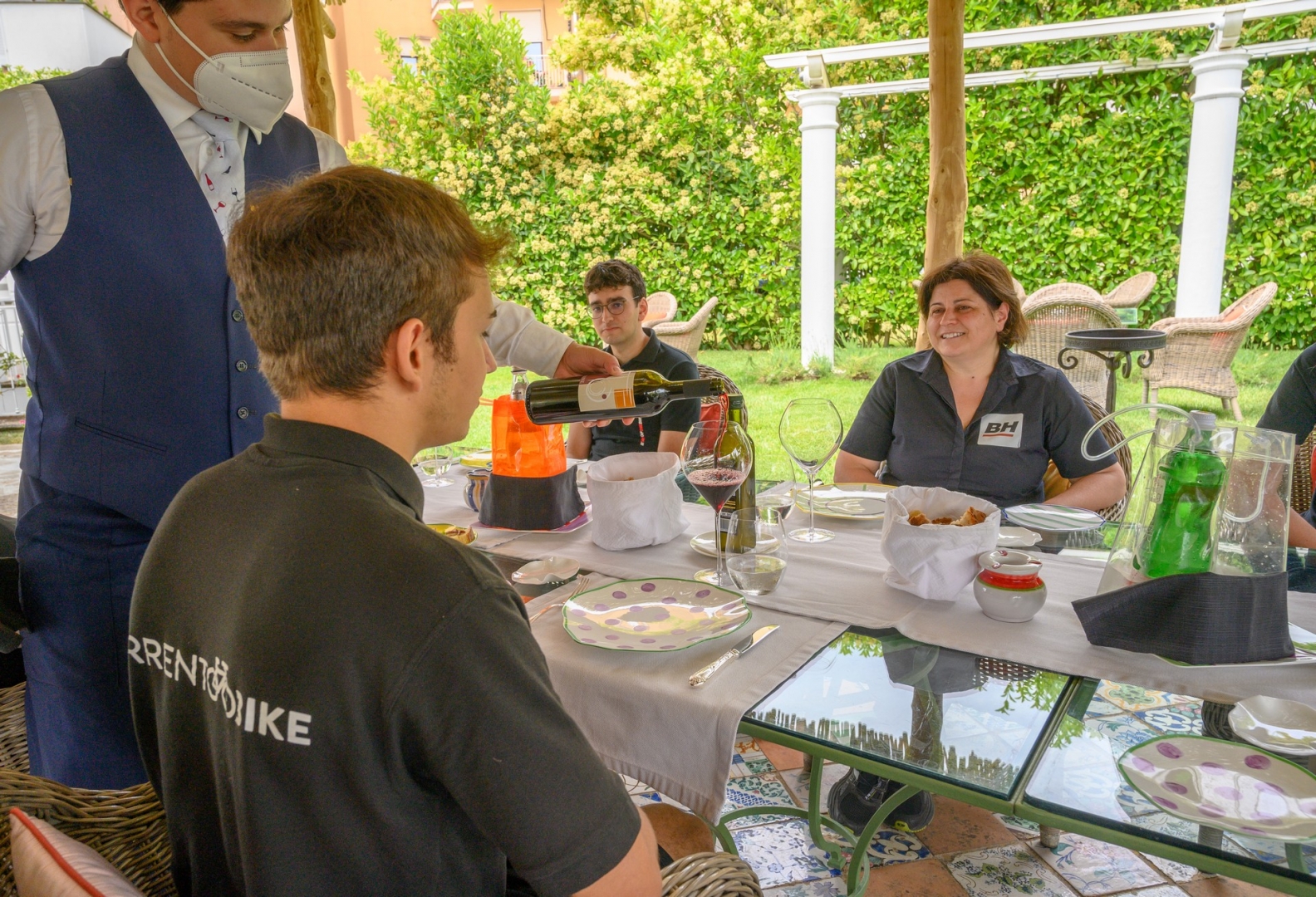
Of the five e-bike tours, the Taste and Nature tour at €250 per person is the most ambitious and the most memorable. The ride itself covers similar terrain to the Massa Lubrense route — ridge roads, lemon groves, sea views — but the centrepiece is a multi-course lunch at Don Alfonso 1890, the Michelin-starred restaurant in Sant'Agata sui Due Golfi.
Arriving by e-bike adds something a car never could. You have been riding for two hours through the landscape that produces the ingredients on the plate. The lunch was four courses: raw fish with citrus, paccheri with local tomato sauce, sea bass with capers and olives, and a dessert built around the sfusato amalfitano lemon. The wine came from the restaurant's own cellar — built into Roman-era tunnels beneath the building. At €250, the tour includes the ride, the lemon grove visit, the nature reserve, and the full Don Alfonso experience.
The Amalfi Coast on Two Wheels
The Amalfi Coast e-bike tour at €90 per person takes you along the most dramatic stretch of the SS163 from Sorrento toward Positano. The guide knows every layby, every viewpoint, every section where the road widens enough to ride comfortably. You stop where you want. You look where you want. And because you are on a bike rather than in a vehicle, the scale of the landscape hits you in a way that glass and metal insulate you from.
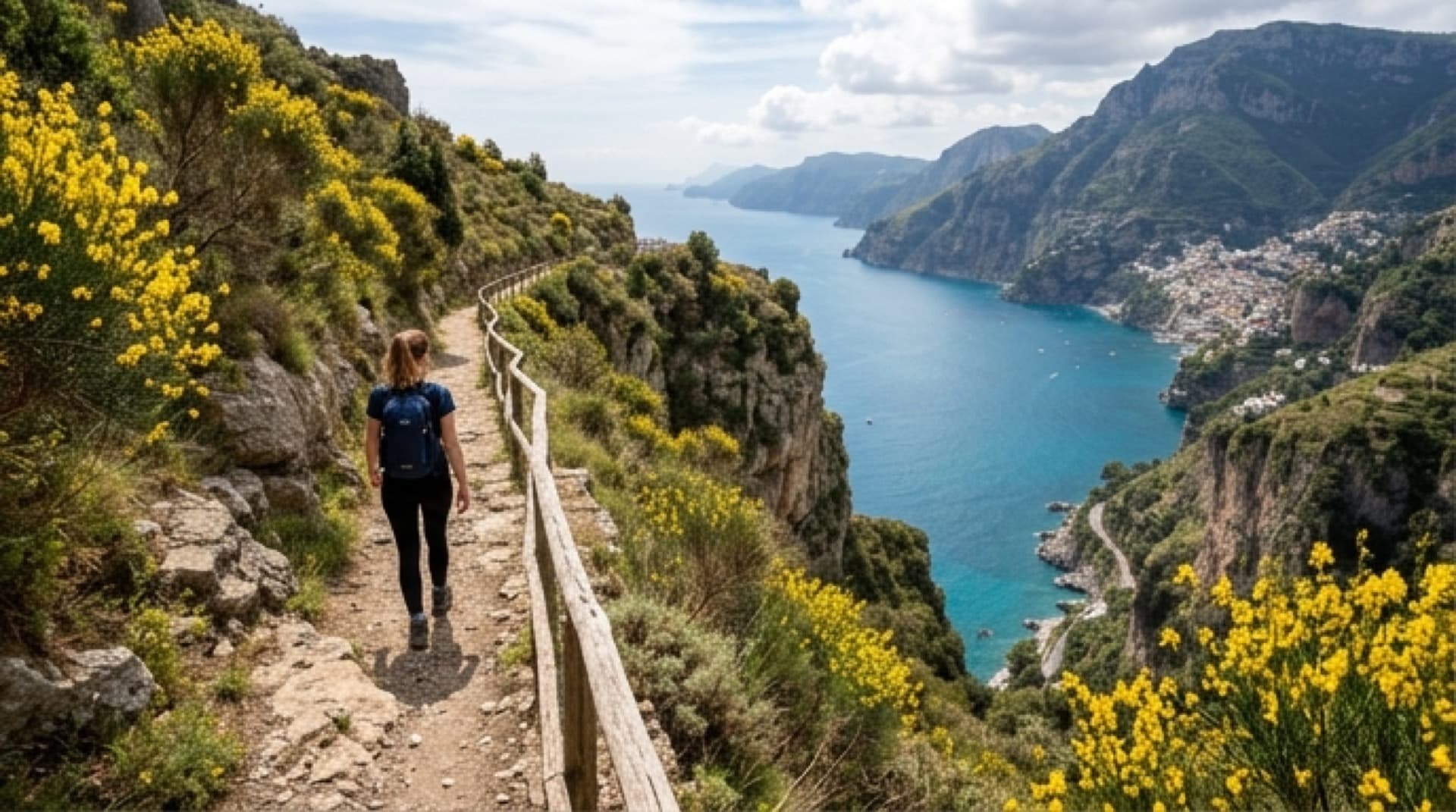
The route pauses at the classic viewpoint above Positano, where the village cascades down the cliff in that impossible arrangement of pastel cubes. The return ride benefits from the afternoon light, which illuminates the western-facing cliffs in warm tones. Our guide timed it deliberately — experienced riders always do the SS163 westbound in the afternoon for exactly this reason. At €90, this is the best-value way to experience the Amalfi Coast road.
Difficulty Levels — Honest Assessment
- Easy (Massa Lubrense, Traditional Flavours): Gentle gradients, frequent stops, maximum assist available. Suitable for anyone who can ride a bicycle, including older travellers and those who have not cycled in years. You will not break a sweat unless you choose to.
- Medium (Hidden Sorrento, Amalfi Coast, Taste and Nature): Some steeper sections and sustained riding. The motor handles the climbs, but you are on the bike for 3–6 hours with fewer breaks. Basic comfort on a bicycle is essential. You will feel it in your legs at the end, but in a satisfying way rather than an exhausting one.
What to Bring
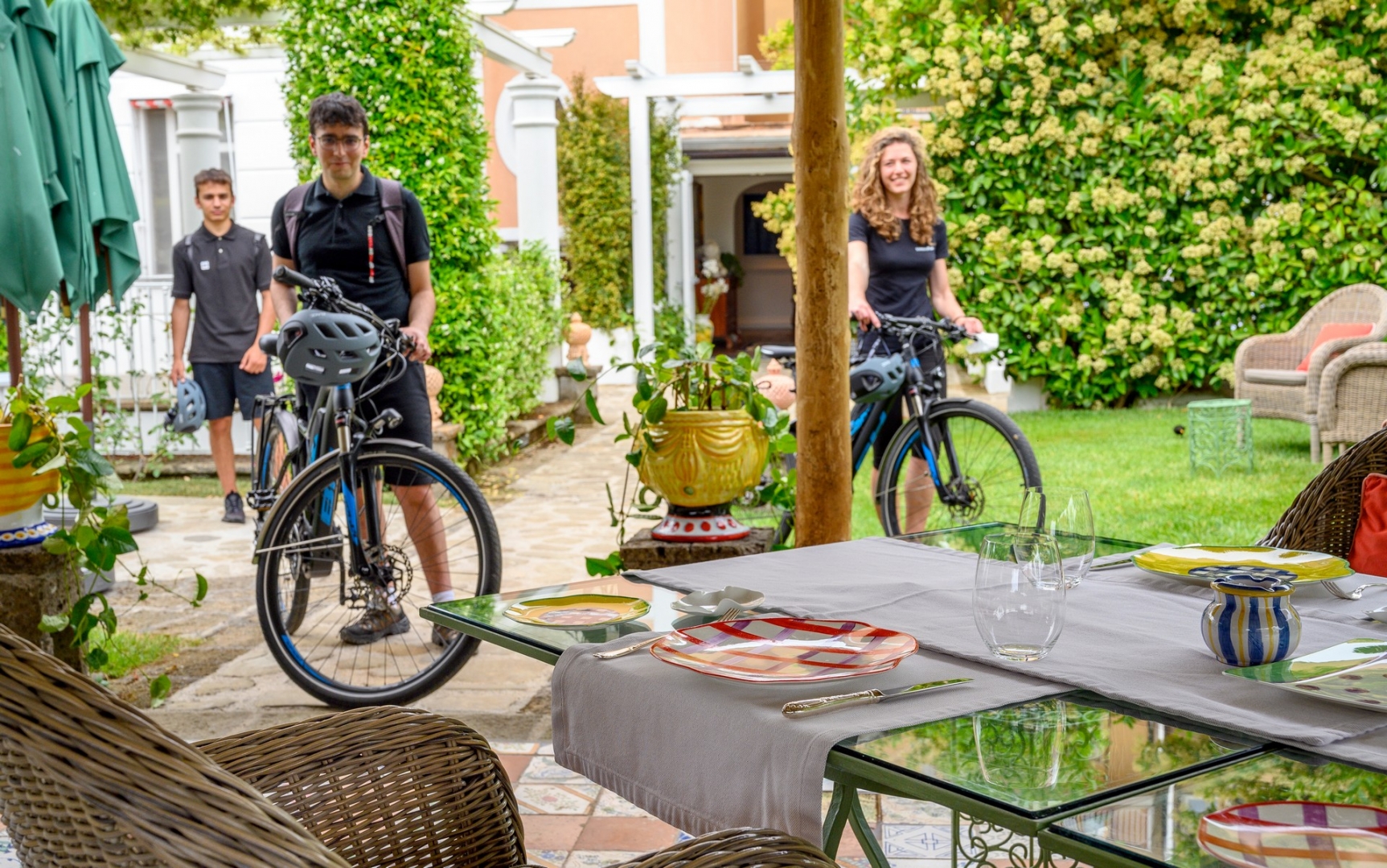
- Clothing: Comfortable athletic wear or shorts and a breathable top. Closed-toe shoes — trainers or sturdy sandals with a back strap. No flip-flops.
- Sun protection: Sunscreen (SPF 30+), sunglasses, and a hat or cap. The peninsula has limited shade on coastal sections.
- Light jacket: Essential for morning departures in April, May, and October when the air at altitude can be cool.
- Phone/camera: Your guide stops frequently for photos. A phone with a good camera is sufficient. If you bring a larger camera, ensure it has a strap — you need both hands for the handlebars.
- Small backpack: For your jacket, camera, and any purchases (cheese, olive oil, limoncello) from farm stops.
- Cash: €10–20 for any extra drinks, snacks, or purchases at farm stops not included in the tour price.
Explore the Sorrento Peninsula by E-Bike
Five guided tours from €70/person — all include e-bike, helmet & local guide. Browse all options and book on BlueKeys: