A village built to be seen from the sea
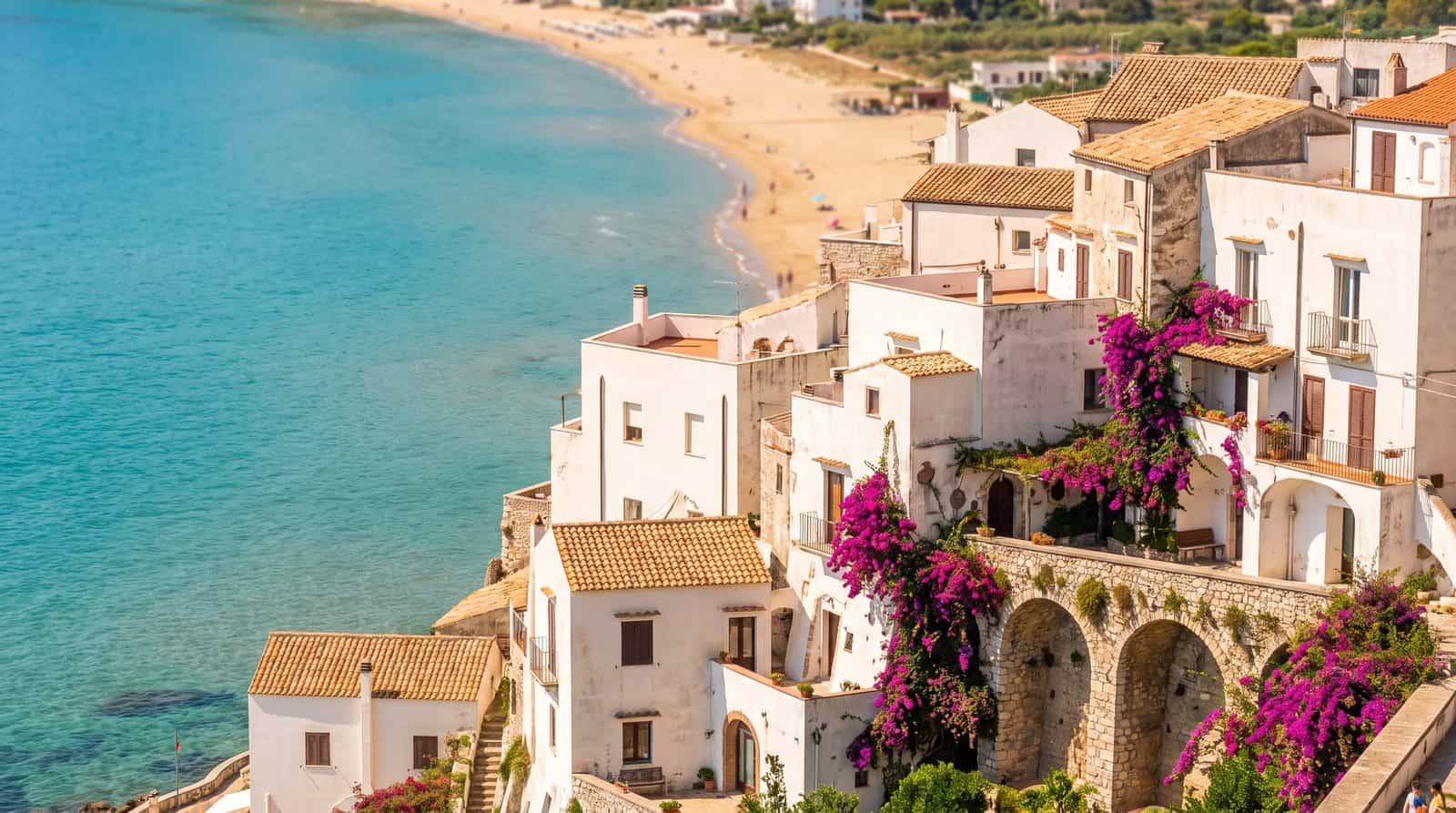
Sperlonga sits on a rocky headland about 120 km south of Rome, on the stretch of coast that tourist brochures call the Riviera di Ulisse. The old town is a knot of whitewashed houses, arches and stepped lanes, and the white is not decoration: it was lime, cheap and disinfectant, and it kept the houses cool. Cars stop at the edge, which is the reason the place still looks like itself.
The headland splits the coast in two, and that is the practical thing to know: the Spiaggia di Levante lies to the east and the Spiaggia di Ponente to the west, both sandy, both long, and the wind almost always favours one of the two. If one side is choppy, you walk ten minutes and the other is calm.
The emperor's dining room
At the eastern end of the bay stands the Villa of Tiberius, and it is the reason Sperlonga appears in history books. The emperor built it around a natural sea cave which he turned into a dining room, with a table on an island in a pool and a set of vast marble sculpture groups showing scenes from the Odyssey. In 26 AD part of the cave collapsed during dinner; Tacitus records that Sejanus shielded Tiberius with his own body.
The sculptures were found in thousands of fragments in 1957 and reassembled in the museum built beside the site. What you see is a cave open to the sea, the outline of the pools, and next door the Polyphemus and Scylla groups put back together. An hour and a half covers both, and it is best early: there is no shade on the site.
Getting there, and why it is the awkward part
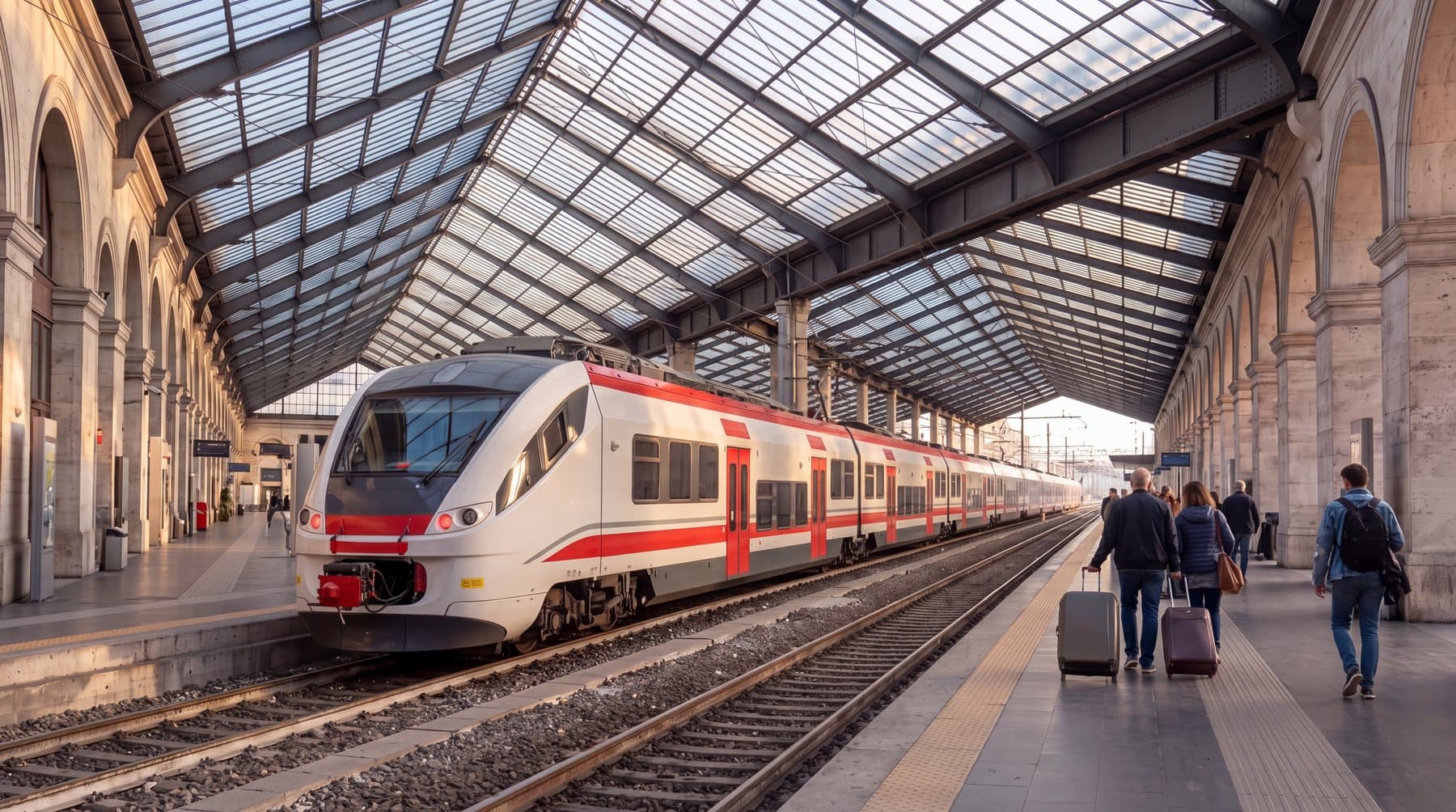
Sperlonga has no railway station. The nearest is Fondi-Sperlonga, about 10 km inland, and from there you need a local bus or a taxi to cover the last stretch. In summer the buses run often enough; out of season they thin out to a handful a day, and the last one back is earlier than you would like.
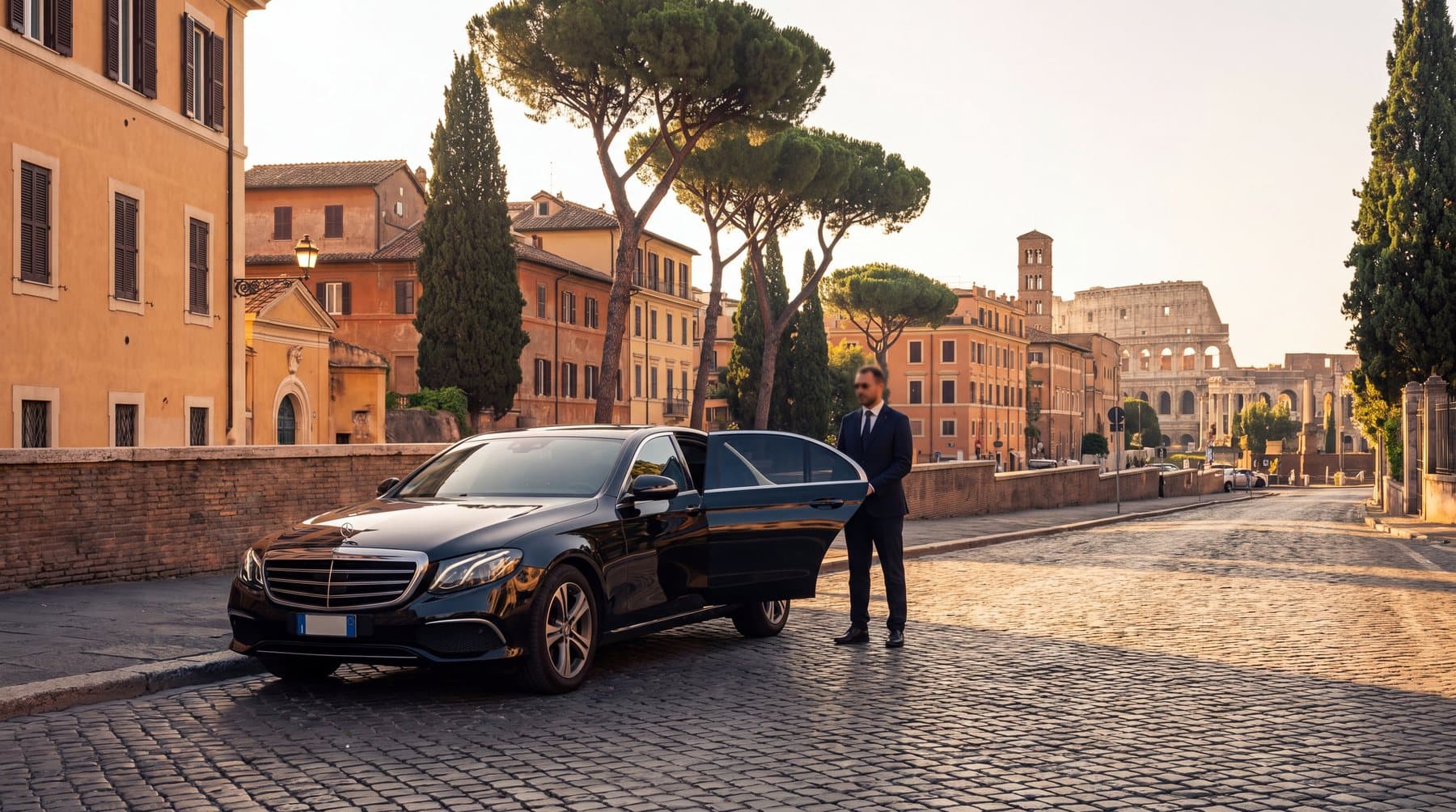
By road it is about two hours from central Rome and a little over an hour and a half from Ciampino. Parking in August is its own problem: the car parks above the village fill by mid-morning and the alternative is a long walk uphill. A private transfer drops you at the edge of the old town and removes both the connection and the parking.
When to come
June and September are the best compromise: the sea is warm, the village is awake, and you can still find a table. July and August are Italian summer at full volume, with the beaches organised into establishments and the lanes busy until late. Out of season Sperlonga is quiet to the point of being closed, which some people come for deliberately.