Respuesta rápida
Alójate en Amalfi si quieres la mejor combinación de precio, transporte y ambiente local. Alójate en Positano si el glamour, los beach clubs y las vistas de Instagram te importan más que el presupuesto. La mayoría de los visitantes primerizos se marchan más contentos de Amalfi: cuesta un 40 % menos y es mucho más fácil moverse por ella.
¿Has elegido Positano?
Traslado privado aeropuerto de Nápoles → Positano
Precio fijo desde €156. Puerta a puerta, seguimiento de vuelo incluido. Sin colas, sin sorpresas: directo a tu hotel en los acantilados.
Reserva el traslado a Positano →| Positano | Amalfi | |
|---|---|---|
| Hotel de gama media (temporada alta) | €250–500 / noche | €120–300 / noche |
| Terreno del centro | Muy empinado: más de 200 escalones | Mayormente llano, transitable a pie |
| Calidad de la playa principal | ★★★★ Spiaggia Grande (arena) | ★★★ Marina Grande (cantos) |
| Conexiones de autobús | Limitadas, abarrotadas en verano | Frecuentes a Sorrento y Salerno |
| Rutas de ferry | Capri, Amalfi, Salerno | Capri, Positano, Salerno, Minori |
| Relación calidad-precio en restaurantes | Enfocados al turista, €18–35/plato | Más locales, €12–25/plato |
| Vida nocturna | Bares de cócteles, Music on the Rocks | Más tranquila, aperitivo en la plaza |
| Compras | Lino de diseño, sandalias artesanales | Limoncello, cerámica, papel |
| Mejor para familias | Difícil (escaleras, carritos) | ★★★★ Llano, apto para carritos |
| Mejor para parejas | ★★★★★ Romántico, vistas al atardecer | ★★★★ Con encanto, menos masificado |
| Excursiones de un día a Ravello | 1 h o más en autobús (con transbordo) | 25 min en autobús, directo |
| Aparcamiento | €5–8/hora, muy limitado | €3–5/hora, garaje Luna Rossa |
| Traslado desde Nápoles | ~90 min, desde €156 | ~75 min, desde €168 |
| Tamaño del pueblo (zona transitable a pie) | Pequeño: 1 calle principal + escaleras | Más grande: plaza + casco antiguo |
| Nuestro veredicto | Capricho de 1–2 noches | Mejor base para 3 noches o más |
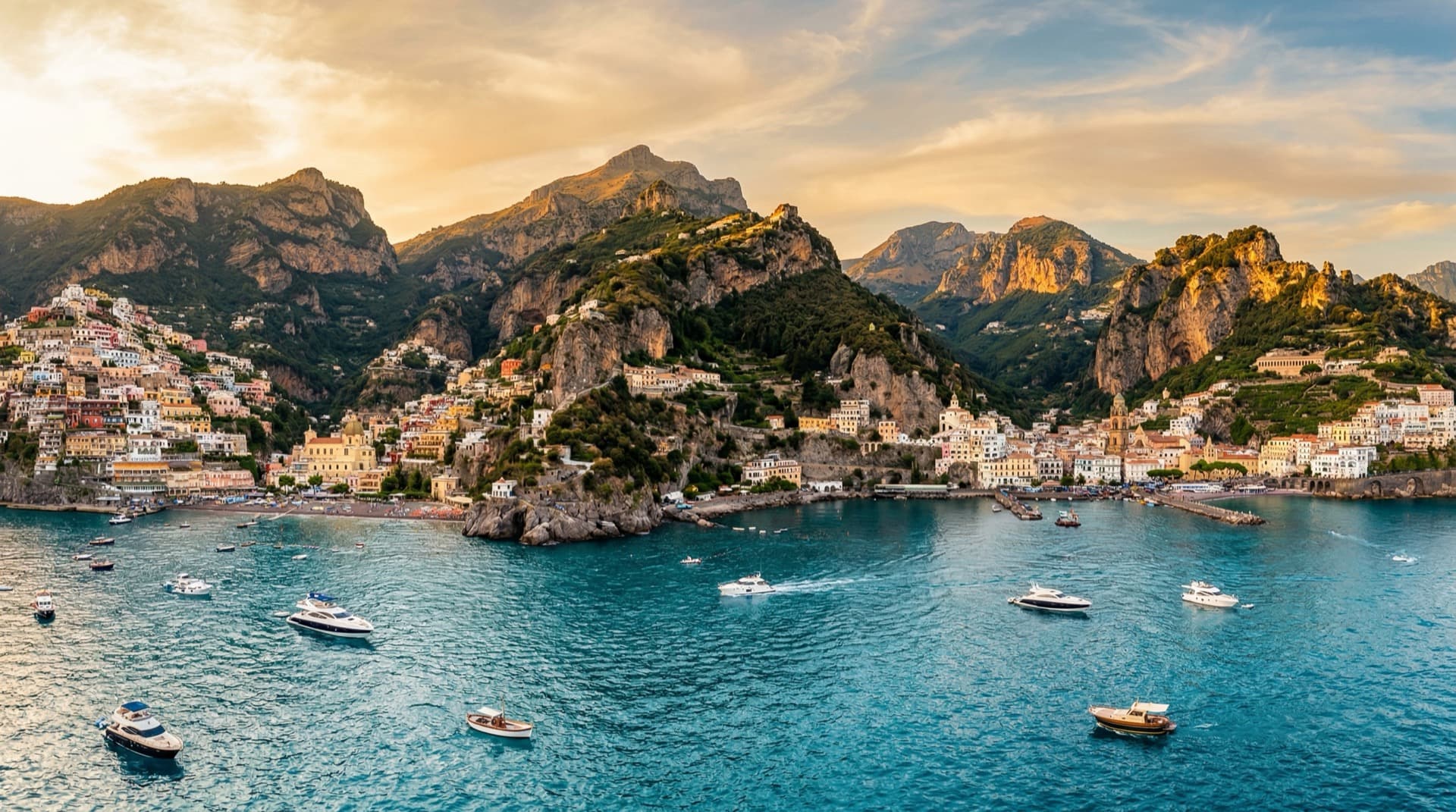
Positano y Amalfi son los dos pueblos más famosos de la Costa Amalfitana, y cada año miles de viajeros se enfrentan al mismo dilema: ¿en cuál debería alojarme? Como alguien que ha vivido en este litoral durante años, trabajando con huéspedes en ambos pueblos, la respuesta depende por completo del tipo de vacaciones que quieras. Esta guía compara los dos pueblos en todos los factores que importan: ambiente, playas, gastronomía, transporte, vida nocturna, compras, idoneidad para familias y parejas, y precios reales, y después ofrece un veredicto claro y sincero.

El ambiente
Positano: glamour en un acantilado
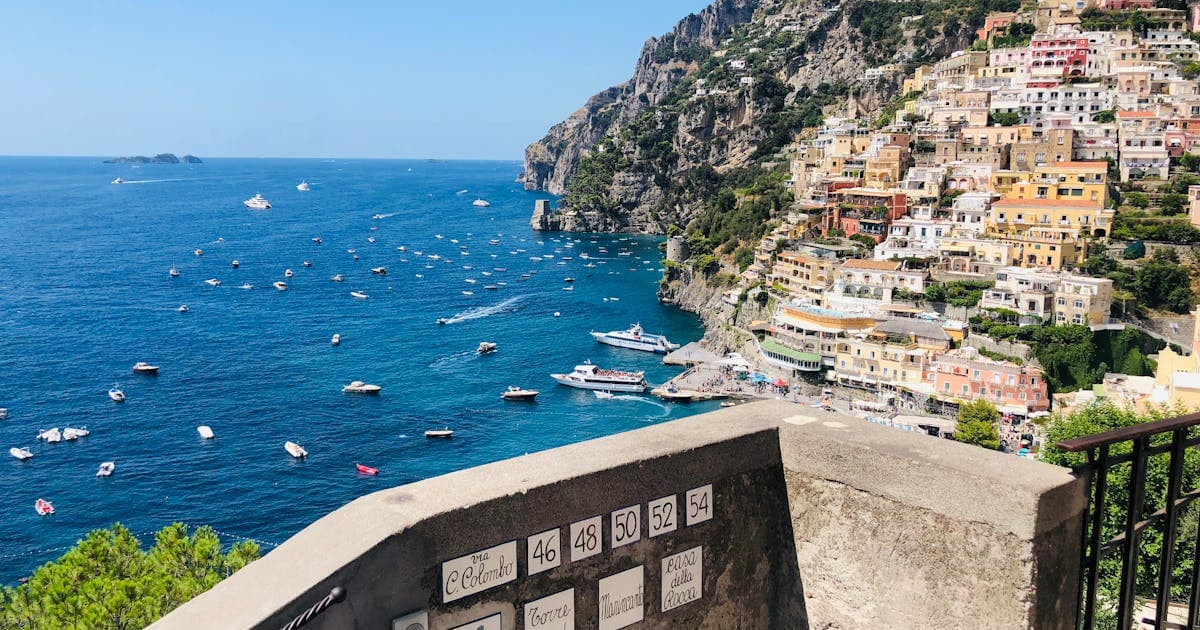
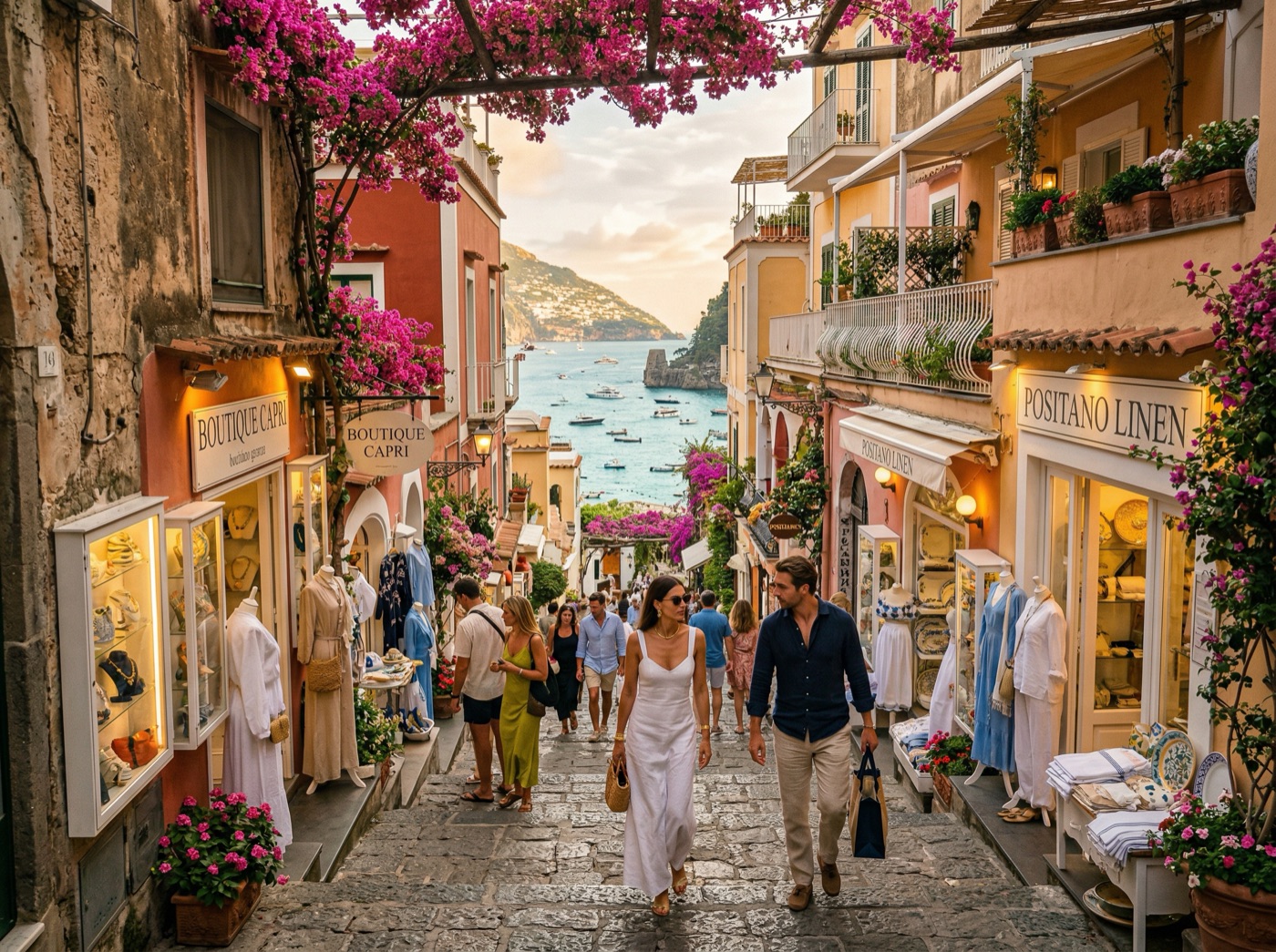
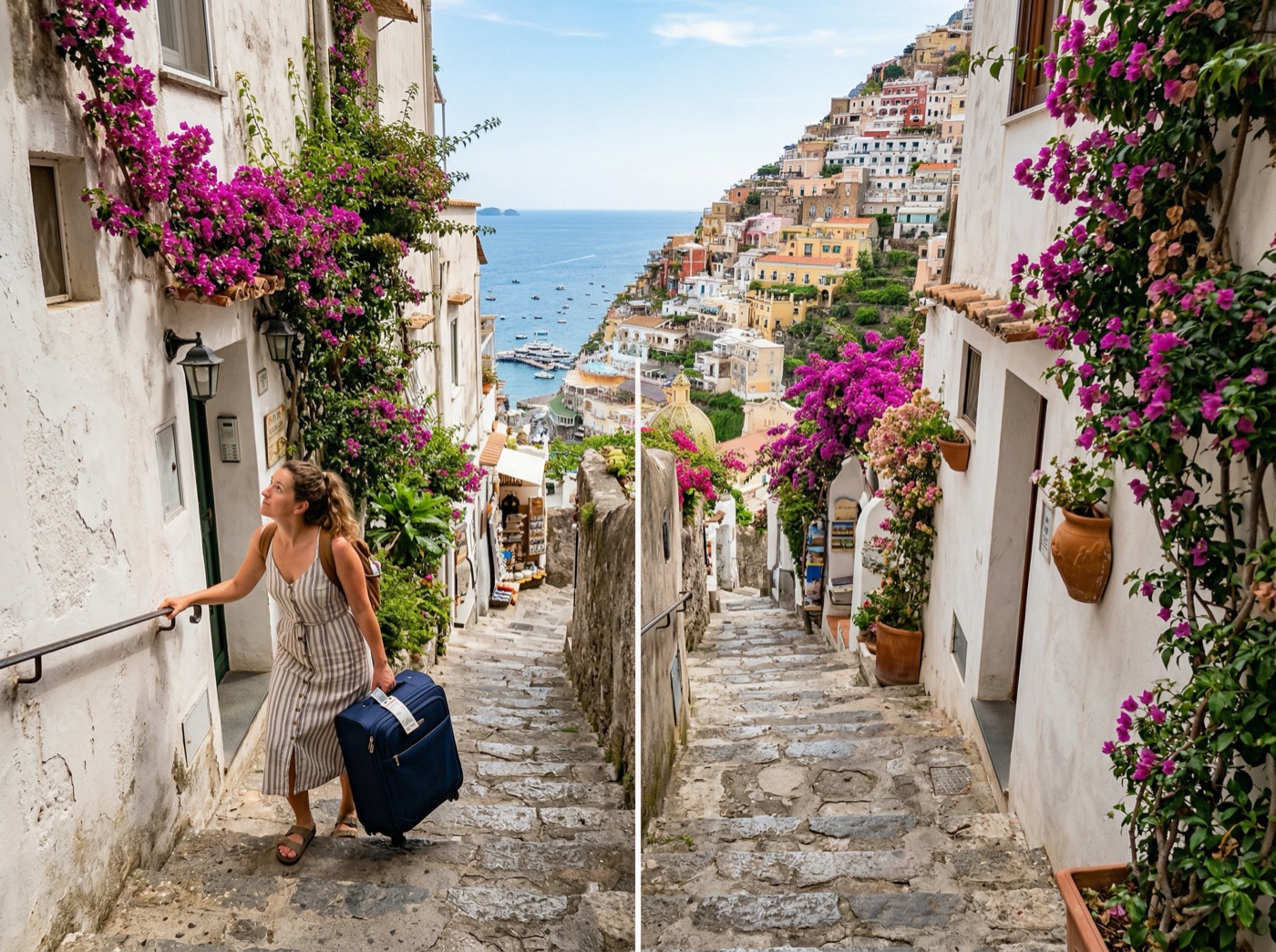
Positano es vertical. El pueblo se derrama por una abrupta pared de acantilado en una cascada de casas de colores pastel, buganvillas y estrechas callejuelas escalonadas. Es innegablemente fotogénico —probablemente el pueblo más fotografiado de Italia— y lo sabe. El ambiente es chic y muy vacacional: hoteles boutique, tiendas de lino de diseño, beach clubs y bares de cócteles con vistas al atardecer. Positano atrae a un público acomodado, y el pueblo tiene un aire claramente aspiracional. John Steinbeck lo describió como un «lugar de ensueño» en 1953, y esa reputación no ha hecho más que intensificarse con Instagram.
Amalfi: historia y bullicio
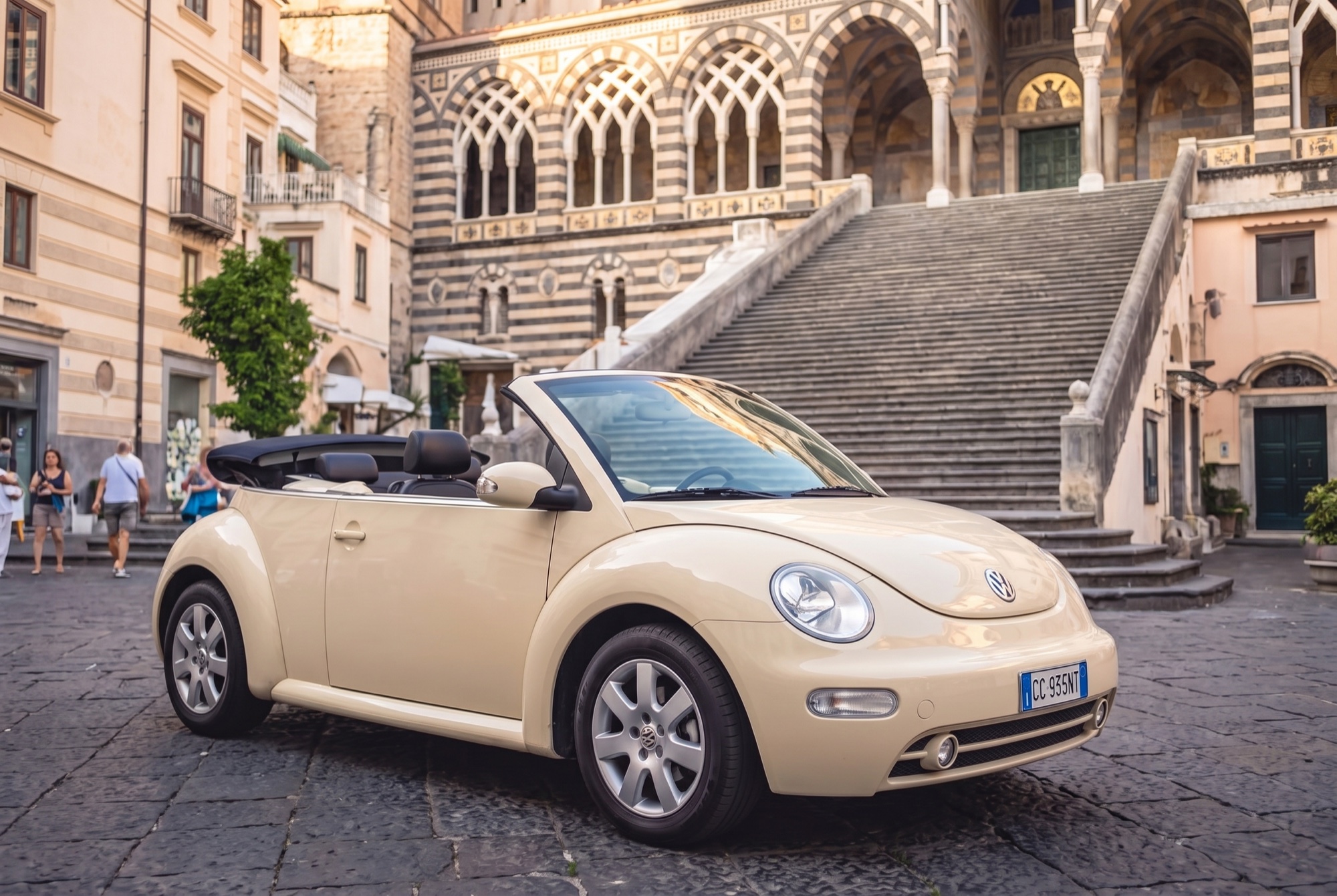
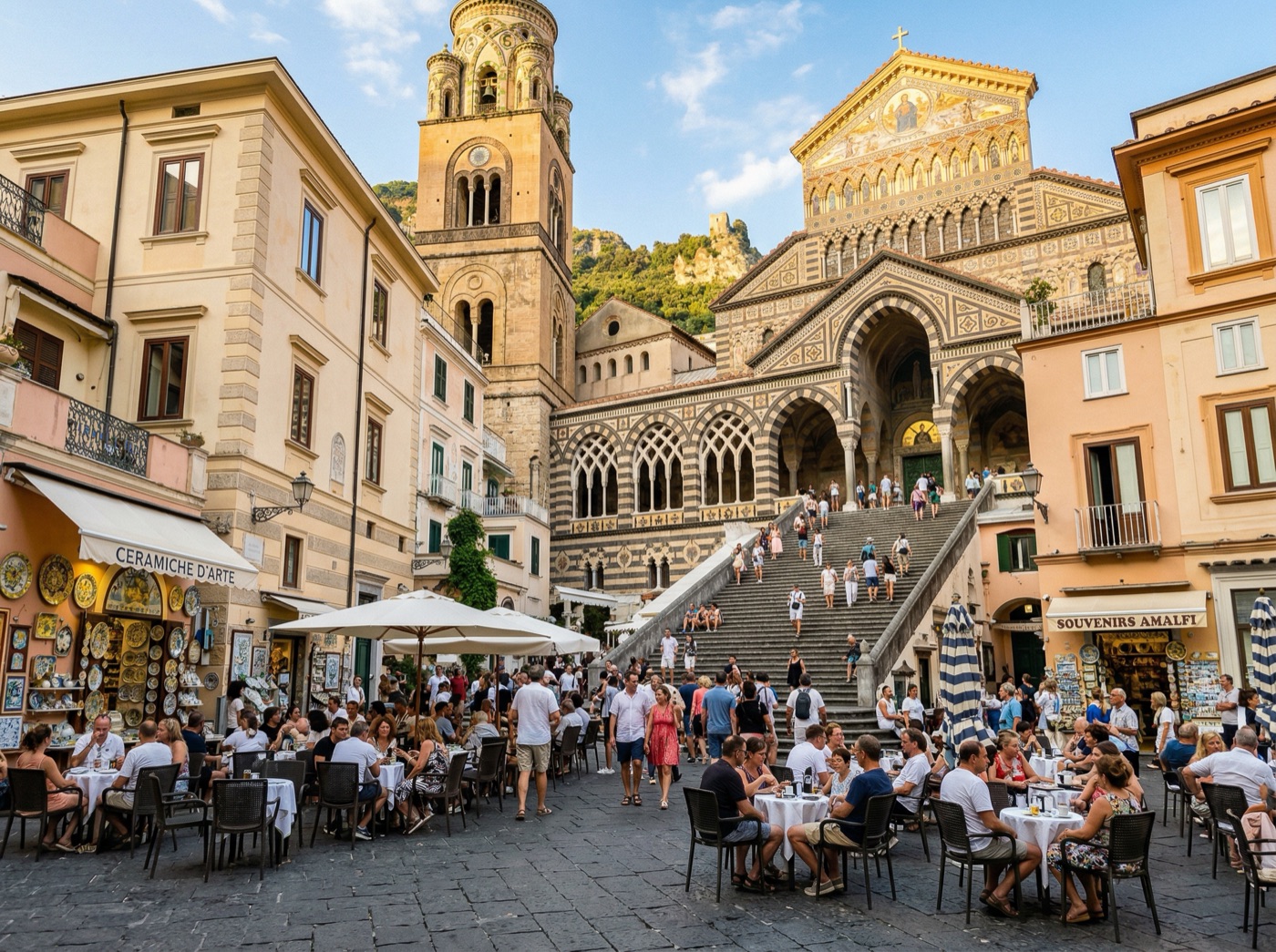
Amalfi es más llana, más animada y de raíces históricas más profundas. Antaño capital de una poderosa república marítima que rivalizaba con Venecia, el pueblo conserva un fuerte carácter local del que Positano a veces carece. Su pieza central es la Catedral de San Andrés (Duomo di Amalfi), con su llamativa fachada a rayas y su gran escalinata que asciende desde la plaza principal. Detrás de la catedral, las estrechas callejuelas del casco antiguo se sienten auténticamente habitadas, con trattorias familiares, panaderías que venden sfogliatelle y ancianos charlando en los portales. Amalfi se siente como un pueblo de verdad, no como un decorado.
Arquitectura y monumentos
Positano
La arquitectura de Positano es su paisaje. Los edificios pastel que descienden en cascada por el acantilado son el atractivo. Más allá del entorno fotogénico, hay una iglesia destacable: Santa Maria Assunta, con su característica cúpula de azulejos de mayólica visible desde cualquier punto del pueblo. El icono bizantino de la Virgen Negra que alberga en su interior merece una mirada. Por lo demás, Positano tiene más que ver con el entorno que con los monumentos individuales.
Amalfi
Amalfi tiene mucho más que ver. El Duomo di Amalfi, del siglo IX, y su Claustro del Paraíso (Chiostro del Paradiso) son realmente impresionantes: arcos moriscos, sarcófagos y frescos descoloridos. El Arsenale della Repubblica es un astillero medieval convertido en museo que documenta el imperio marinero de Amalfi. El Museo del Papel (Museo della Carta) muestra la tradición papelera del pueblo, del siglo XIII, en un molino de agua en funcionamiento. Y un paseo de 15 minutos por la Valle dei Mulini lleva hasta las atmosféricas ruinas de antiguos molinos de papel reconquistados por una vegetación selvática: uno de los rincones ocultos más fotografiados de la costa.
Playas
Playas de Positano
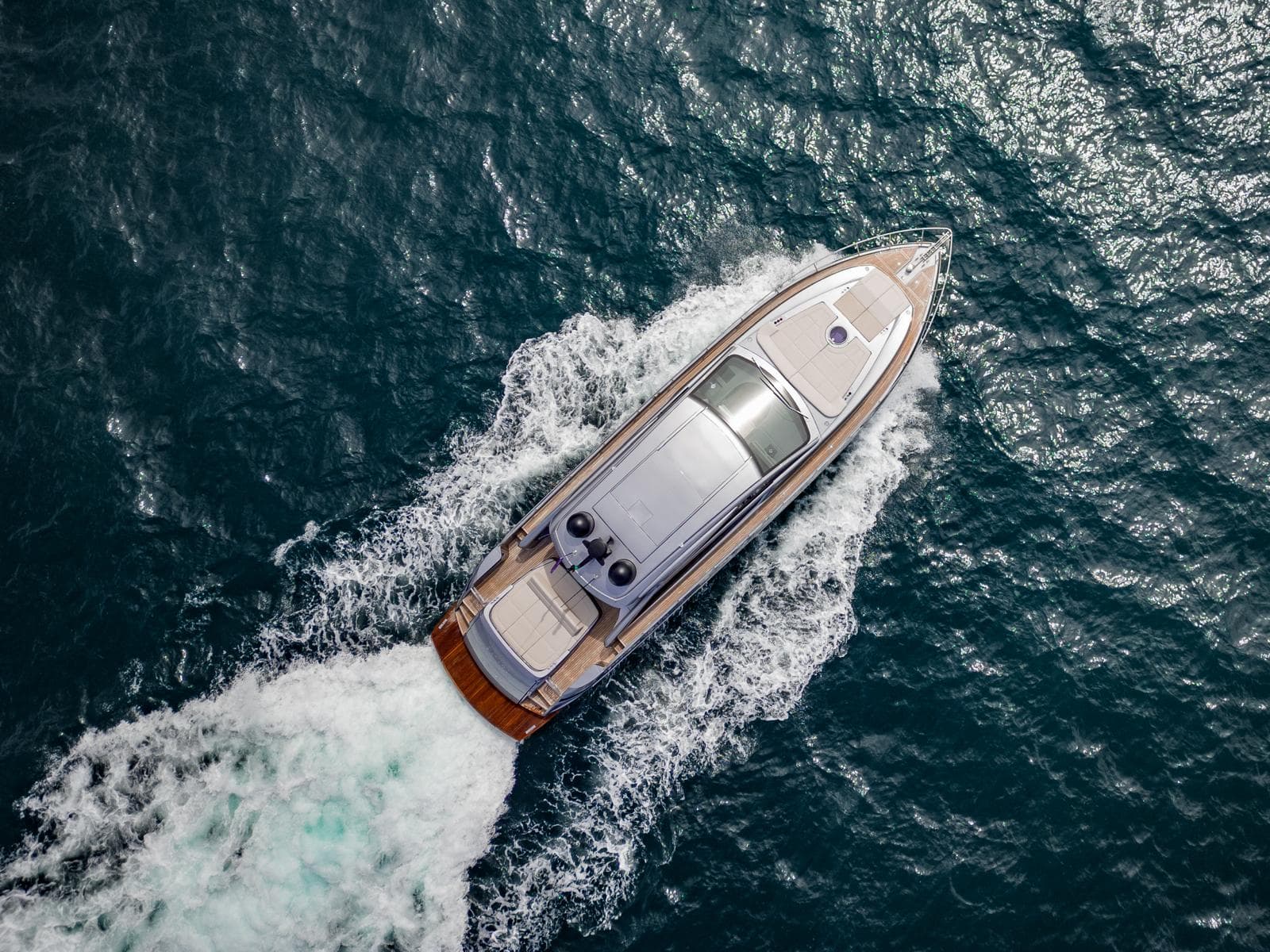
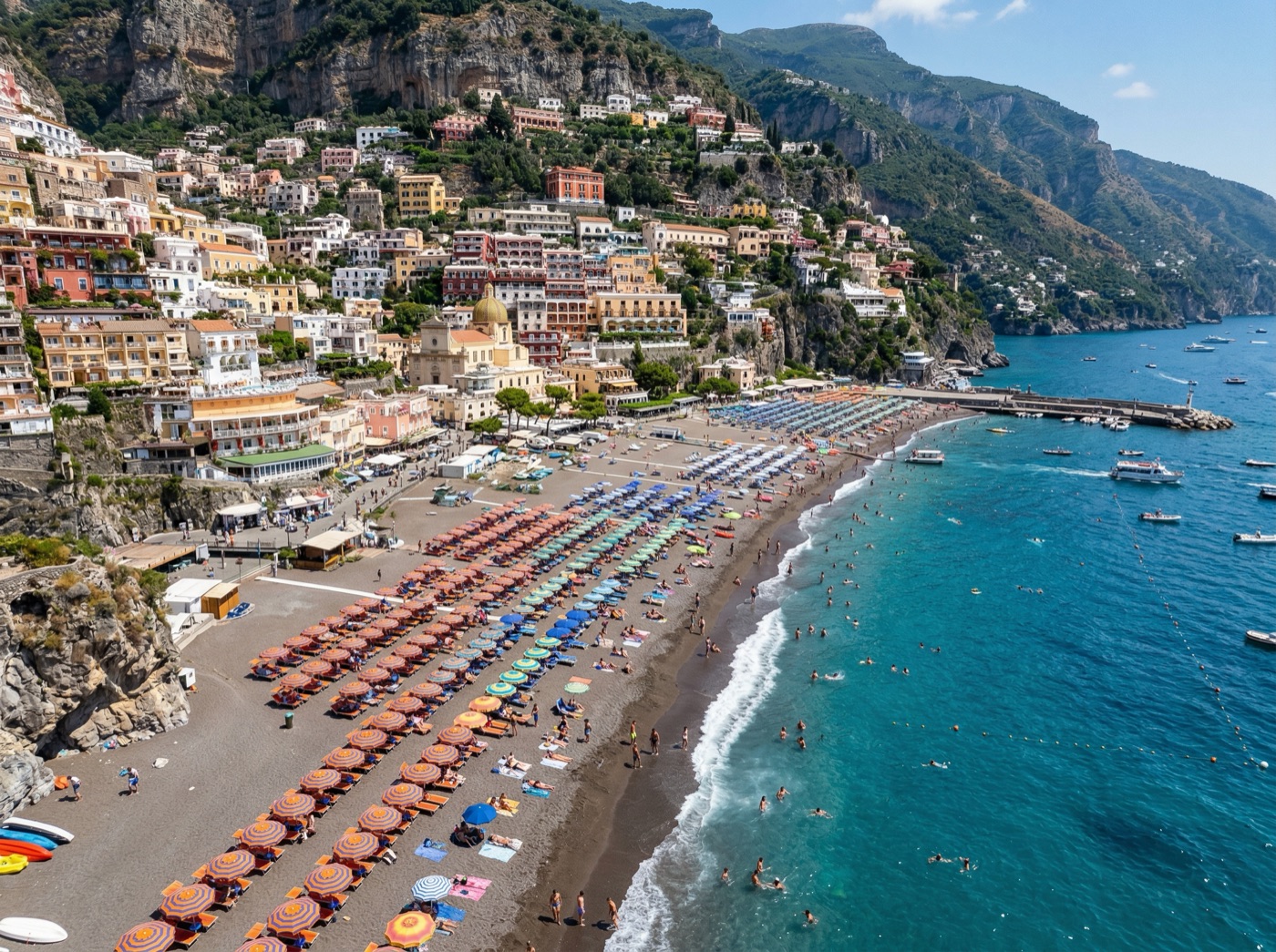
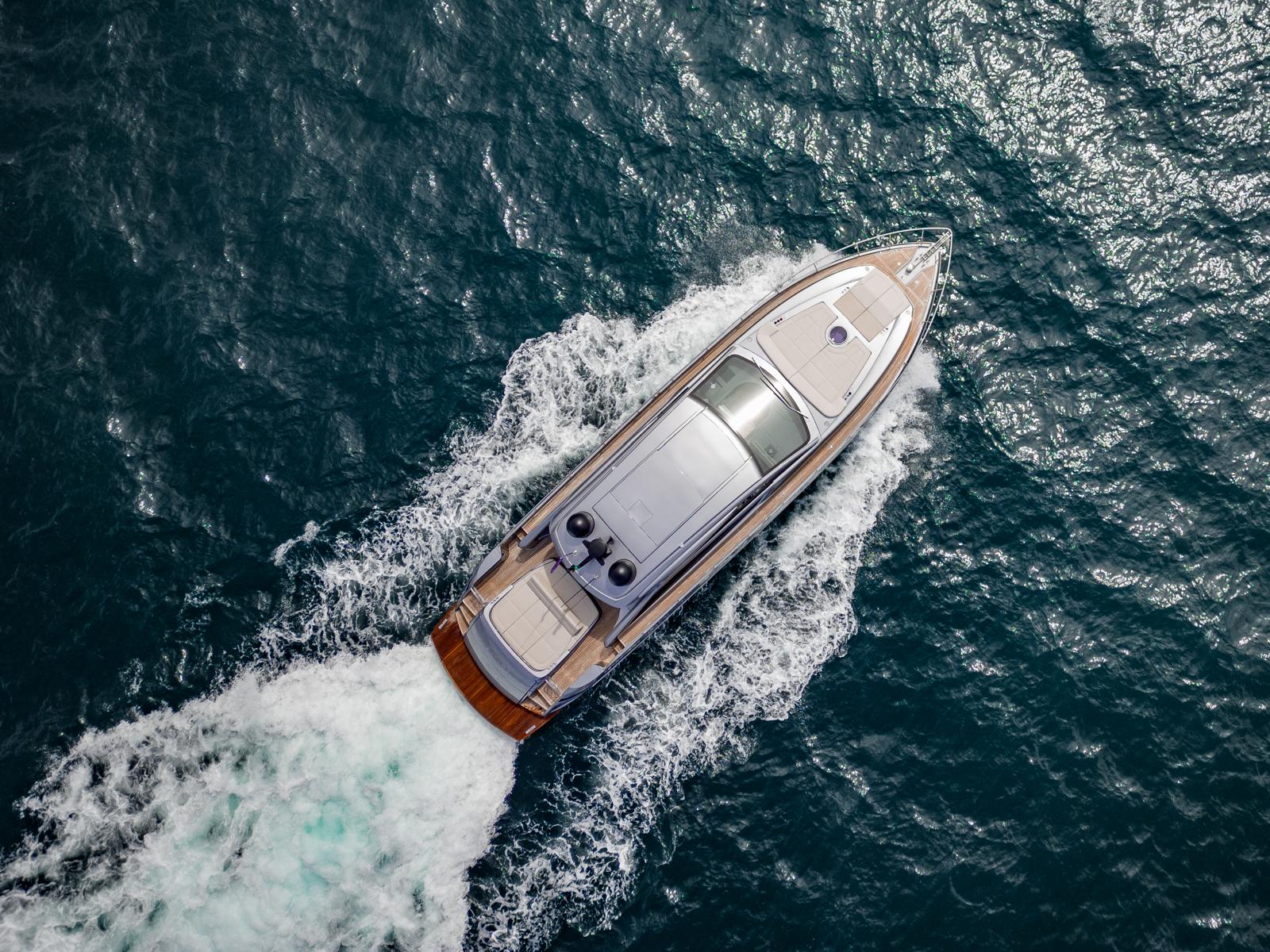
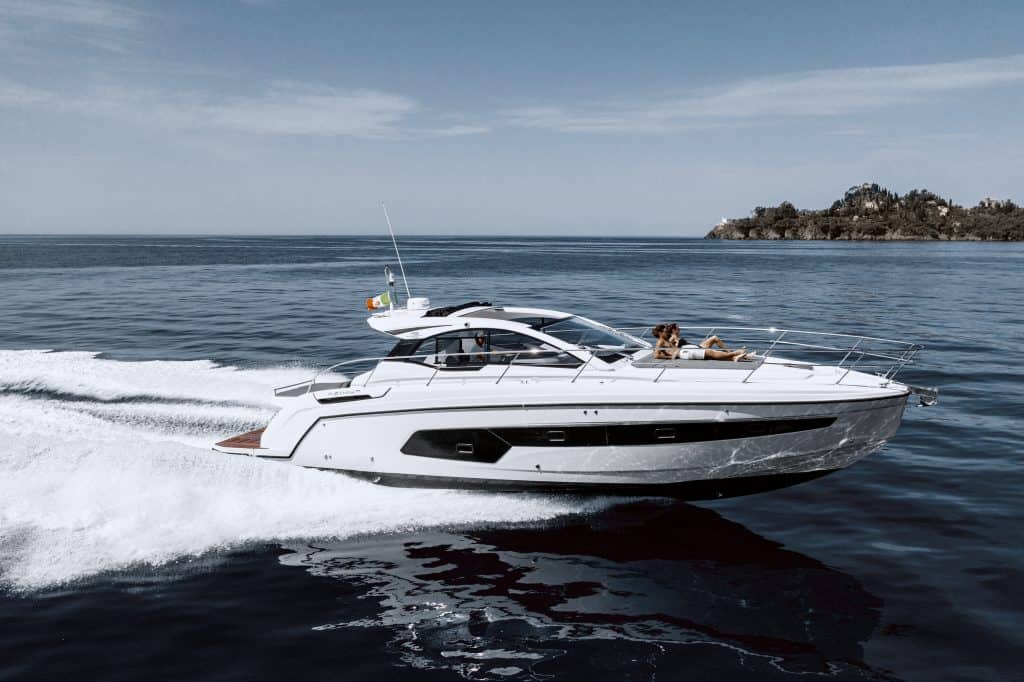
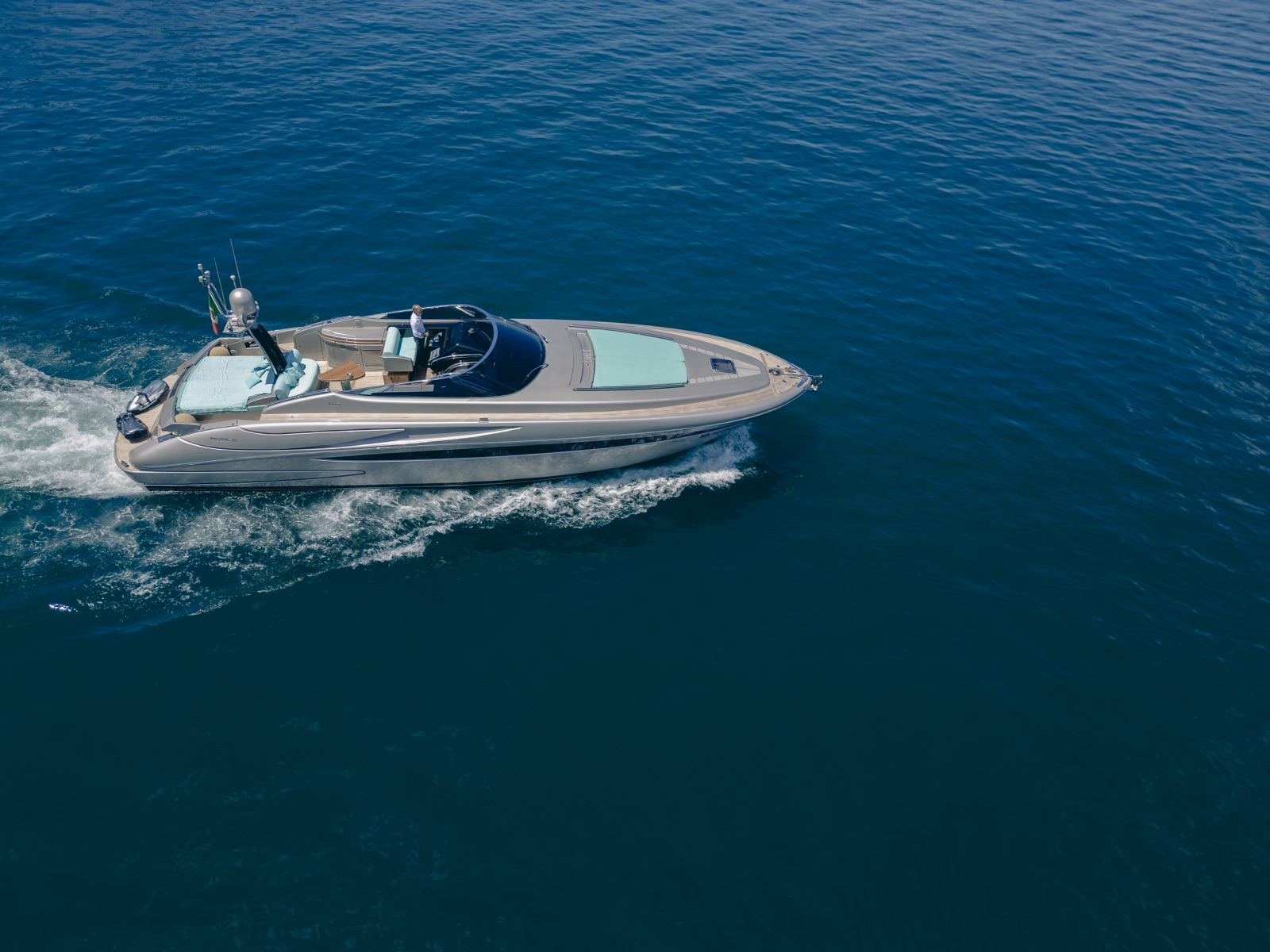
Positano lleva ventaja en cuanto a playas. Spiaggia Grande es la playa principal: una amplia media luna de arena oscura y cantos justo debajo del centro del pueblo. El alquiler de tumbonas cuesta €15–25 según la fila. En verano está muy concurrida, pero es innegablemente bonita. Para algo más tranquilo, la playa de Fornillo queda a un corto paseo hacia el oeste por un sendero al borde del acantilado. Fornillo tiene un aire más relajado, con un puñado de chiringuitos y aguas más cristalinas para nadar. Otras pequeñas calas —Laurito, Arienzo y las islas Li Galli— solo son accesibles en barco. Un chárter de barco privado desde €800/día o un alquiler de barco en la Costa Amalfitana es la mejor manera de descubrirlas.
Playas de Amalfi
La playa principal de Amalfi (Marina Grande) es más pequeña y funcional que la de Positano. Las tumbonas cuestan €10–20, pero el espacio se llena rápido en temporada alta. Para nadar mejor, camina 10 minutos hacia el oeste por el sendero costero hasta la playa de Duoglio: aguas más cristalinas y menos gente. El pueblo vecino de Atrani (a 5 minutos a pie rodeando el promontorio) tiene una playa encantadora y poco concurrida, con un puñado de bares locales. Amalfi es también el punto de partida de las excursiones en barco a la Gruta Esmeralda y a playas más apartadas a lo largo de la costa.
Mejor para familias
Ganador: Amalfi, por amplio margen.
Positano resulta realmente complicado con niños pequeños. Todo el pueblo son escaleras: contamos más de 200 escalones desde la calle principal hasta la playa. Si viajas con un carrito, lo cargarás en brazos. Las callejuelas empinadas son agotadoras para los más pequeños, y la playa supone un largo descenso (y una subida aún más larga de vuelta). Los niños mayores y los adolescentes lo disfrutarán, pero para familias con menores de 5 años, Positano es poco práctico.
El centro llano de Amalfi lo hace muchísimo más fácil con niños pequeños. La plaza es apta para carritos, la playa queda a un corto paseo de la plaza principal y los restaurantes son más acogedores con las familias. Las heladerías jalonan la calle principal, y el breve trayecto en autobús hasta los jardines de Villa Cimbrone, en Ravello, es una excursión de medio día sencilla que los niños disfrutan. Para alojamiento familiar, echa un vistazo a los alojamientos aptos para familias en la Costa Amalfitana.
Mejor para parejas y lunas de miel
Ganador: Positano para un capricho de 1–3 noches. Amalfi como base romántica de 5 noches o más.
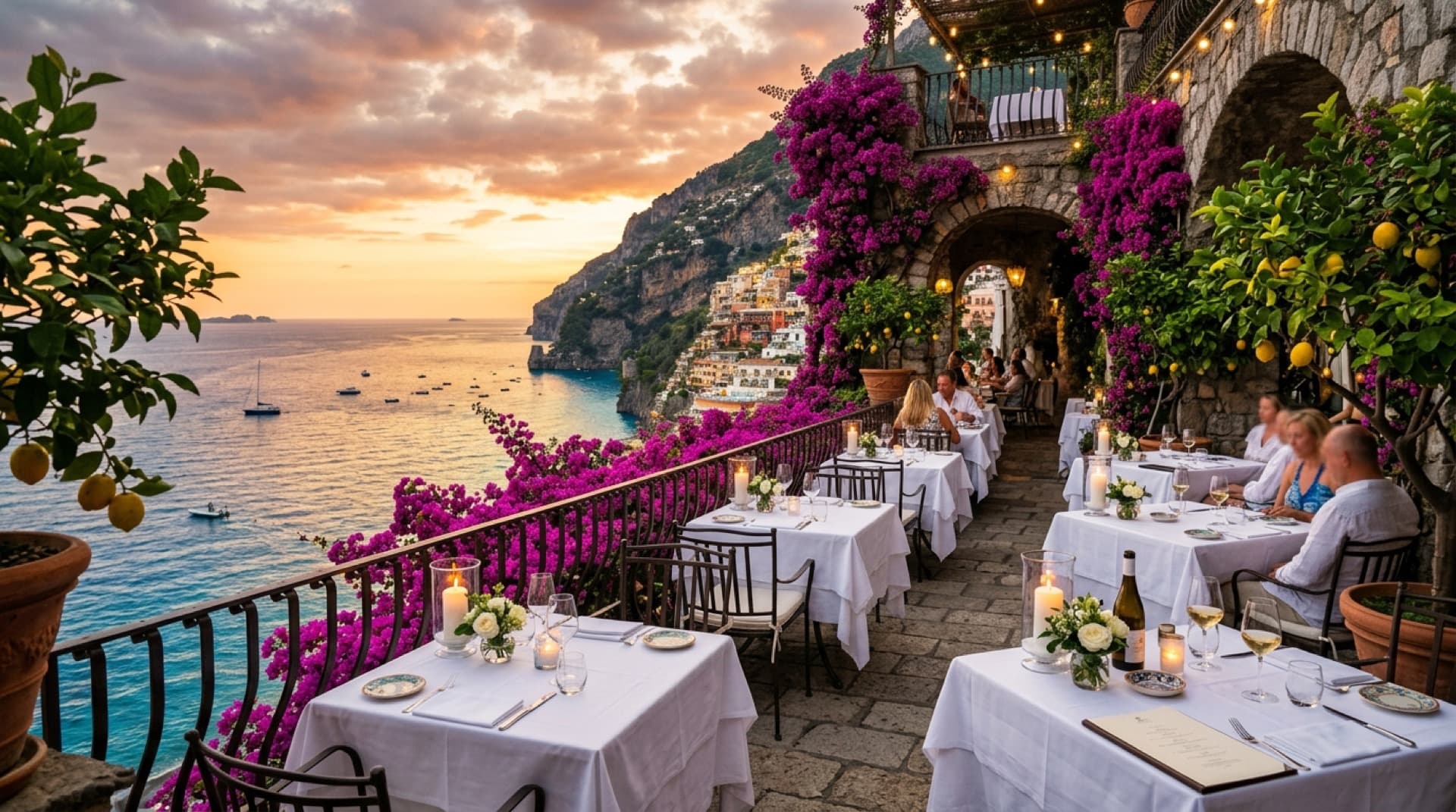
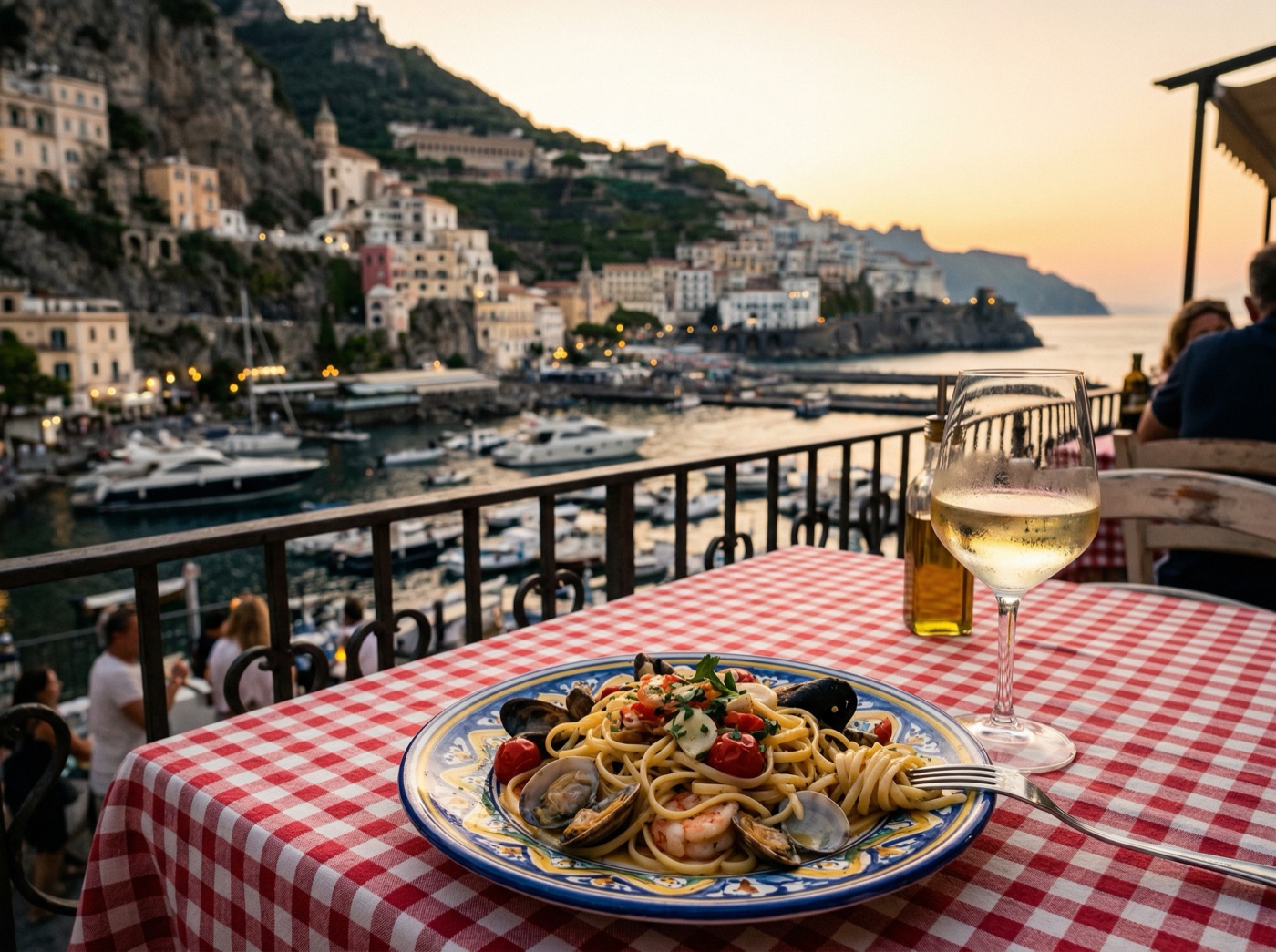
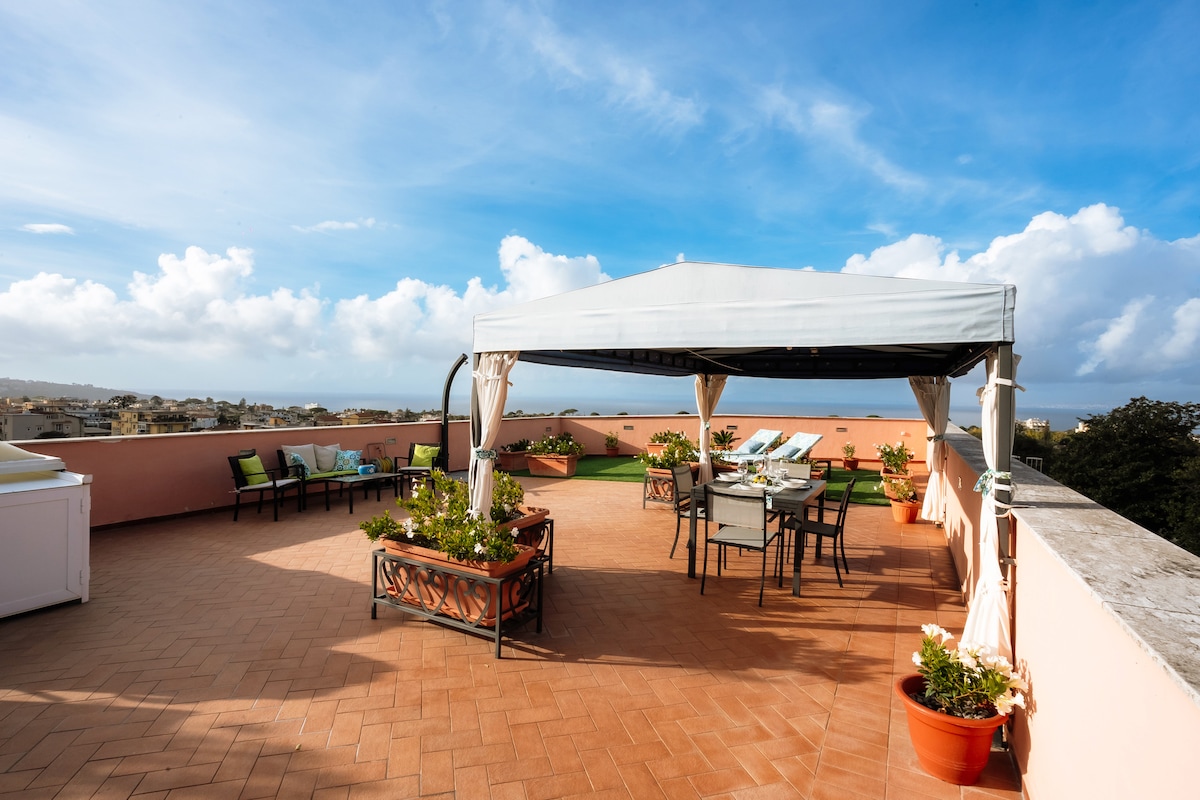
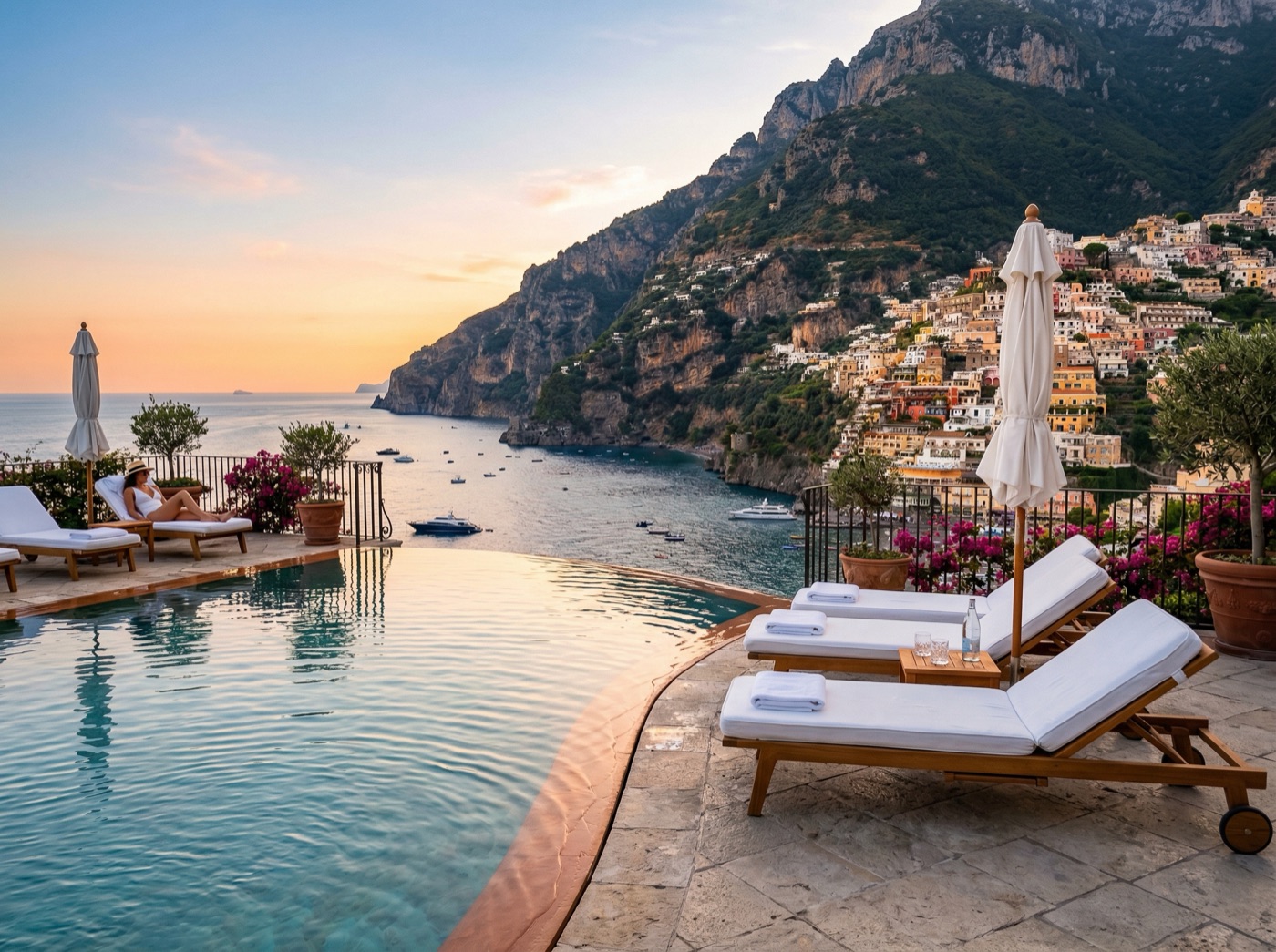
Positano es el destino clásico de luna de miel, y se gana esa reputación. El atardecer desde una terraza con vistas a la bahía, una cena en un restaurante a la luz de las velas con el mar a tus pies, cócteles en un bar al borde del acantilado: el romance está integrado en la propia arquitectura. Hoteles como Le Sirenuse y Villa Treville son hoteles de luna de miel de fama mundial, e incluso las opciones de gama media suelen tener vistas espectaculares.
Amalfi es menos obviamente romántica, pero ofrece otro tipo de intimidad. Pasear por las estrechas callejuelas del casco antiguo al atardecer, compartir un plato de scialatielli ai frutti di mare en una mesa de una plaza tranquila, ver llegar las barcas de pesca al atardecer desde el muro del puerto: es romántica de una forma más serena y auténtica. Para estancias más largas, Amalfi te brinda las veladas románticas sin la sensación constante de estar pagando por el entorno.
Restaurantes y gastronomía
Comer en Positano
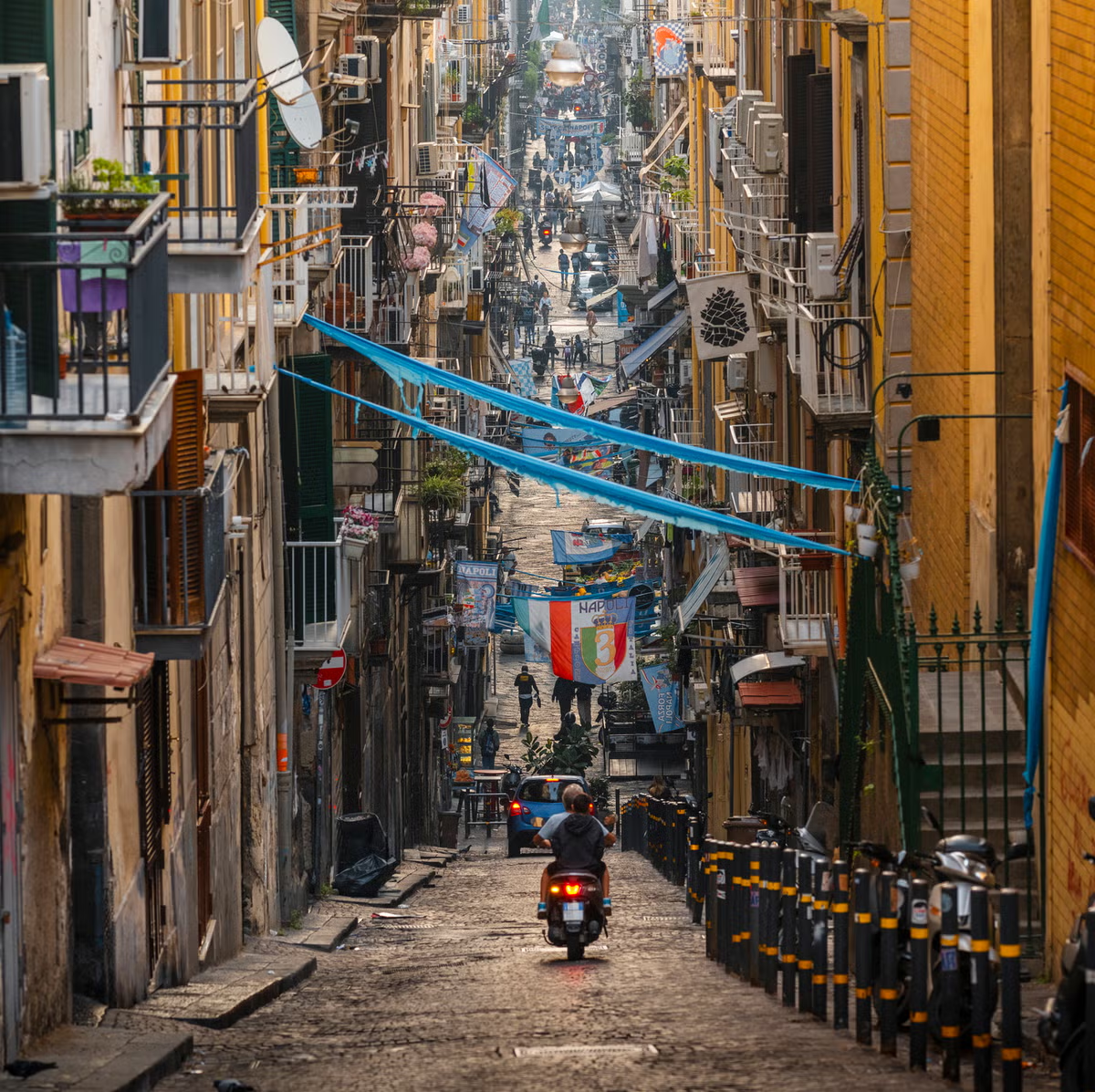
Positano tiene restaurantes excelentes, pero suelen ser caros y orientados al turista. Cuenta con pagar €18–35 por un plato principal en un restaurante de gama media. Destacan Da Vincenzo (cocina napolitana clásica, principales desde €18), Next2 (marisco con vistas, principales desde €22) y La Tagliata (un restaurante familiar en las colinas con festines de precio fijo a €35, vino incluido). Para una comida informal, los restaurantes junto a la playa de Spiaggia Grande sirven marisco fresco y Peroni bien fría: no es alta cocina, pero está perfectamente ubicado. Consejo económico: los puestos de panini de la Via dei Mulini venden excelentes bocadillos por €5–8.
Comer en Amalfi
Amalfi ofrece mejor relación calidad-precio y una gama más amplia de opciones para comer. Los platos principales en buenos restaurantes oscilan entre €12–25. Trattoria da Maria y Da Gemma son favoritos de toda la vida que sirven cocina costera tradicional. La panadería Andrea Pansa, en la plaza principal, elabora repostería desde 1830: su sfogliatella (€2,50) está entre las mejores de la costa. Para algo especial, el diminuto pueblo vecino de Atrani tiene varios restaurantes que se sienten genuinamente locales en lugar de orientados al turista. Prueba Le Arcate para una cena de marisco en la playa con los pies en la arena.
Vida nocturna y ambiente vespertino
Vida nocturna en Positano
Positano tiene la mejor vida nocturna, aunque «vida nocturna» en la Costa Amalfitana significa bares de cócteles, no discotecas. Music on the Rocks es el bar más famoso de la costa: excavado en una cueva en la base de los acantilados, organiza noches de DJ en verano con el mar rompiendo abajo. En otros puntos, el Franco's Bar, en la colina, sirve excelentes Negronis con vistas panorámicas, y el Aldo's Cocktail Bar del Hotel Le Sirenuse es un lugar para ver y dejarse ver. La mayoría de los bares cierran hacia la 1 de la madrugada, y el ambiente es de sofisticación relajada más que de fiesta.
Vida nocturna en Amalfi
Amalfi es más tranquila por las noches. La plaza principal se llena de gente tomando el aperitivo a partir de las 19:00: pide un Spritz (€8–10) y observa el passeggiata. El Gran Caffè de la plaza es el lugar clásico. El paseo marítimo tiene algún que otro bar de vinos, y el Lo Smeraldino de Atrani ofrece copas en la playa al caer la noche. Amalfi no intenta competir con Positano en vida nocturna, y si buscas entretenimiento de madrugada, te decepcionará. Pero si prefieres una copa de vino local de Furore en una plaza tranquila antes que un bar de cócteles abarrotado, Amalfi cumple.
Compras
Compras en Positano
Positano es famosa por sus sandalias de cuero hechas a mano: artesanos como Safari y Da Costanzo te hacen un par a medida mientras esperas (€50–120). La ropa de lino Moda Positano se vende en decenas de boutiques a lo largo de la Via dei Mulini. La cerámica, el limoncello y el arte local llenan las tiendas más pequeñas. Comprar en Positano es agradable, pero caro: la misma cerámica cuesta entre un 30 y un 50 % menos en Vietri sul Mare o incluso en Amalfi.
Compras en Amalfi
La especialidad de Amalfi es el papel hecho a mano: la familia Amatruda lo produce desde el siglo XIV, y su tienda vende preciosa papelería, cuadernos y láminas. El limoncello de productores locales es un poco más barato aquí que en Positano. Las cerámicas pintadas a mano son similares a las de Positano, pero por lo general con mejor relación calidad-precio. La calle comercial principal (Via Lorenzo d'Amalfi) tiene una buena mezcla de souvenirs turísticos y productos genuinamente artesanales.
Naturaleza y senderismo
Ambos pueblos son puertas de entrada a caminatas espectaculares, pero Amalfi ofrece más variedad.
Desde Positano: el famoso Sendero de los Dioses (Sentiero degli Dei) termina en Positano; más exactamente, termina en Nocelle (sobre Positano), desde donde se desciende 1.700 escalones hasta el pueblo. La caminata en sí empieza en Bomerano y dura unas 4 horas. Es la ruta más popular de la costa, y con razón: las vistas son extraordinarias.
Desde Amalfi: la Valle dei Mulini (Valle de los Molinos) es un corto paseo entre las atmosféricas ruinas de molinos de papel medievales. La caminata más larga de la Valle delle Ferriere (3 horas ida y vuelta) lleva hasta una cascada y un raro hábitat de helechos: sorprendentemente exuberante y selvático. Amalfi es también el punto de partida de la subida a Ravello por el antiguo sendero Scala-Minuta, que dura unos 45 minutos y evita por completo el autobús.
Aparcamiento y conducción
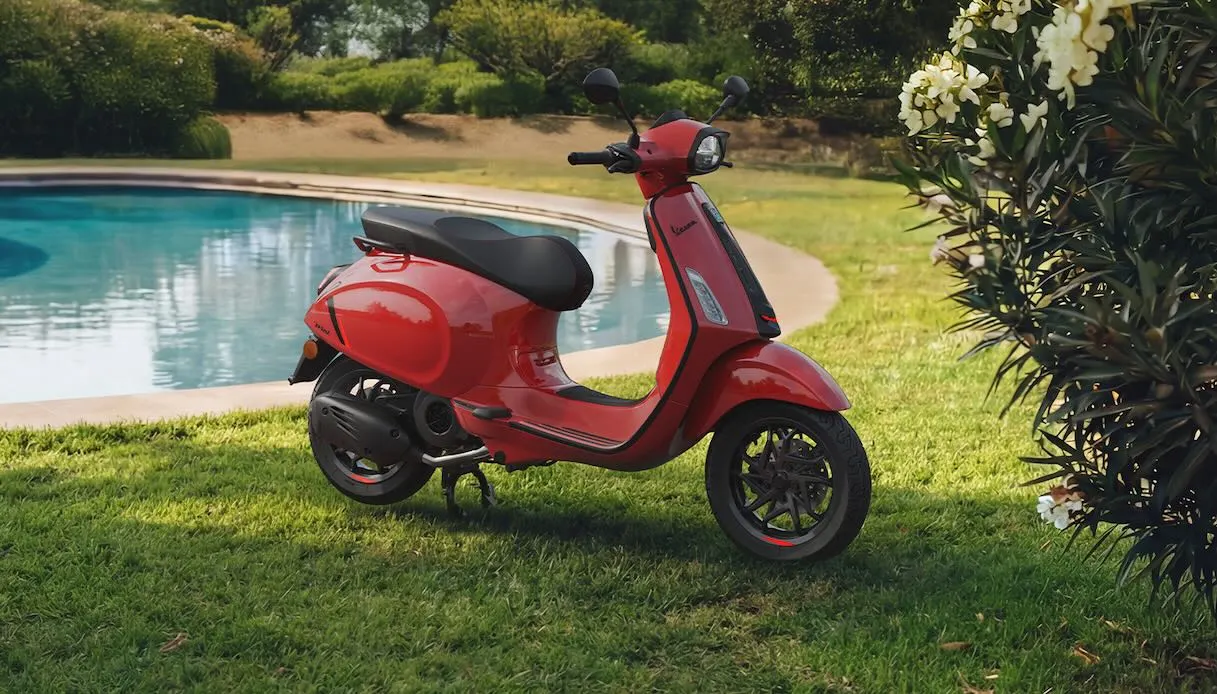
Si alquilas un coche, ambos pueblos son complicados para aparcar, pero Amalfi resulta algo menos doloroso.
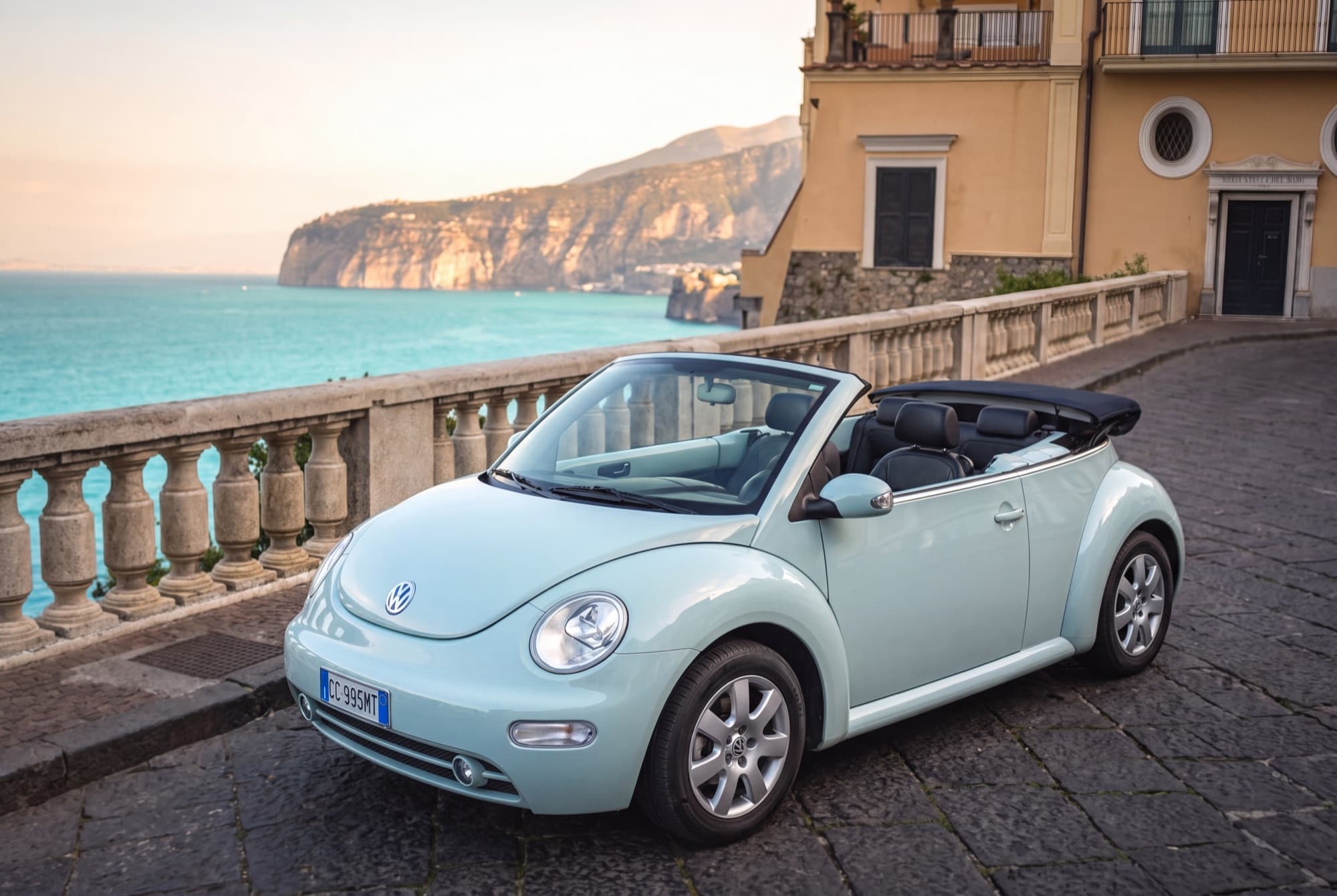
Positano: el aparcamiento en la calle apenas existe. Las pocas plazas se disputan todo el año. El principal aparcamiento, cerca de la parte alta del pueblo, cobra €5–8 por hora en verano. Nuestro consejo firme: deja el coche en Sorrento y coge el autobús, el ferry o un traslado privado a Positano.
Amalfi: el garaje subterráneo Luna Rossa, cerca del puerto, cobra €3–5 por hora (€25–35/día). Se llena a media mañana en julio y agosto, pero suele ser manejable en temporada media. También hay aparcamientos a lo largo de la carretera de acceso desde Salerno. Amalfi sigue sin ser un pueblo apto para el coche, pero es marginalmente menos estresante que Positano para quien conduce.
Cómo moverse
Transporte en Positano
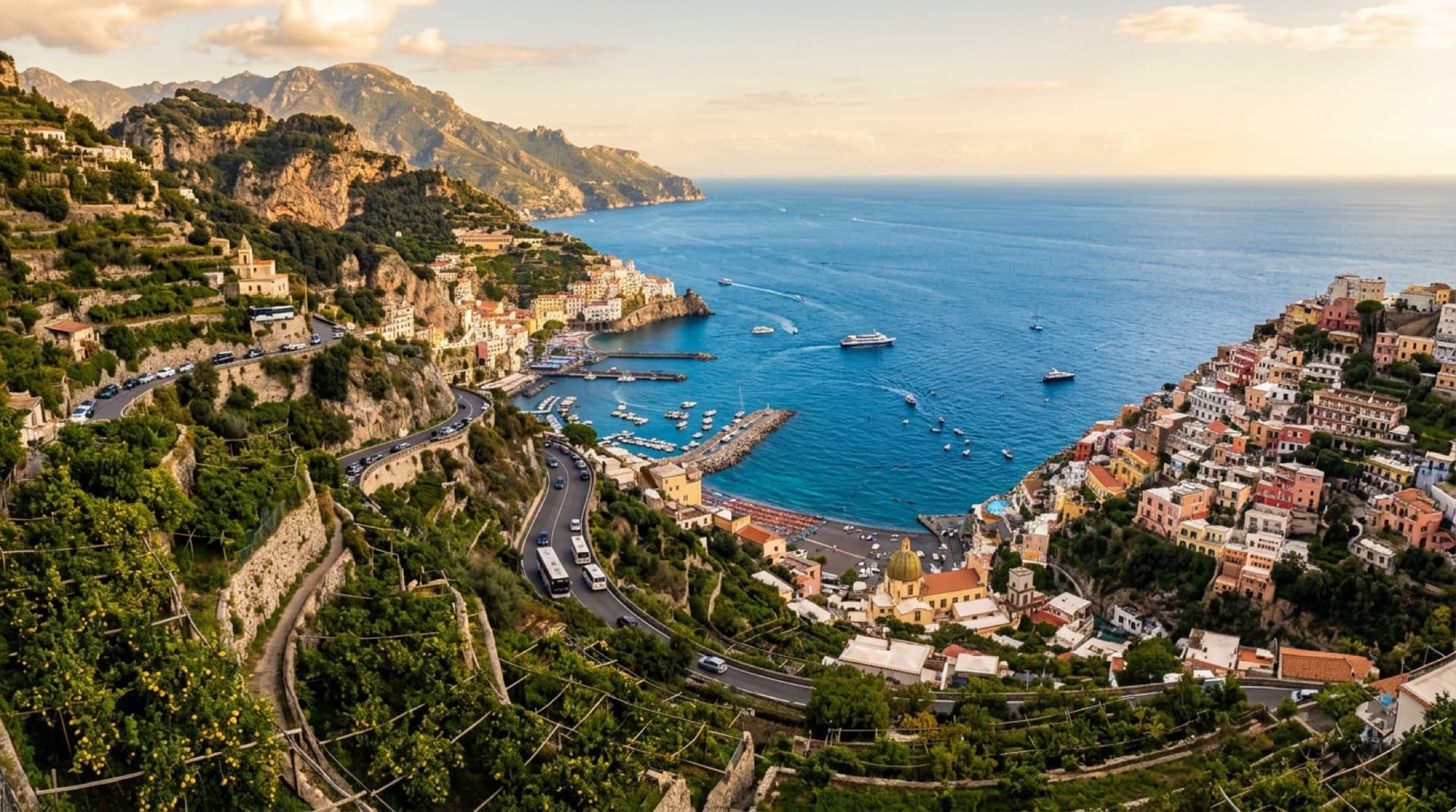
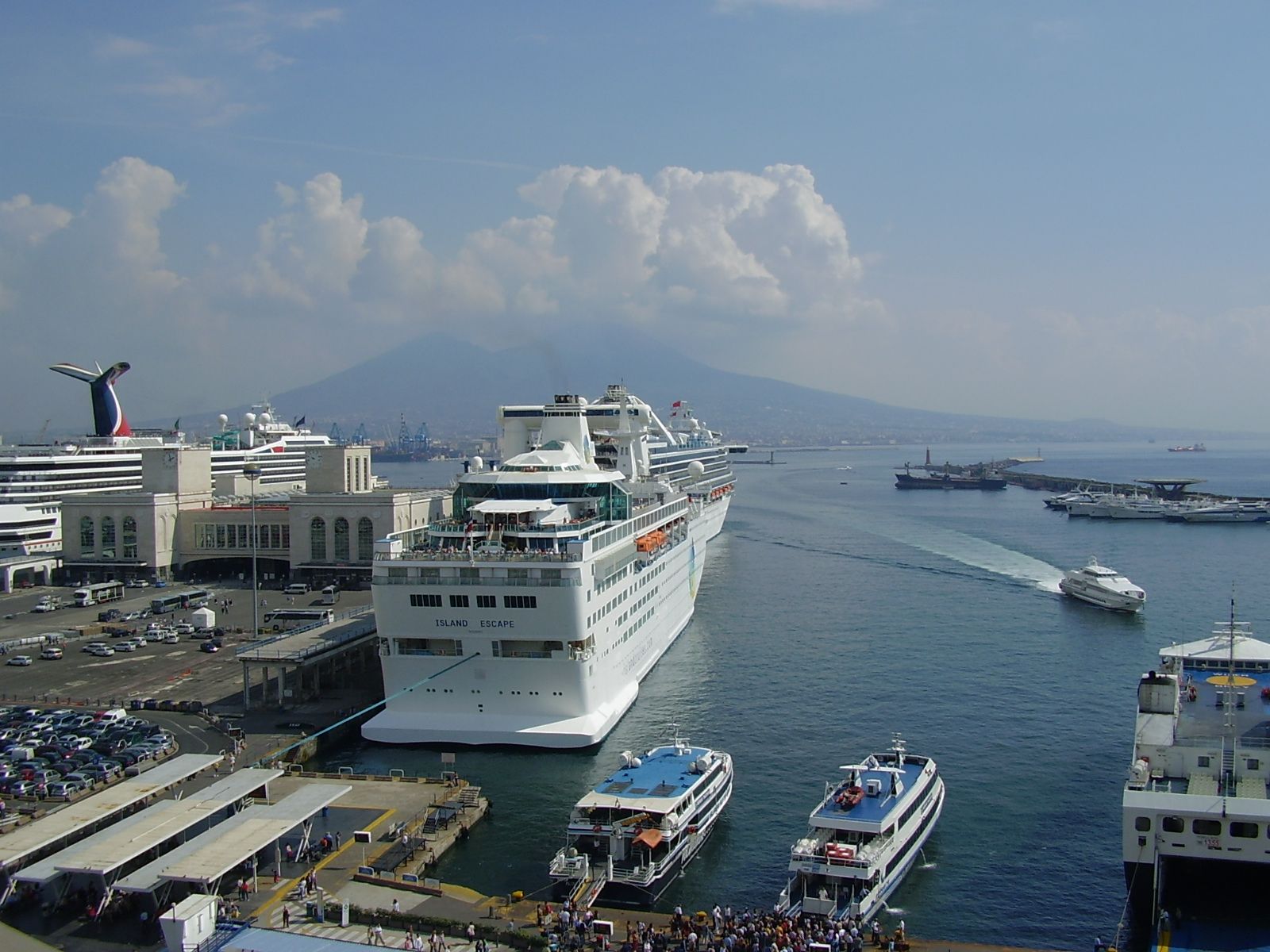
Llegar y salir de Positano puede ser complicado. El pueblo está conectado por los autobuses SITA Sud a lo largo de la carretera costera SS163, pero en verano los autobuses suelen ir llenos: colas de 30 a 50 personas de pie bajo el calor son normales en la parada de Sponda en julio. No hay estación de tren. El puerto de ferry más cercano conecta Positano con Amalfi (€10, 25 min), Capri (€22, 50 min) y Salerno (€12, 70 min); los ferris funcionan de forma estacional, de abril a octubre. Dentro del pueblo, todo implica escaleras, cientos de ellas. Esto hace que Positano sea difícil para cualquier persona con problemas de movilidad o con niños pequeños en carrito.
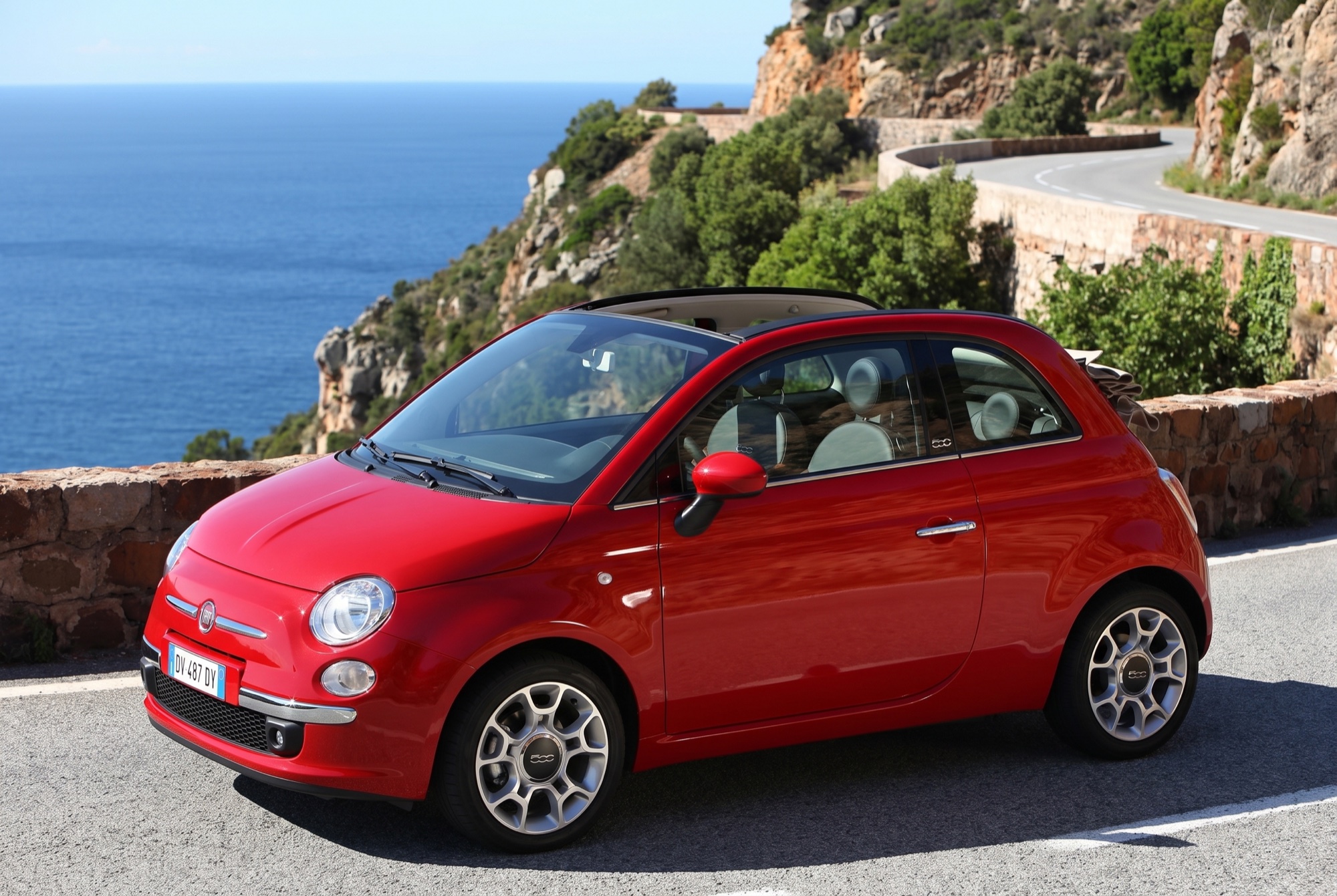
La opción más sencilla desde el aeropuerto o la estación de Nápoles es un traslado privado de Nápoles a la Costa Amalfitana: precio fijo desde €156, puerta a puerta, sin lidiar con el equipaje en autobuses abarrotados.
Transporte en Amalfi
Amalfi está mejor situada y mejor conectada. Los autobuses SITA circulan con frecuencia a Sorrento (vía Positano, 90 min, pocos euros) y a Salerno (35 min, pocos euros). Los ferris de TravelMar operan a Positano, Capri, Salerno y Minori. El centro del pueblo es relativamente llano en comparación con Positano, lo que facilita moverse a pie con el equipaje. Amalfi es además la puerta de entrada a Ravello, a 25 minutos en autobús (€1,30) o por una pintoresca subida a pie por los antiguos escalones de piedra.
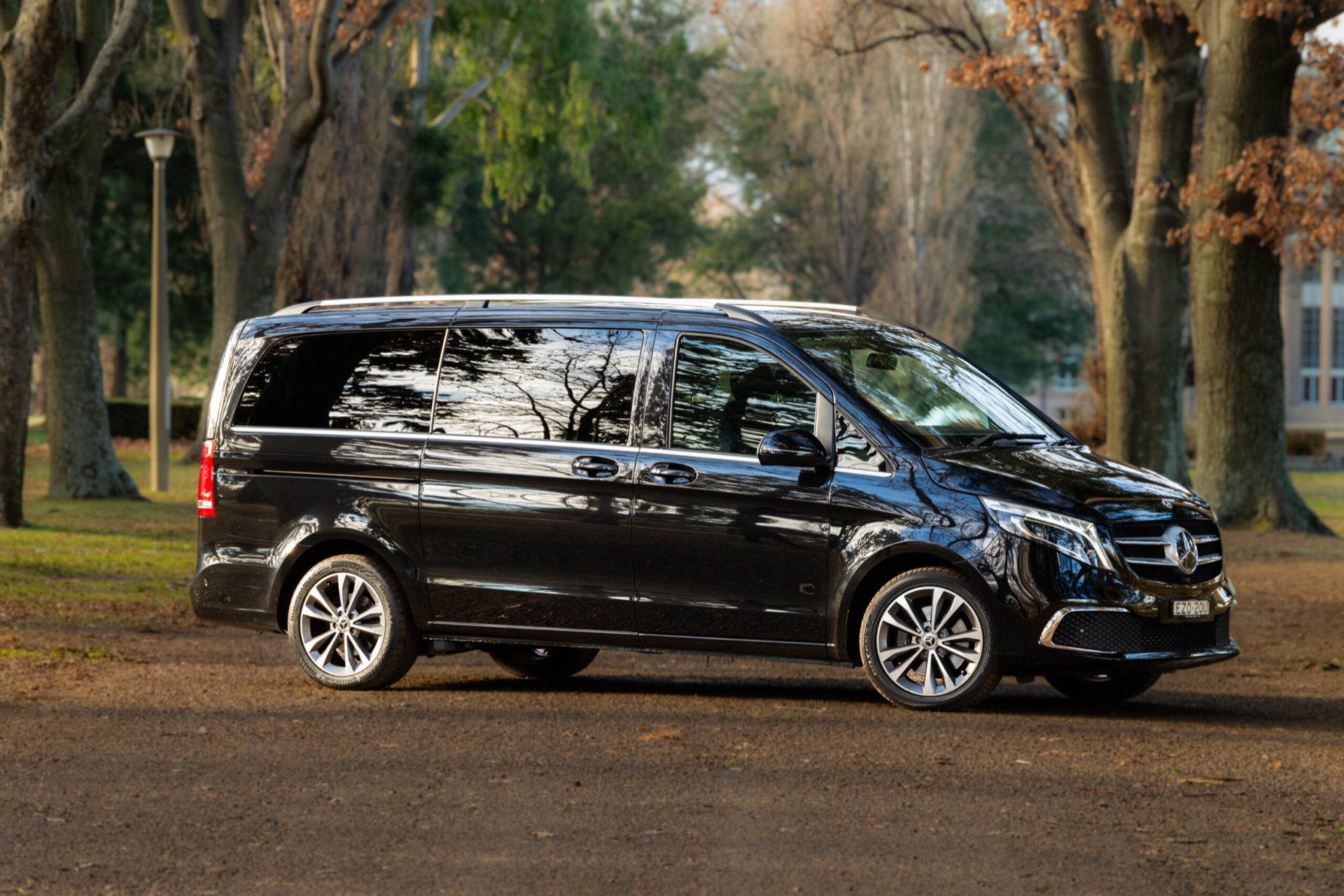
Desde Nápoles, un traslado privado a Amalfi dura unos 75 minutos (desde €168). También puedes reservar un traslado de Sorrento a Amalfi o comparar todas las rutas y precios de traslados en BlueKeys.
Precios: desglose completo del presupuesto diario
Positano es siempre más cara que Amalfi. Este es un presupuesto diario realista para dos adultos en temporada alta (julio-agosto):
| Gasto | Positano | Amalfi |
|---|---|---|
| Hotel de gama media | €300–500 / noche | €150–300 / noche |
| Comida para dos | €40–60 | €25–40 |
| Cena para dos | €70–120 | €45–80 |
| 2 tumbonas + sombrilla | €30–50 | €20–40 |
| 2 aperitivos | €24–30 | €16–20 |
| Autobús SITA (ida y vuelta) | pocos euros | pocos euros |
| Total diario (dos adultos) | €470–760 | €260–480 |
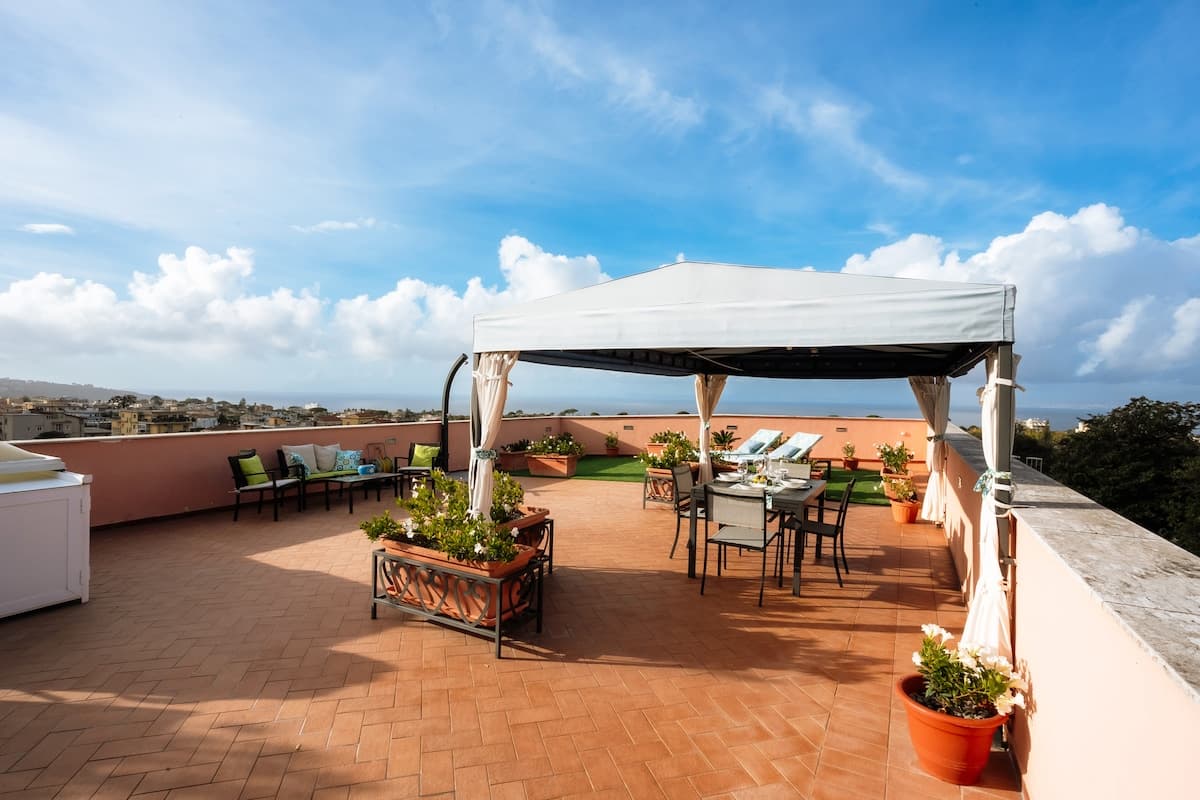
Para las mejores ofertas de alojamiento en ambos pueblos, echa un vistazo a los alojamientos de BlueKeys en la Costa Amalfitana. Reservar directamente a través de BlueKeys suele suponer un ahorro de entre el 10 y el 15 % frente a las grandes OTA, y todos los alojamientos están verificados localmente.
Mejor época para visitar: mes a mes
| Mes | Clima | Masificación | Precios | Veredicto |
|---|---|---|---|---|
| Abr | 16–19 °C, algo de lluvia | Baja | Baja-media | Buena para senderismo, demasiado fría para bañarse |
| May | 20–24 °C, mayormente soleado | Moderada | Media | ★★★★★ El mejor mes en general |
| Jun | 24–28 °C, soleado | Moderada-alta | Media-alta | ★★★★ Estupendo, todos los ferris en marcha |
| Jul | 28–32 °C, caluroso | Muy alta | Punta | ★★ Caluroso, masificado, caro |
| Ago | 28–33 °C, muy caluroso | Extrema | Punta | ★ Evítalo si es posible |
| Sep | 24–28 °C, cálido | Moderada | Media-alta | ★★★★★ La mejor combinación de precio y clima |
| Oct | 18–22 °C, algo de lluvia | Baja | Baja | ★★★ Encanto de temporada baja, menos ferris |
Fiestas y eventos
Positano: el pueblo acoge el festival de danza Positano Premia la Danza en septiembre, que atrae a intérpretes internacionales. La Festa della Madonna Assunta, el 15 de agosto, ofrece un espectacular castillo de fuegos artificiales sobre el mar. Las celebraciones de Nochevieja en la playa congregan a una gran multitud.
Amalfi: Amalfi tiene eventos históricos de más peso. La Regata delle Antiche Repubbliche Marinare (Regata Histórica) se celebra cada cuatro años cuando le toca ser anfitriona a Amalfi: una vistosa carrera de barcos contra Génova, Pisa y Venecia. La Festa di Sant'Andrea, el 30 de noviembre, incluye una espectacular procesión con antorchas por el casco antiguo. El Capodanno Bizantino (Año Nuevo Bizantino), el 1 de septiembre, celebra el antiguo legado marítimo de Amalfi con desfiles y fuegos artificiales. Para los amantes de la cultura, Amalfi gana con claridad.
¿Qué pueblo es mejor para ti?
Elige Positano si...
- Quieres unas vacaciones glamurosas y centradas en la playa
- Eres una pareja o estás de luna de miel buscando romance y vistas al atardecer
- Disfrutas de las compras en boutiques, los bares de cócteles y un ambiente de ver y dejarse ver
- Estás dispuesto a pagar precios premium por el entorno
- Estás razonablemente en forma (las escaleras son implacables)
- Te quedas 1–3 noches y buscas el máximo impacto
Elige Amalfi si...
- Prefieres la historia, la cultura y el ambiente local
- Viajas con niños o familiares mayores
- Quieres mejores conexiones de transporte para excursiones de un día a Ravello, Salerno y más allá
- Viajas con un presupuesto moderado
- Quieres un pueblo transitable a pie, menos vertical y con una vida local activa
- Te quedas 3 noches o más y quieres una base práctica y habitable
La tercera opción: alojarse fuera de ambos
Los viajeros experimentados de la Costa Amalfitana a menudo se saltan tanto Positano como Amalfi en favor de Praiano (€80–150/noche, atardeceres impresionantes, punto de inicio del Sendero de los Dioses), Conca dei Marini (tranquilo, gran relación calidad-precio) o Furore (un pueblo de fiordo escondido). Estos pueblos más tranquilos tienen precios más bajos, mejor aparcamiento y vistas igual de impresionantes. BlueKeys tiene alojamientos por toda la Costa Amalfitana, incluidos varios en estos enclaves que son auténticas joyas ocultas.
Veredicto local: ¿qué pueblo deberías reservar realmente?
Tras vivir y trabajar en la Costa Amalfitana durante años, gestionar decenas de alojamientos en ambos pueblos y haber alojado personalmente a cientos de huéspedes, esta es la respuesta sincera:
Reserva Amalfi si tienes de 3 a 7 noches. Es la mejor base. Puedes llegar a Positano en ferry en 25 minutos para una excursión de un día, ver la famosa vista, comer y estar de vuelta por la tarde sin pagar los precios de Positano. Amalfi te ofrece un pueblo italiano de verdad —una catedral de verdad, un mercado de verdad, trattorias de verdad donde comen los locales— junto con los mejores tours en barco y playas de todo el litoral.
Reserva Positano si tienes 1–2 noches y un presupuesto concreto. Una o dos noches en Positano son una experiencia realmente especial. Los atardeceres, los escalones, los beach clubs: no se parece a ningún otro lugar de Italia. Pero una semana entera allí se vuelve repetitiva y cara. Úsala como un capricho, no como base.
Reserva ambos si tienes una semana. Las vacaciones ideales en la Costa Amalfitana: 4 noches en Amalfi como base (excursiones a Ravello, tour en barco, Sendero de los Dioses) y luego 2 noches en Positano como broche final. Te llevas lo mejor de los dos mundos, y el contraste hace que Positano se sienta aún más especial.
Evita la temporada alta de julio y agosto en cualquiera de los dos pueblos a menos que reserves con más de 6 meses de antelación. Ambos pueblos están realmente desbordados en pleno verano. Las mejores semanas de la Costa Amalfitana son de finales de mayo a mediados de junio (cálido, más tranquilo, todos los ferris en marcha) y las tres primeras semanas de septiembre (todavía cálido, el número de turistas cae en picado a partir del 1 de septiembre).
Excursiones de un día desde ambos pueblos
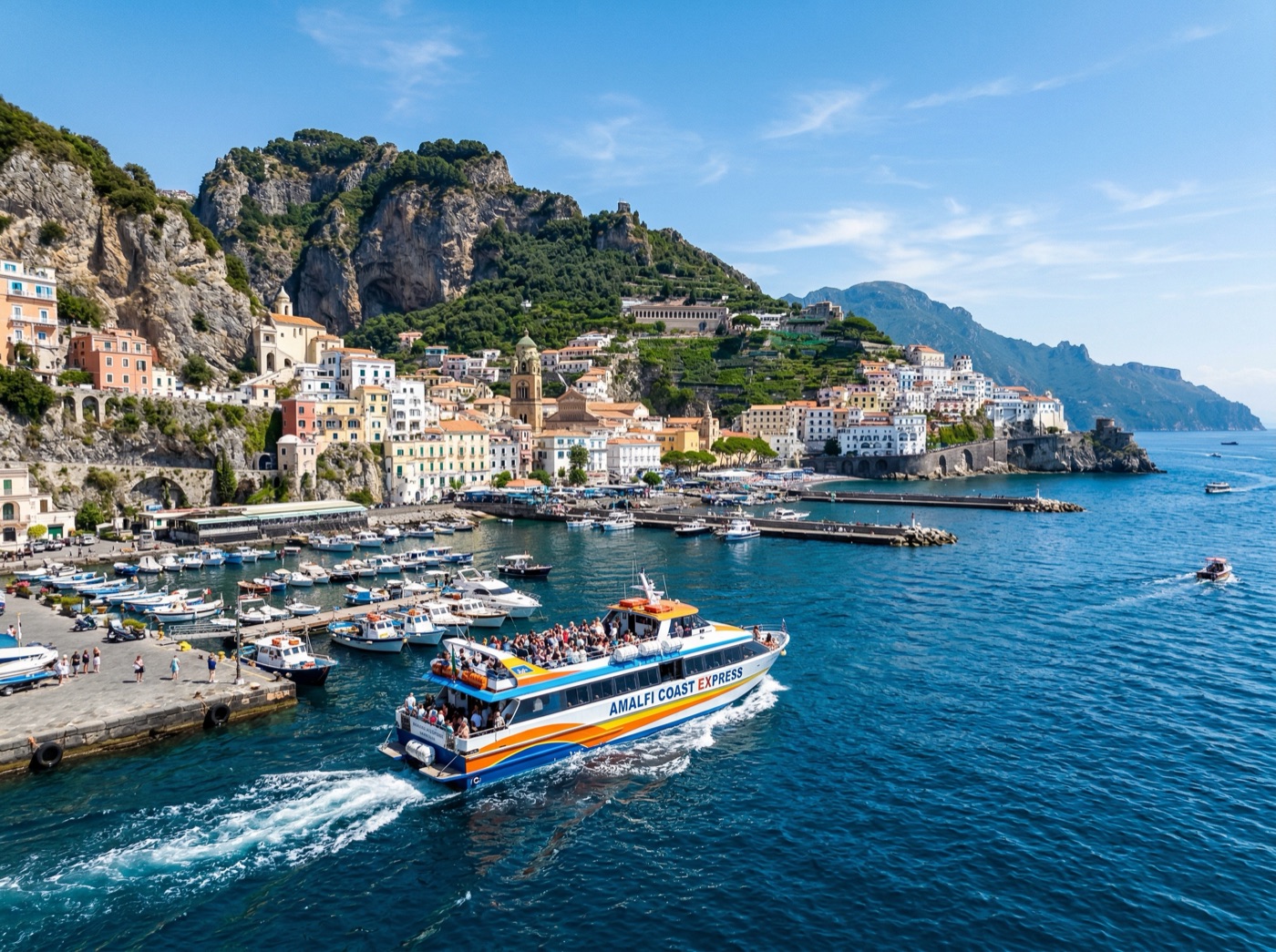
Dondequiera que te alojes, las mejores atracciones de la costa están a tiro de piedra. Reserva un tour en barco por la Costa Amalfitana (desde €65/persona), un tour en barco desde Positano o una excursión en barco desde Amalfi. Un crucero al atardecer es inolvidable desde cualquiera de los dos pueblos. Para una experiencia única, prueba una clase de cocina en Sorrento o una caminata por el Sendero de los Dioses. BlueKeys ofrece tours y experiencias seleccionados que salen tanto de Positano como de Amalfi.
Encuentra tu alojamiento perfecto
Echa un vistazo a los alojamientos de BlueKeys en la Costa Amalfitana: villas y apartamentos seleccionados a mano en Positano, Amalfi y los pueblos con encanto que hay entre medias. Reserva directamente para conseguir las mejores tarifas y el apoyo de un conserje local.