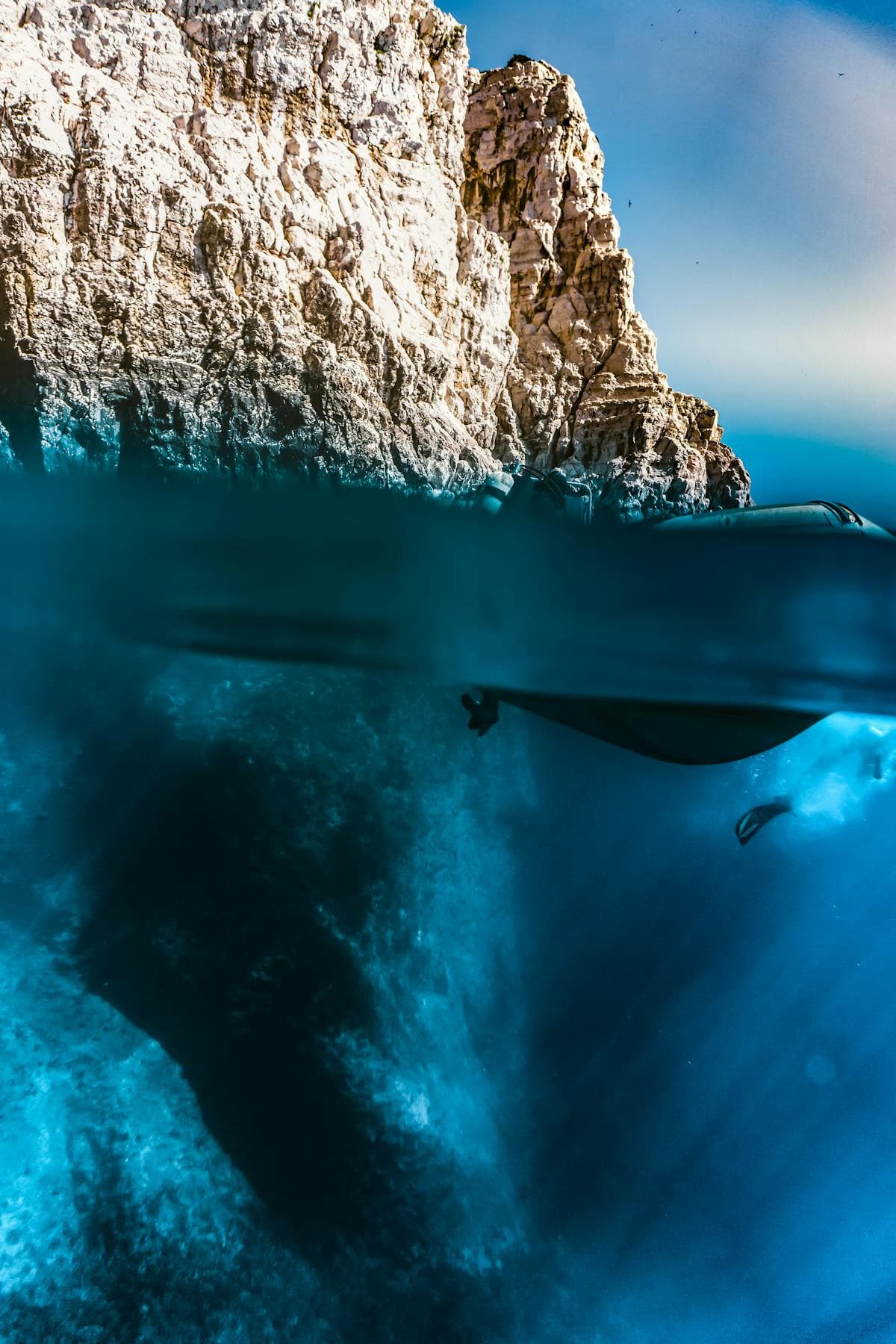
Quick answer — scuba diving Sorrento at a glance
- Discover Scuba (beginners) — 2 dives to 12m, morning programme, equipment included
- Guided dives (certified) — 2-tank morning from €75 · PADI 5-Star centre Marina Grande
- Best sites: Punta Campanella wall, Vervece Rock (grouper), Grotta dello Zaffiro
- Visibility: 25m+ in Jun/Sep · water 22–27°C summer
- Season: April–November · sweet spot June and September
| Experience | Depth | Price | For whom |
|---|---|---|---|
| Discover Scuba (2 dives) | Max 12m | From €75 | No experience needed |
| 2-tank morning dive | Up to 30m | From €75 | Certified OWD+ |
| Single afternoon dive | Up to 30m | From €55 | Certified OWD+ |
| PADI Open Water course | Up to 18m | From €350 | Beginners |
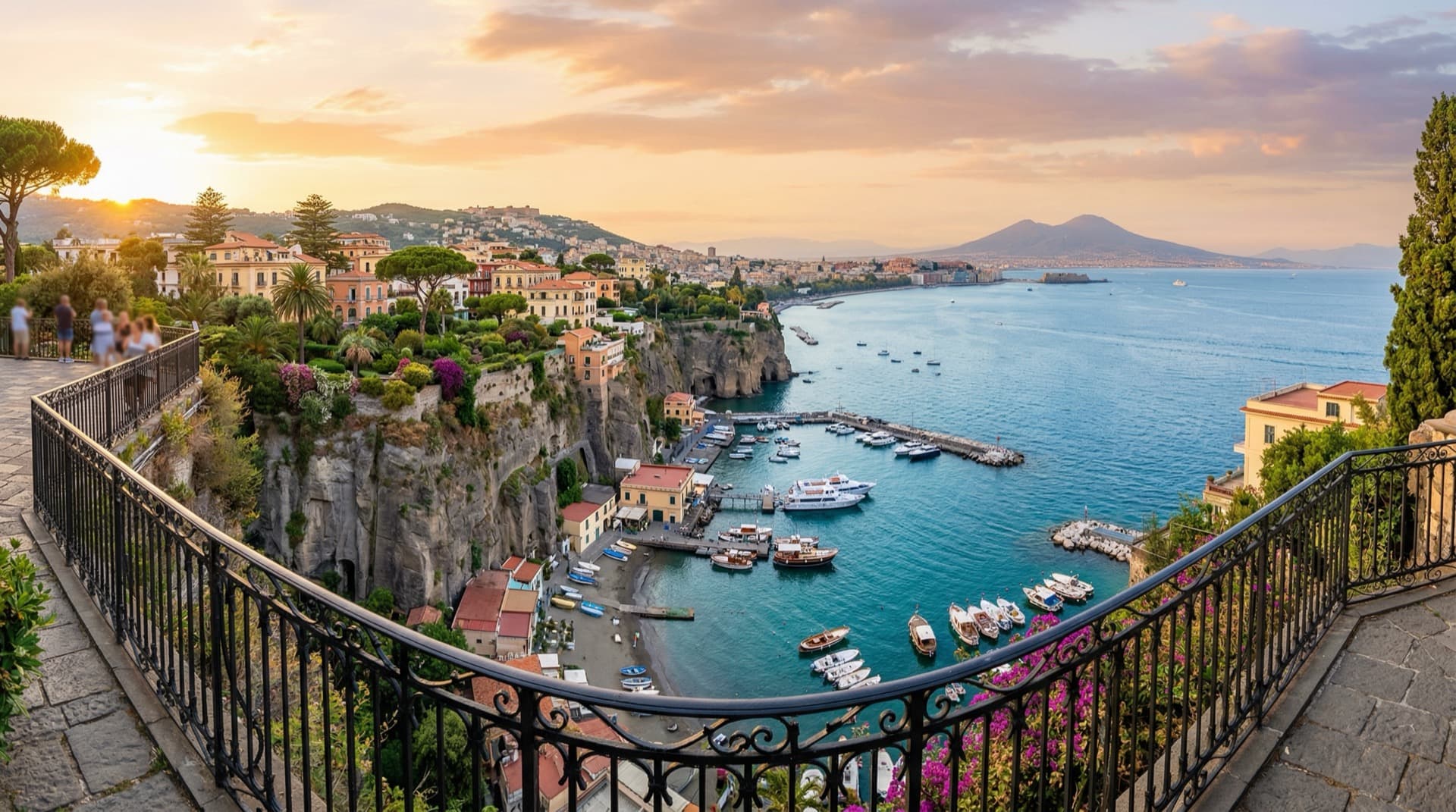
Sorrento sits on a peninsula that drops sharply into some of the clearest water in the Mediterranean. Below those limestone cliffs lies the Punta Campanella Marine Protected Area — 11 square kilometres of underwater caves, Roman ruins, Posidonia meadows, and reef walls teeming with life. Whether you have never breathed underwater or you are a seasoned diver looking for your next destination, this guide covers everything you need to plan a diving trip to Sorrento.

Why Dive in Sorrento?
Most visitors come to Sorrento for the views above the waterline. They do not realise that the real spectacle is below it. The Sorrentine Peninsula is where the Tyrrhenian Sea meets a geological fault line, creating steep underwater walls, caverns, and pinnacles within minutes of the shore. Visibility regularly exceeds 25 metres, water temperatures range from 18 to 27 degrees Celsius through the season, and the marine protected area status means fish populations here are denser than almost anywhere else on the Italian coast.
Add the practical advantages — a PADI 5-Star dive centre right at the harbour, easy boat access to dive sites, and the fact that you can be sitting in a Sorrento restaurant with a glass of Falanghina forty minutes after surfacing — and you start to understand why divers who discover this area keep coming back.
The Punta Campanella Marine Protected Area
Established in 1997, the Punta Campanella MPA covers the tip of the Sorrentine Peninsula and the waters between Sorrento and Capri. The area is divided into three zones — A (full protection, no entry), B (restricted access with permits), and C (regulated activities including diving). Most recreational dive sites sit in Zone B and C, which means smaller crowds and healthier reefs than unprotected coastline.
The seabed here is remarkably varied. In the space of a single dive you can pass over Posidonia oceanica meadows, swim along a vertical limestone wall, enter a cave system, and hover above the remains of a Roman villa that slid into the sea two thousand years ago. The MPA is home to over 200 documented species of fish, plus octopus, moray eels, nudibranchs, seahorses, and — in deeper water — eagle rays and the occasional pod of dolphins.
Dive Site Comparison
| Site | Depth | Boat time | Min cert | Highlight |
|---|---|---|---|---|
| Punta Campanella Wall | 5–40m | 20 min | AOWD | Gorgonians, barracuda, sheer wall |
| Vervece Rock | 10–30m | 15 min | OWD | Giant grouper, bronze Madonna |
| Marina di Crapolla Caves | 5–18m | 20 min | OWD | Light shafts, lobster, red coral |
| Grotta dello Zaffiro | 5–18m | 15 min | OWD | Sapphire light, seahorses |
| Scoglio del Vervece (shallow) | 5–12m | 15 min | Discover Scuba | Posidonia meadows, beginner-friendly |
| Li Galli Islands | 8–25m | 25 min | OWD | Swim-throughs, amberjack, clear water |
Best Dive Sites in Detail
Punta Campanella Cliff Wall
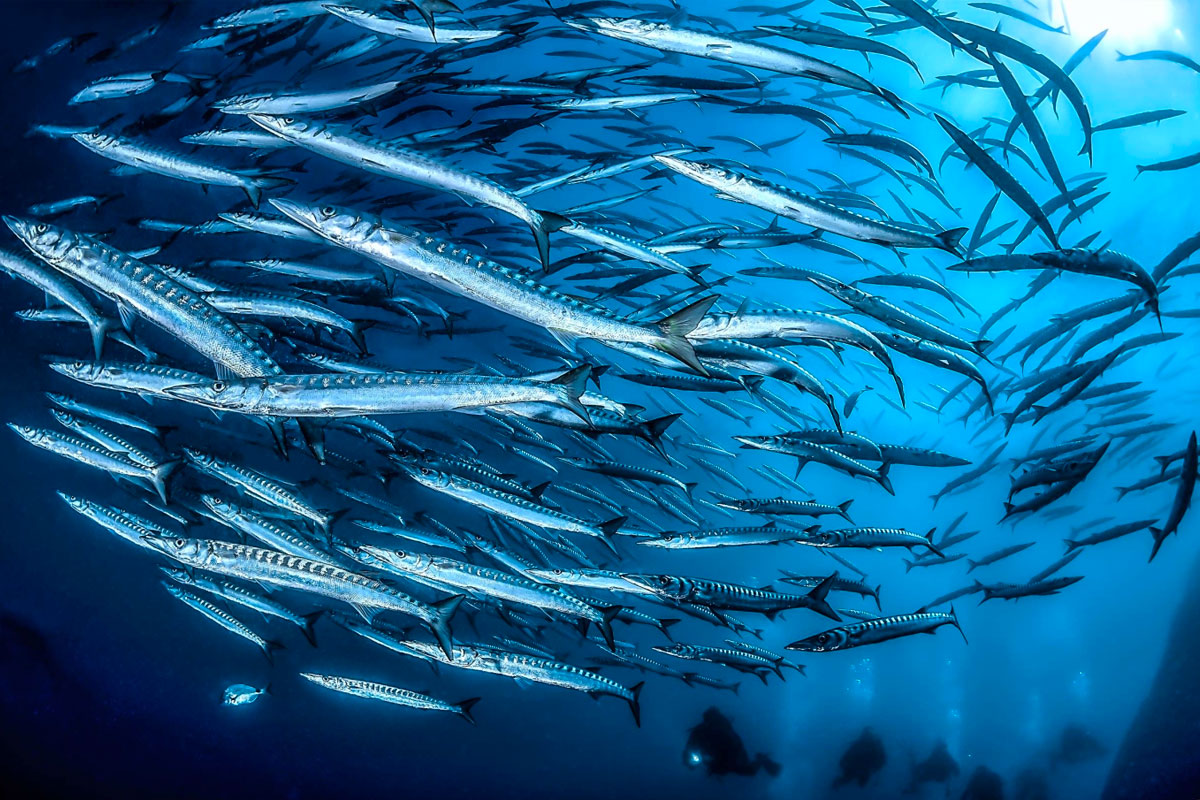
The signature dive of the area. A sheer wall drops from 5 metres to over 40 metres, covered in yellow sea fans, orange sponges, and purple gorgonians. Barracuda schools patrol the blue water off the wall, while grouper and moray eels hide in the crevices. The dive begins at the lighthouse promontory and drifts south with a gentle current. Suitable for Advanced Open Water and above.
Vervece Rock
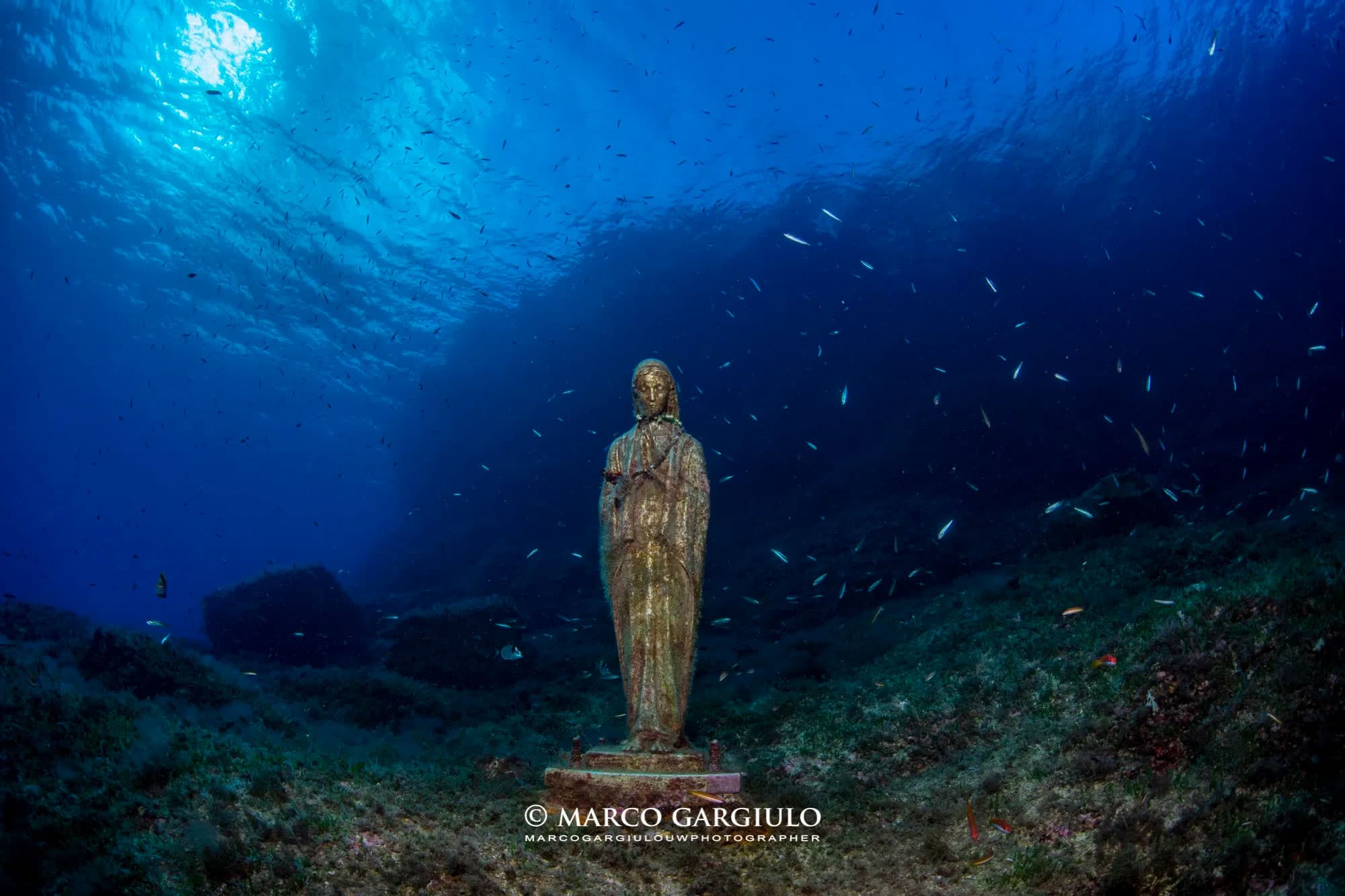
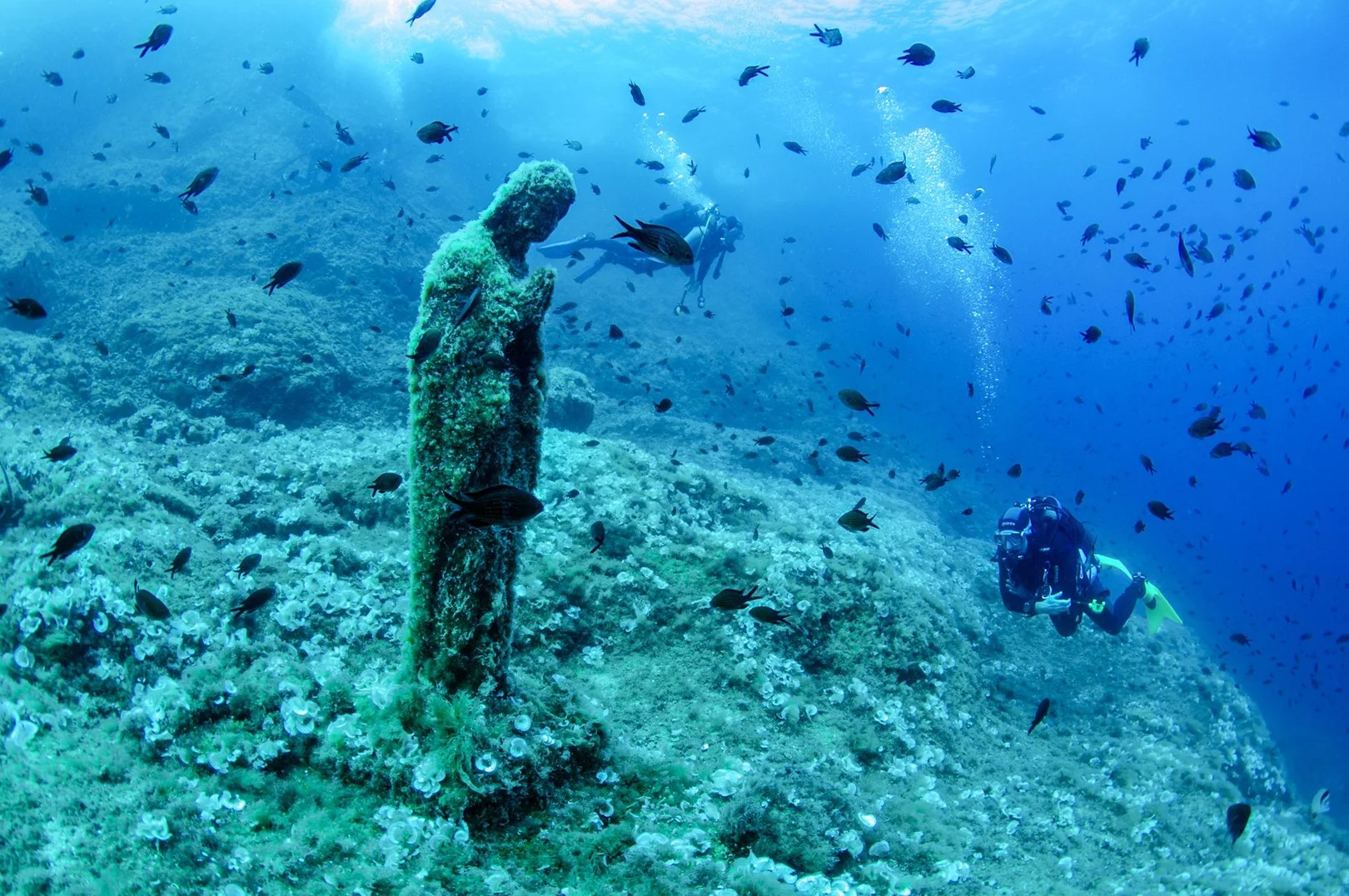
A submerged pinnacle two nautical miles offshore, rising from a sandy bottom at 30 metres to within 10 metres of the surface. Vervece is famous for its resident population of large grouper — some weighing over 20 kilograms — that are so accustomed to divers they approach within arm's length. At the base of the rock sits a bronze Madonna statue placed by local fishermen. A moderate-level dive with occasional currents.
Marina di Crapolla Caves
A system of semi-submerged caves on the southern coast of the peninsula, accessible only by boat. Sunlight filters through openings in the rock ceiling, creating cathedral-like shafts of blue light. Inside the caves you will find lobster, shrimp, and colonies of red coral at surprisingly shallow depths. Maximum depth 18 metres — suitable for Open Water divers.
Grotta dello Zaffiro
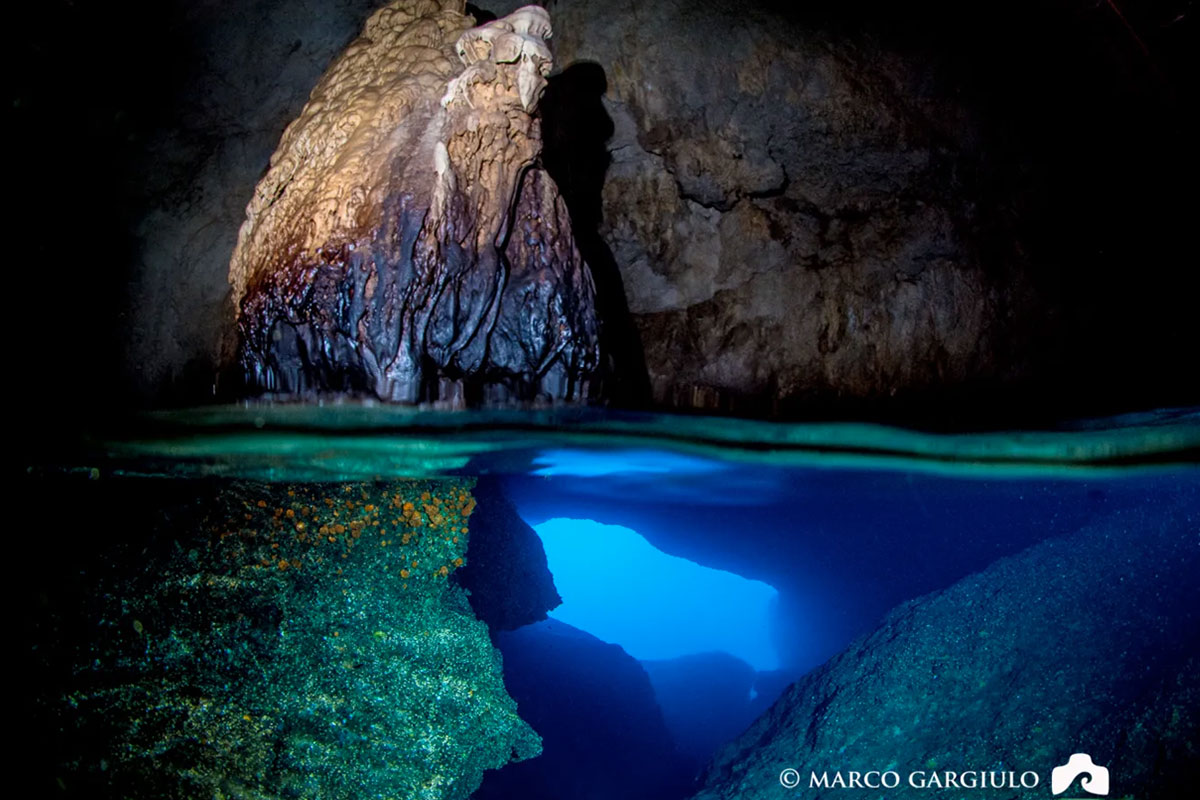
Named for the sapphire-blue light that fills the interior, this cave is one of the most photogenic dives in the region. The entrance sits at 12 metres and opens into a wide chamber where the light refracts through the water in shifting patterns. Outside the cave, the reef is home to scorpionfish, nudibranchs, and the occasional seahorse clinging to Posidonia blades. Suitable for all certified divers.
Li Galli Islands
The three small islands between Positano and Capri — once owned by Rudolf Nureyev — offer superb diving in crystal-clear water. The underwater terrain is a mix of rocky arches, swim-throughs, and sloping reefs where amberjack and dentex hunt in the open water. Schools of salema and damselfish swirl around the shallower sections, while octopus hide in crevices at the base. A 25-minute boat ride from Marina Grande, typically visited on morning two-tank trips when conditions allow. Suitable for Open Water divers and above.
Certification Options in Sorrento
The local dive centre is a PADI 5-Star facility offering the full range of courses. Instruction is available in English, Italian, German, and French.
| Course | Duration | Price | Max depth | What you get |
|---|---|---|---|---|
| Discover Scuba Diving | Half day | From €75 | 12m | No cert — 2 supervised dives, ideal taster |
| PADI Scuba Diver | 3 days | From €480 | 12m (supervised) | International cert, upgradeable to OWD |
| PADI Open Water Diver | 4 days | From €650 | 18m | Dive independently worldwide |
| PADI Advanced Open Water | 2 days | From €350 | 30m | Deep, navigation, night dive specialties |
If you want to get certified during your holiday, the PADI Open Water Diver course takes four days and qualifies you to dive independently to 18 metres worldwide. For a shorter commitment, the PADI Scuba Diver course takes three days and certifies you to 12 metres with a professional guide. All courses include eLearning materials (study at home before you arrive), all equipment, and the international certification card. For more details, see our dedicated page on PADI courses in Sorrento.
For Beginners: Your First Dive
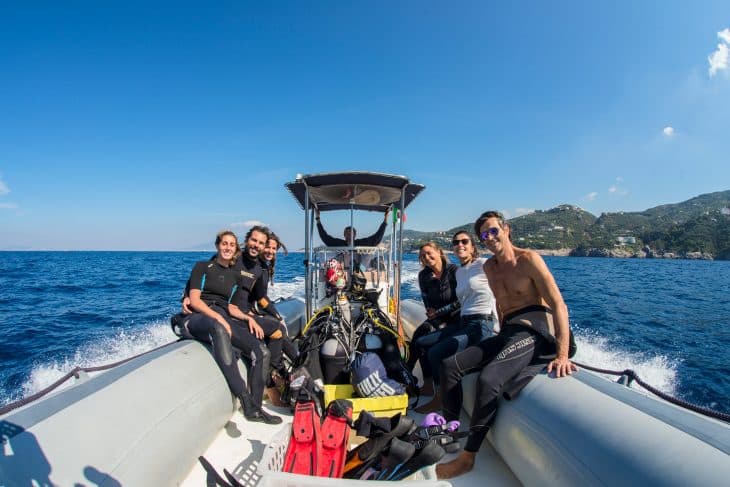
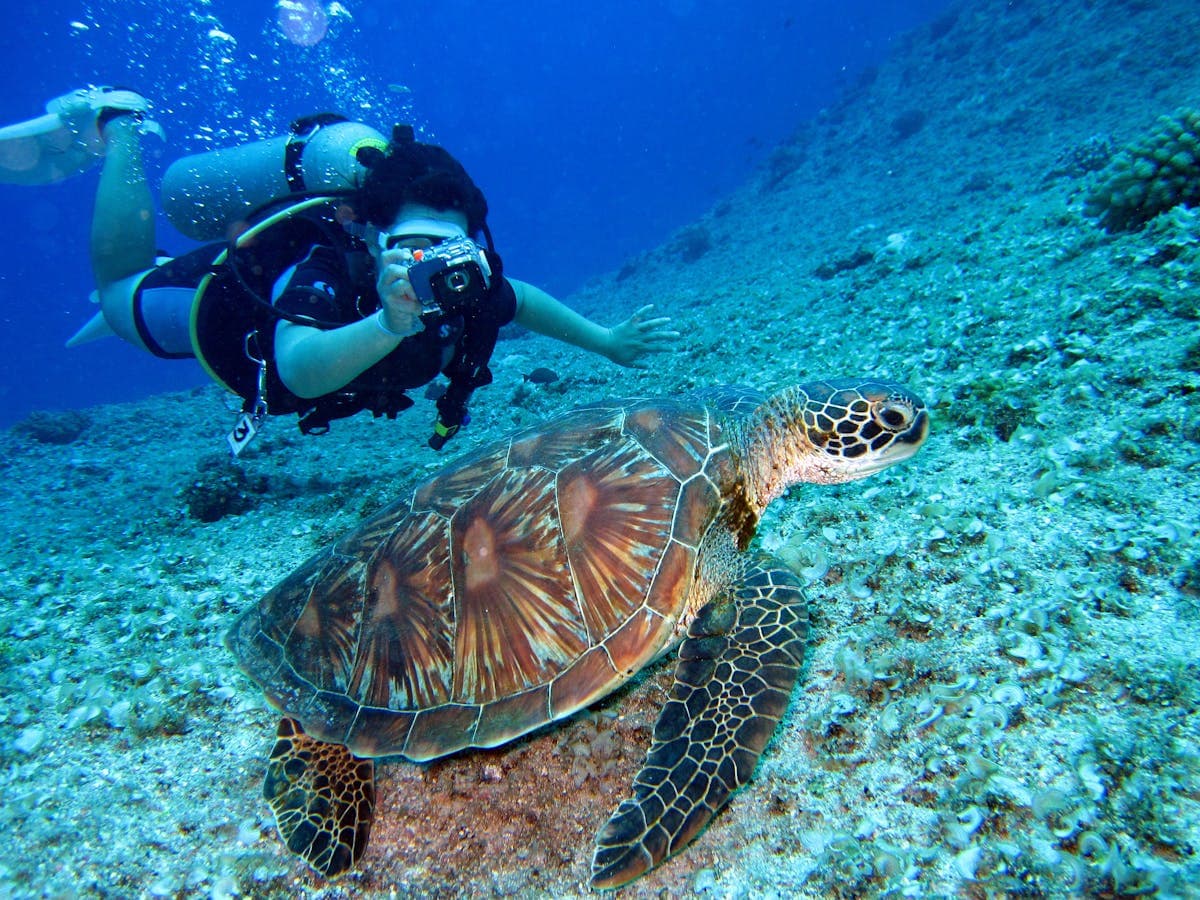
Never dived before? Sorrento is an ideal place to start. The Discover Scuba Diving programme lets you experience breathing underwater without any prior certification. You begin with a safety briefing and confined water session at the harbour, then head out by boat for two open-water dives to a maximum depth of 12 metres.
The programme runs every morning, departing from Marina Grande at 08:00 and returning by 12:30. All equipment is provided — wetsuit, BCD, regulator, mask, fins — and your PADI instructor stays with you throughout both dives with a maximum ratio of 1:4. Most participants are surprised by how natural it feels after the first five minutes underwater. No swimming test is required, though you should be comfortable in open water.
For Certified Divers
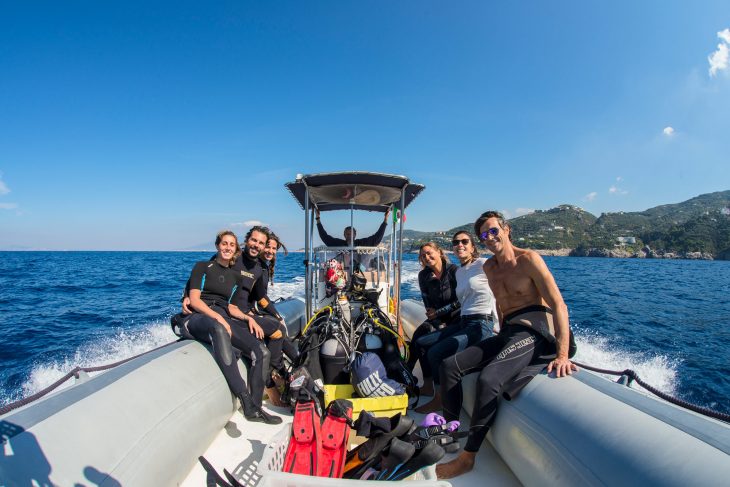
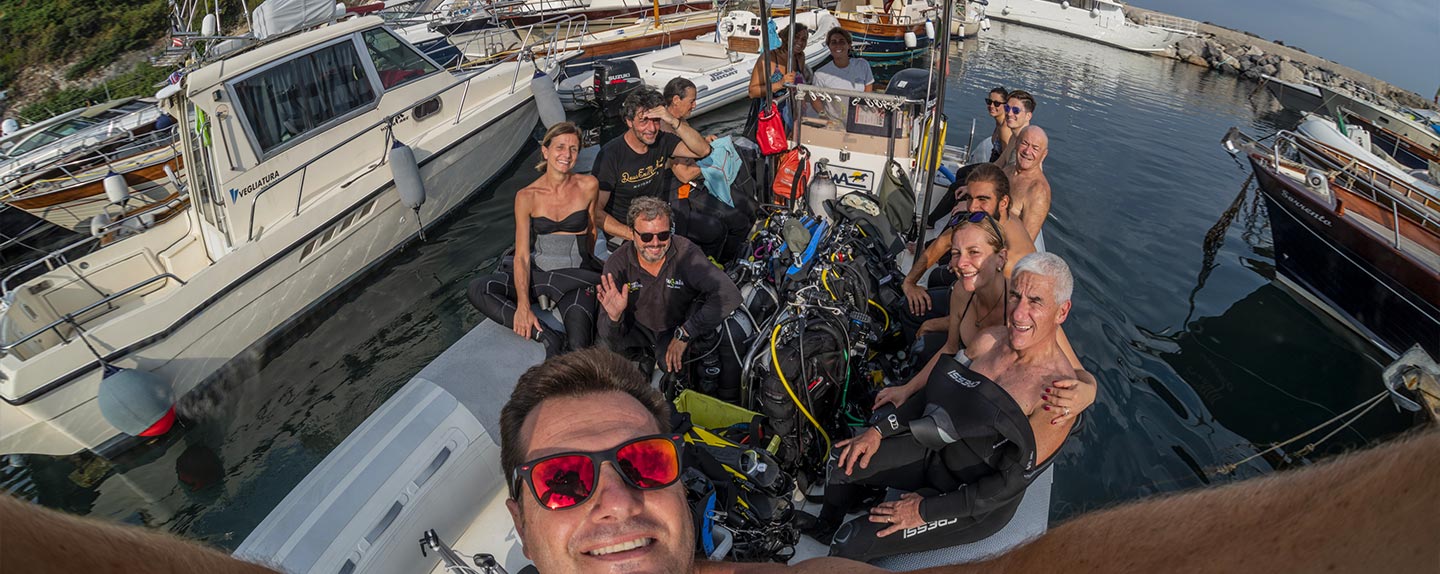
If you already hold an Open Water or higher certification, the most popular option is the two-tank morning dive. The boat departs Marina Grande at 08:00, visits two different dive sites selected based on conditions and group experience, and returns by 12:30. All equipment is included, and the dive centre provides Nitrox for those certified to use it.
For a shorter experience, the single afternoon dive departs at 14:30 and visits one site, returning by 16:30. Both options include a local divemaster who knows every crevice and every resident grouper by name.
Marine Life — What You Will See
The Punta Campanella MPA supports an extraordinary range of Mediterranean species. Here is what to expect at different depths and seasons:
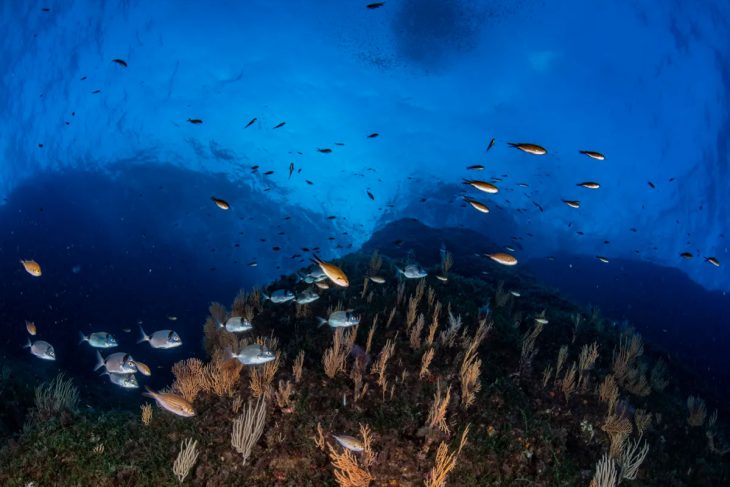
Shallow reef (0–10m): The Posidonia oceanica meadows that carpet the shallower areas are the nursery of the Mediterranean. Juvenile fish shelter among the blades, seahorses grip the stems, and octopus hunt along the edges. Rainbow wrasse, ornate wrasse, and painted comber dart between the fronds. Look carefully in the sand patches for cuttlefish buried with only their eyes showing.
Mid-water (10–25m): As you descend past 15 metres, the community changes: schools of barracuda and amberjack cruise the open water, while grouper — some over a metre long — hold territory around rocky outcrops. Moray eels are common in crevices at all depths. Scorpionfish lie perfectly camouflaged against the rock. Nudibranchs — the Spanish shawl and the flabellina are particularly photogenic — cluster on sponges and hydroids.
Deep wall (25–40m): The gorgonian fans that cover the deeper walls attract dentex and large barracuda. In summer, eagle rays visit the deeper sites, gliding along the wall edge in pairs or small groups. Red coral colonies, once heavily harvested, are recovering under MPA protection and can be found in caves and overhangs below 25 metres.
Night dives: On night dives you may encounter sleeping parrotfish wrapped in their mucus cocoons, hunting octopus changing colour in real time, and the bioluminescent plankton that turns your exhaled bubbles into sparks of blue light. Night dives run from the centre on request for groups of two or more certified divers, from €65 per person.
Month-by-Month Diving Calendar
| Month | Water temp | Visibility | Wetsuit | Notes |
|---|---|---|---|---|
| April | 17–19°C | 20–30m | 5mm + hood | Season opens, fewer boats, nudibranch season |
| May | 19–21°C | 25–30m | 5mm | Plankton blooms attract pelagic fish |
| June | 22–24°C | 25m+ | 3–5mm | Best all-round month, long days, calm seas |
| July | 25–27°C | 20–25m | 3mm / shorty | Warm and comfortable, sites busier |
| August | 26–28°C | 15–25m | 3mm / shorty | Jellyfish possible, peak crowds, book early |
| September | 24–26°C | 25–35m | 3–5mm | Peak visibility, jellyfish gone, eagle rays |
| October | 21–23°C | 20–30m | 5mm | Autumn storms possible but diving outstanding |
| November | 19–21°C | 20–25m | 5mm + hood | Season closing, fewer operators, dedicated divers only |

Practical Tips
- Meeting point: Marina Grande, 186 — the dive centre is on the harbourfront, identifiable by the blue PADI flag
- Morning departures: 08:00 sharp. Arrive 15 minutes early for equipment fitting.
- Afternoon departures: 14:30
- What to bring: Swimsuit, towel, sunscreen (reef-safe preferred), and a warm layer for the boat ride back
- What is provided: Full scuba equipment, water, and snacks on board
- Seasickness: The boat ride to dive sites takes 10–20 minutes. If you are prone to motion sickness, take medication 30 minutes before departure.
- Certification cards: Bring your PADI or equivalent card and logbook. Digital cards on the PADI app are accepted.
- Photos: Underwater cameras are available for rent at the dive centre (from €15/day). GoPro mounts are standard on rental equipment.
- Nitrox: Available for certified Nitrox divers at no extra charge on morning two-tank dives.
- Safety: The dive boat carries oxygen, a first aid kit, and VHF radio. The nearest hyperbaric chamber is at Ospedale Cardarelli in Naples, approximately 50 minutes by road.
Book Your Dive with BlueKeys
BlueKeys works directly with Punta Campanella Diving, the peninsula's leading PADI 5-Star centre. All dives, courses, and equipment are bookable through our platform with instant confirmation and local support.
Browse all diving experiences in Sorrento, or contact us if you need help choosing the right dive for your experience level. Whether it is your first breath underwater or your five-hundredth dive, the reefs of Punta Campanella will not disappoint.
Ready to dive Sorrento?
Book a Discover Scuba Diving experience, join a two-tank morning dive, or start your PADI Open Water certification — all through BlueKeys with local dive professionals.
Naples Airport → Sorrento: coach or private transfer
Curreri Viaggi: €13, 75–90 min, 8 departures a day, 09:00–19:30. Private transfer Naples Airport → Sorrento: from €120 per vehicle, 60 min, 50 km door-to-door, no changes.
| Option | Price | Journey time & frequency |
|---|---|---|
| Curreri Viaggicoach | €13per person | 75–90 min8 departures a day, 09:00–19:30 |
| Private transfer | from €120per vehicle · up to 3 passengers | 60 min50 km · on demand, booked ahead |
| Sources: Curreri Viaggi | ||