Quick answer — top things to do in Amalfi
- Amalfi Cathedral — free to visit, 9th-century bronze doors, crypt of Saint Andrew
- Emerald Grotto — sea cave by boat from €7, best light 10am–noon
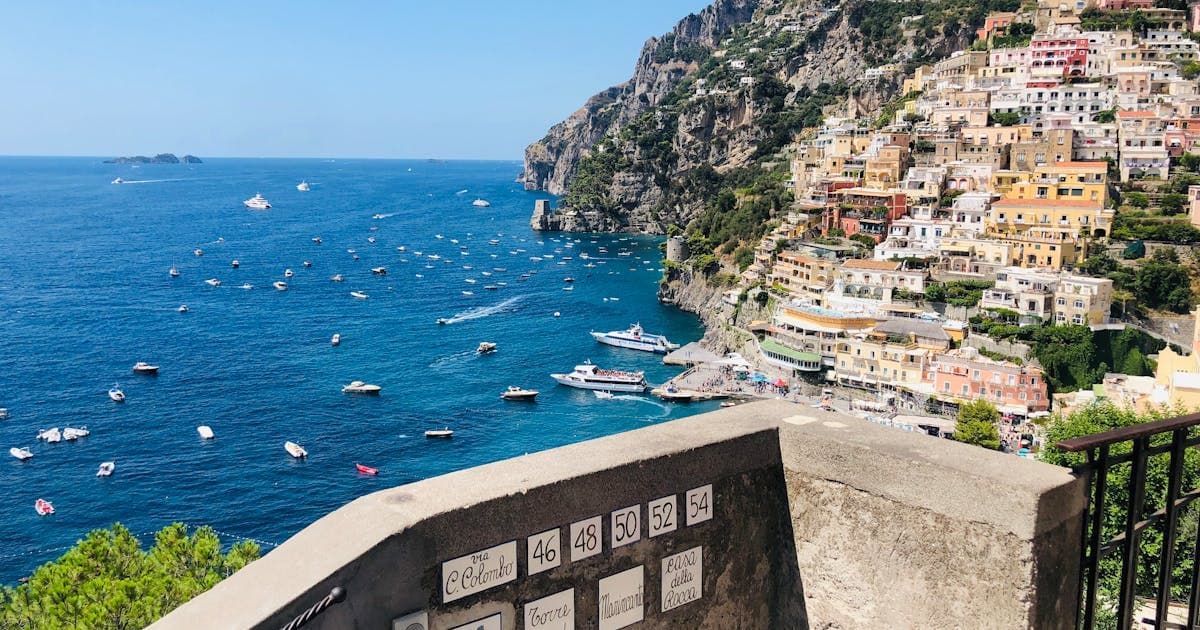
- Boat trip to Positano — 30 min, ferry from €10 or private boat from €65/person
- Valle dei Mulini (Valley of the Mills) — free gorge walk, ancient paper mills
- Atrani — 5-minute walk, real local life, beach on the piazza

Activity Comparison — Planning Your Day
| Activity | Cost | Duration | Best time | Book ahead? |
|---|---|---|---|---|
| Amalfi Cathedral + Cloister | Free / €3 cloister | 45 min | Before 10am | No |
| Emerald Grotto | €7 entry + boat | 1 hour | 10am–noon | No |
| Boat trip (public ferry) | From €8–20 | 30–70 min | Morning | No |
| Private boat tour | From €65/person | Half/full day | Morning | Yes, 2–3 days |
| Valle dei Mulini walk | Free | 1 hour | Any time | No |
| Museo della Carta | €4 | 45 min | Morning | No |
| Arsenale della Repubblica | Free | 30 min | Any time | No |
| Walk to Atrani | Free | 5 min + time there | Late afternoon | No |
| Sentiero dei Limoni hike | Free | 3 hours round trip | Morning | No |
| Day trip to Ravello | €1.30 bus + €7–8 villas | Half day | Morning | No |
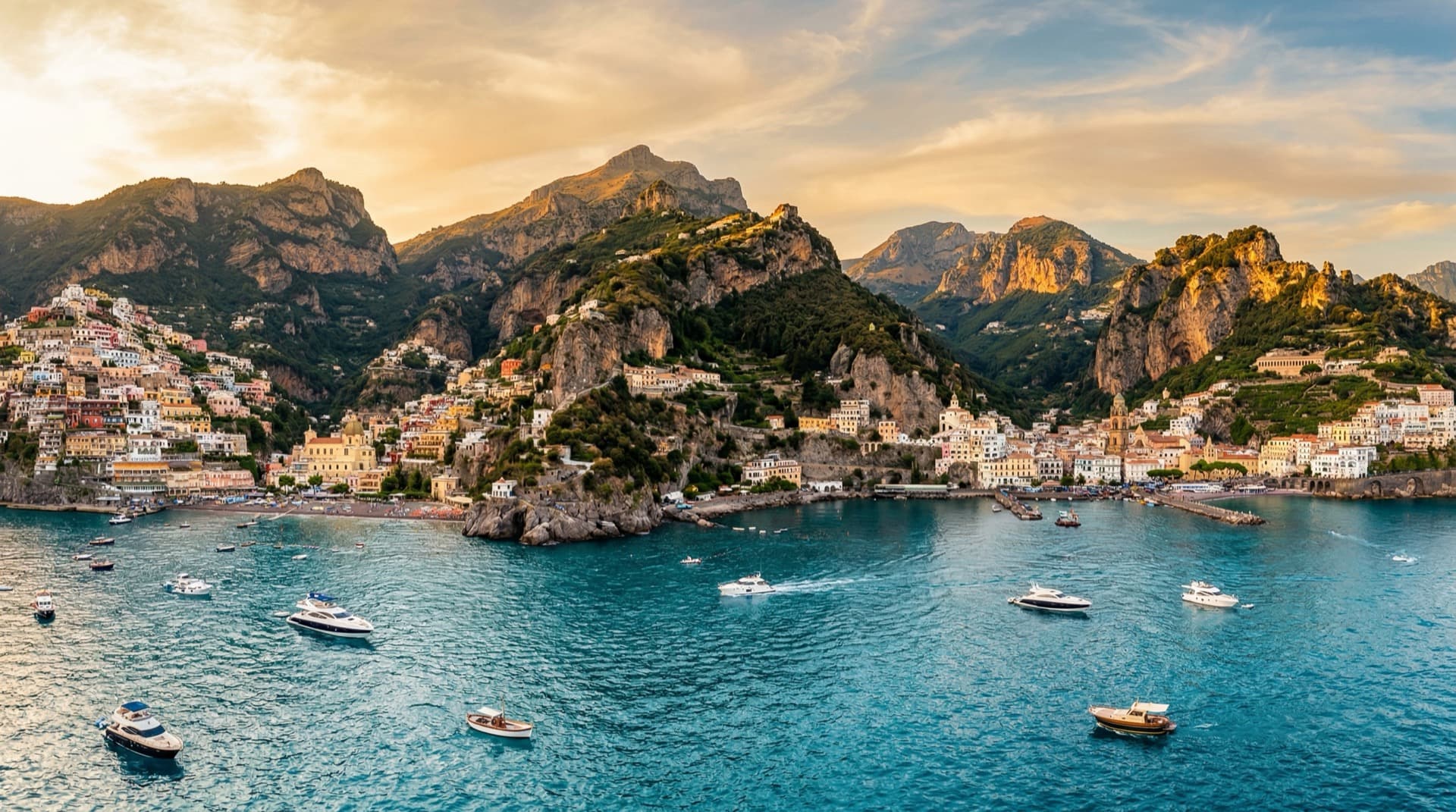
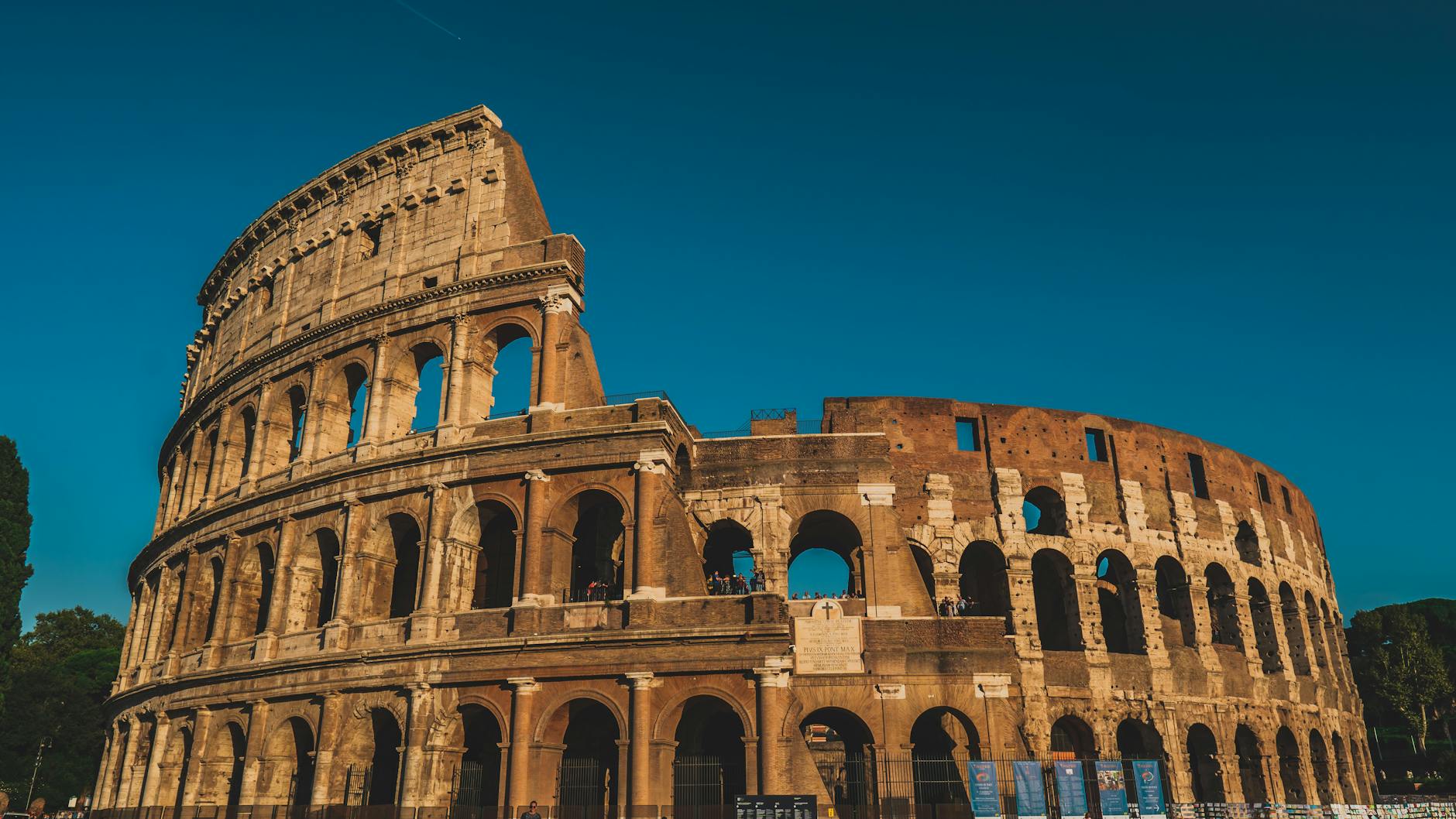
Amalfi sits at the centre of its famous coastline and was, for two centuries, one of the great maritime powers of the Mediterranean. The city was richer and more powerful than Venice in the 9th century — and the architecture, the cathedral, the arsenal and the paper mills still carry that history. Today it is compact enough to explore on foot in a morning, but rich enough to justify an entire day, especially if you add a boat trip and a long seafood lunch by the harbour.
1. Amalfi Cathedral — The Duomo di Sant'Andrea
The Cathedral of Saint Andrew dominates the main piazza and defines the Amalfi skyline. Its striped Arab-Norman facade, with a mosaic of Christ flanked by angels above the entrance, is one of the most photographed views on the coast. The building dates from the 9th century and has been rebuilt and extended many times since — the result is a layered fusion of Romanesque, Byzantine, Gothic, and Baroque elements that tells the story of every century Amalfi has lived through. The original 9th-century bronze doors were cast in Constantinople and shipped across the Mediterranean, a testament to the city's trading reach.
Entry to the cathedral itself is free. The Cloister of Paradise — a 13th-century Moorish-style garden surrounded by interlacing arches, with a collection of Roman sarcophagi arranged among the columns — charges €3 and is worth every cent for the architecture alone. Below the cathedral, the crypt of Saint Andrew houses the relics of the apostle, brought to Amalfi from Constantinople in 1208. The crypt is intimate and atmospheric, with a 17th-century marble altar and frescoed ceiling. Arrive before 10am or after 4pm to avoid the cruise ship crowds that fill the piazza from mid-morning.
2. Emerald Grotto (Grotta dello Smeraldo)
The Emerald Grotto is Amalfi's answer to Capri's Blue Grotto — a sea cave where the water turns vivid green due to light filtering through a submerged arch. Unlike the Blue Grotto, you can enter by rowing boat or lift from the road above (€7 per person for the cave entry; boat transfer extra). The cave was discovered by a local fisherman in 1932 and has been drawing visitors ever since, though it receives a fraction of Capri's crowds. Inside, the boatman guides you through the chamber while pointing out the submerged presepe (nativity scene) placed on the cave floor by local divers — a uniquely Neapolitan touch.
The best light is between 10am and noon, when the sun angle illuminates the water from below and the emerald colour is at its most intense. The overall experience is quieter and more accessible than the Blue Grotto, though the colour effect is less dramatic. You can reach the grotto by local bus from Amalfi (20 minutes, €1.30) or by boat excursion from the harbour. Allow one hour including travel time. A combined visit with a boat trip along the coast makes the logistics easier and adds swimming stops.
3. Boat Trip from Amalfi Harbour
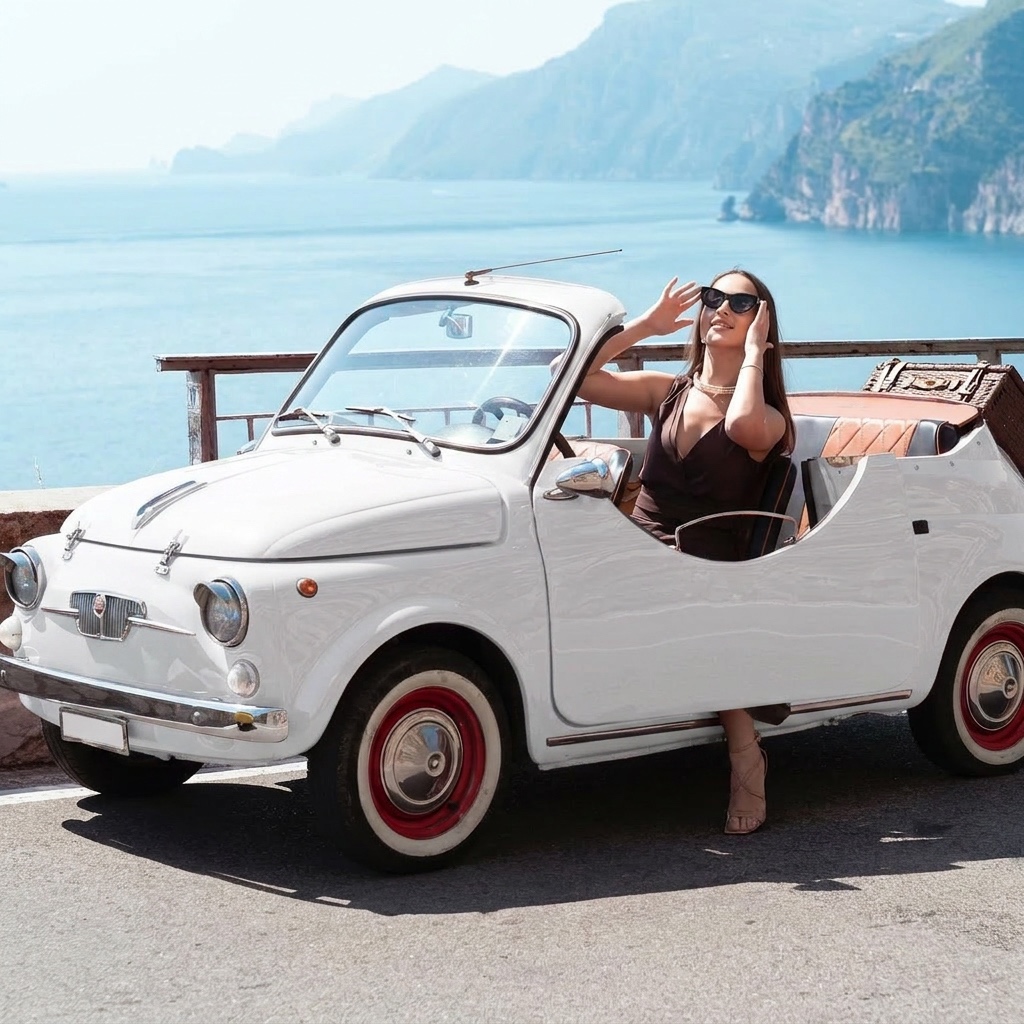
Amalfi is the best departure point for day trips along the coast. The public ferry connects Amalfi to Positano (30 min, from €10), Salerno (50 min, from €8) and Capri (70 min, from €20) multiple times daily in summer. For more flexibility, BlueKeys offers boat tours from Amalfi and private charters from the harbour: a half-day to Positano, the Blue Grotto and the sea caves costs from €65/person with a skipper. A full-day tour including Capri, swimming stops and a lunch break starts from €120/person.
The advantage of a private boat over the ferry is freedom — your skipper can stop in secluded coves inaccessible by road, anchor for swimming in water so clear you can see the bottom at 10 metres, and adjust the route based on sea conditions and your preferences. Most private boats depart at 09:00 or 10:00 and return by 16:00 or 17:00, leaving time for an evening in Amalfi. Book at least 2–3 days in advance in July and August, when boats sell out quickly. In shoulder season, a day's notice usually suffices.

4. Valle dei Mulini — The Valley of the Mills
Behind the main piazza, a narrow gorge cuts deep into the limestone cliff that backs the town. This is the Valle dei Mulini, the valley where Amalfi's paper mills once operated — an industry that made the town one of the first paper producers in Europe. By the 13th century, Amalfi was manufacturing decorated handmade paper from cotton and linen rags, using water channels diverted from the mountain streams above. The technology arrived via Arab traders, giving Amalfi a century's head start over the rest of Europe.
Today you can walk the gorge for free — the path runs for about 1.5 kilometres, past the ruins of the old mills and through dense vegetation. The stone channels, grinding wheels, and drying racks are still visible among the overgrowth, and in wet weather the stream that powered the mills still runs through the canyon. At the far end, the Museo della Carta (Paper Museum) occupies a restored 13th-century mill and demonstrates the traditional paper-making process (entry €4, closed Monday). The walk is shaded and cool even in summer — a welcome break from the heat of the harbour.

5. Arsenale della Repubblica
The Arsenale is the only surviving medieval shipyard on the Amalfi Coast — a vaulted stone structure where the Republic of Amalfi built and maintained its fleet in the 10th and 11th centuries. At its peak, Amalfi's navy rivalled those of Pisa, Genoa, and Venice, controlling trade routes across the Mediterranean. The fleet that sailed from these arched bays carried textiles, spices, and precious metals between Italy, North Africa, and the Levant.
Entry is free. The building now serves partly as a museum and partly as an exhibition space, with models of historical ships, navigation instruments, and displays on the Tavole Amalfitane — the maritime code of laws that governed Mediterranean trade for centuries. The vaulted stone interior is atmospheric and cool, and the building is only 100 metres from the main piazza, tucked down a side lane to the left of the harbour. Allow 30 minutes.

6. Piazza Flavio Gioia
The seafront piazza, named after a navigator from Amalfi who may have improved the magnetic compass in the 14th century (historians debate this), is the social heart of the town. The harbour sits directly below, and the ferry dock, boat rental operators, and the main taxi stand are all within 50 metres. Sit at one of the harbour bars with a granita di limone (€3) and watch the ferries, fishing boats, and tourist vessels coming and going. The piazza is at its best in the early morning before 9am — fishermen sorting nets, cafe owners setting out tables, the cathedral catching the first light — and in the late afternoon when the tourist buses have left and the locals reclaim their town.
7. Atrani — The Hidden Village Next Door
Atrani is technically a separate town from Amalfi, but the two are joined — you walk from one to the other in five minutes along a narrow coastal path or through a tunnel. Atrani is the smallest municipality in southern Italy and one of the most beautiful on the coast. Where Amalfi has adapted to tourism, Atrani has largely ignored it. The houses are stacked vertically up the cliff face, connected by steep staircases and covered passageways that have not changed in centuries.
The main square, Piazza Umberto I, runs directly to the beach — the only beach on the Amalfi Coast accessible from a village main square. In summer, locals and visitors share the sand, and the restaurants lining the piazza serve fresh fish at prices lower than Amalfi's harbour front (expect €12–18 for a full lunch with wine). The village has real local life: children playing football in the piazza, washing lines strung between windows, old women sitting in doorways. Visit in the late afternoon when the light hits the facades and the locals come out for their evening walk.
8. Sentiero dei Limoni (Lemon Path)
This 4-kilometre walking trail connects Amalfi to Minori via the mountain villages above the coast. It takes around 90 minutes each way and passes through terraced lemon groves, olive groves, and the small hillside village of Pogerola. The trail starts just above Amalfi town and offers views over the rooftops to the sea. The air smells of citrus, the path is shaded by lemon pergolas, and the only sounds are birdsong and the occasional rumble of a Vespa on a distant road below.
It is best walked in the morning before the heat builds. Wear good shoes (the path is uneven stone in places) and bring water — there is no shade on the exposed sections. The reward at the other end is Minori — a quieter resort town with a long sandy beach, a 1st-century Roman villa, and excellent restaurants. Take the ferry back from Minori to Amalfi (20 minutes, from €4) to avoid walking the same route twice.
9. Museo della Carta (Paper Museum)
Tucked inside the Valle dei Mulini, the Paper Museum is the most distinctive museum on the Amalfi Coast. The building is a 13th-century mill that was operational until the 1950s. Guided tours (€4, included in the entry) demonstrate how sheets of paper were produced by hand from rags — the same process used in Amalfi since the Middle Ages. You watch the waterwheel turn the grinding hammers, see the pulp spread onto frames, and handle finished sheets that are thick, textured, and unmistakably handmade. The shop sells handmade Amalfi paper, stationery and decorated notebooks at fair prices — a sheet of writing paper from €1, a bound notebook from €8. Allow 45 minutes. The museum is closed on Mondays and in winter.
10. Day Trip to Ravello
From Amalfi, buses run to Ravello every 30 minutes (€1.30 one way, 20 minutes). Ravello sits 350 metres above the sea and feels like a different world — cool, quiet, and full of medieval palaces and gardens. Villa Rufolo (entry €7) has a terrace garden used as the venue for the Ravello Festival concerts in summer, with views over the coast that are among the finest in Italy. Villa Cimbrone (entry €8) has the Terrace of Infinity — a belvedere lined with classical busts and a drop to the sea below that has attracted writers, composers, and artists for over a century. Allow a full morning in Ravello and take the bus back down for lunch by the Amalfi harbour.
11. Watching the Sunset from the Waterfront
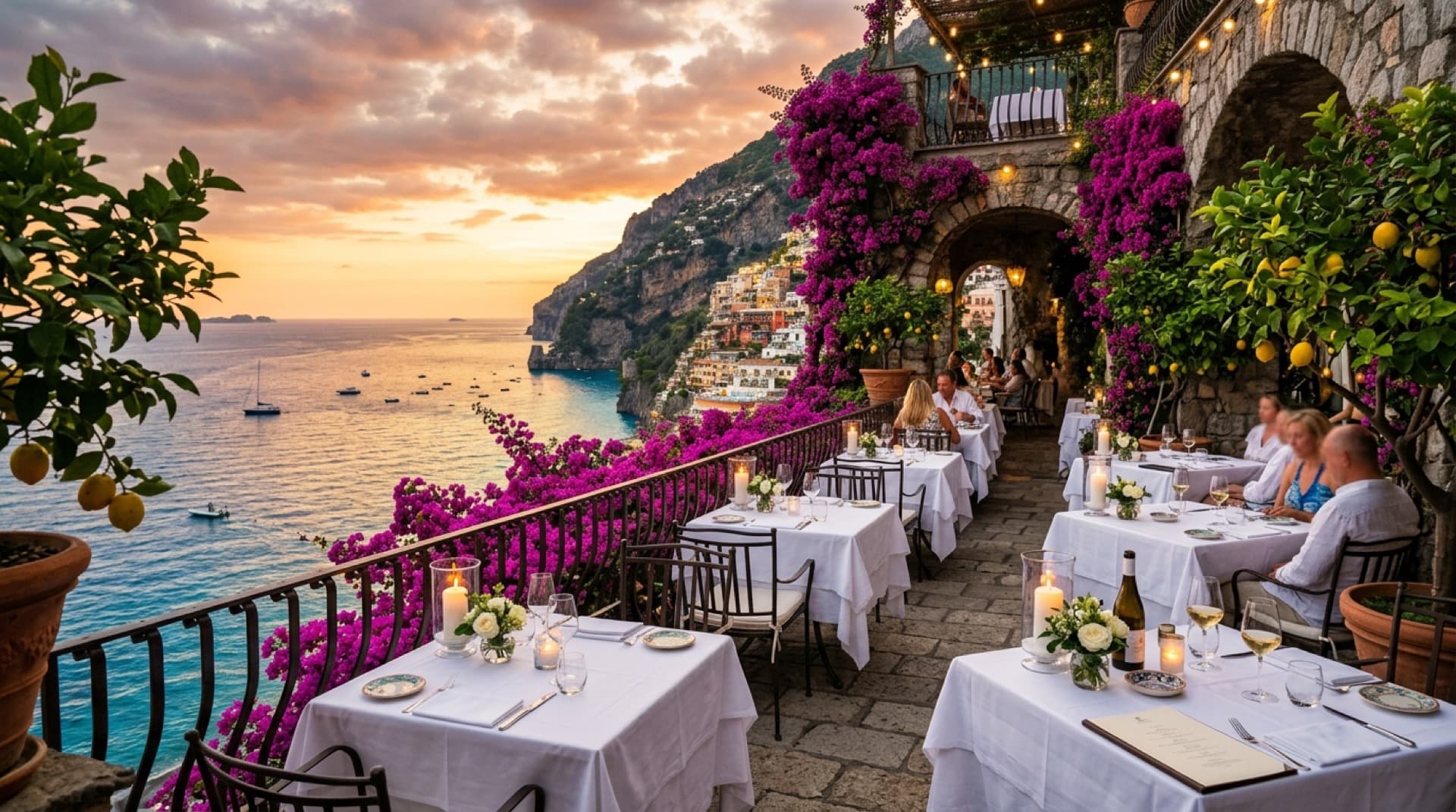
Amalfi faces roughly south-west, which means sunsets can be spectacular in the right conditions — especially in September and October when the air is clearer. The best spots are the breakwater at the far end of the harbour, the terrace of the Hotel Luna Convento (free to visit for a drink at the bar, cocktails from €10), and the elevated coastal path toward Atrani. The ferries stop running at dusk in summer, so if you are based in Positano or Sorrento, check return times before you commit to a sunset in Amalfi. Prefer the water? A sunset cruise from Amalfi keeps you on the coast until the colours fade. A private transfer back by road avoids the ferry timing problem entirely.
Budget Tips — Amalfi on Any Wallet
Amalfi can be expensive if you stick to the harbour restaurants and tourist boats, but it does not have to be. Here is how to manage costs:
- Free activities: The cathedral (free entry), Arsenale (free), Valle dei Mulini walk (free), Atrani walk (free), and the waterfront sunset cost nothing. You could fill an entire day without spending a cent beyond transport.
- Budget meals: Skip the harbour-front restaurants for lunch and head to the bakeries on Via Lorenzo d'Amalfi — sfogliatella (€2.50), arancini (€2.50), pizza al taglio (€3–4). A full standing lunch for under €8.
- Transport savings: The public ferry from Sorrento to Amalfi costs from €15. The SITA bus from Sorrento costs €2.50 and takes 90 minutes via the scenic SS163 road — slower, but you see the entire coastline.
- Museum pass: The Cloister of Paradise (€3) and Museo della Carta (€4) are the only paid attractions in town — €7 total for both. Everything else is free.
- Smart boat trips: The public ferry to Positano costs €10 and gives you the same coastal views as a private boat. For swimming, the beach at Atrani is free and accessible on foot.
- Accommodation: Holiday apartments in Amalfi from BlueKeys start from €80/night — cheaper than harbour-view hotels and with kitchen facilities for self-catering.
Where to Eat in Amalfi
Amalfi has better food options than most coastline towns its size. Here are the best options across price ranges:
- Street food (under €5): The bakeries off Via Lorenzo d'Amalfi serve fresh sfogliatella, arancini, and pizza slices. For gelato, head to Gelateria Porto Salvo on the main street — lemon and ricotta flavours are the local specialties, from €2.50.
- Casual lunch (€12–20): Trattoria Il Mulino on Via delle Cartiere, near the Paper Museum, serves genuinely local food at non-tourist prices. Try the scialatielli ai frutti di mare (€14) — fresh local pasta with mixed seafood. Taverna Buonvicino on the steps behind the piazza does excellent pizza from €8.
- Seafood (€20–35): The restaurants along the harbour serve the day's catch. The local specialty is pesce all'acqua pazza — fish poached in a broth of tomatoes, garlic, herbs, and white wine (from €16). Ricci di mare (sea urchin) appears on menus from May to September, served raw on crostini or tossed through spaghetti (from €14). For the freshest options, ask which fish arrived that morning.
- Special occasion (€40+): Ristorante Marina Grande, right on the harbour, serves refined Amalfitano cuisine with a wine list heavy on Campanian producers. Expect to pay €40–60 per person for a full meal with wine, but the quality and setting justify it.
How to Reach Amalfi
Amalfi is the transport hub of the coast. Public ferries run from Salerno (50 min, from €8), Positano (30 min, from €10) and Sorrento (60 min, from €15) throughout the day in summer. From Naples, the fastest route is the ferry from Molo Beverello to Amalfi (90 min in season, from €20). By road, the SS163 coastal road from Sorrento takes 45–75 minutes depending on traffic. A private transfer from Naples Airport to Amalfi costs from €168 for 1 or 2 passengers and includes luggage service. This is the stress-free option if you are arriving with suitcases.
Where to Stay in Amalfi
Amalfi has a good range of accommodation for all budgets. The historic centre has several boutique hotels and B&Bs within the old town lanes, while the seafront has larger hotels with harbour views. Holiday apartments in Amalfi from BlueKeys start from €80/night and offer more space and kitchen facilities than a standard hotel room — useful for longer stays or families. Book at least 6 weeks ahead for July and August; the town fills quickly in peak season.