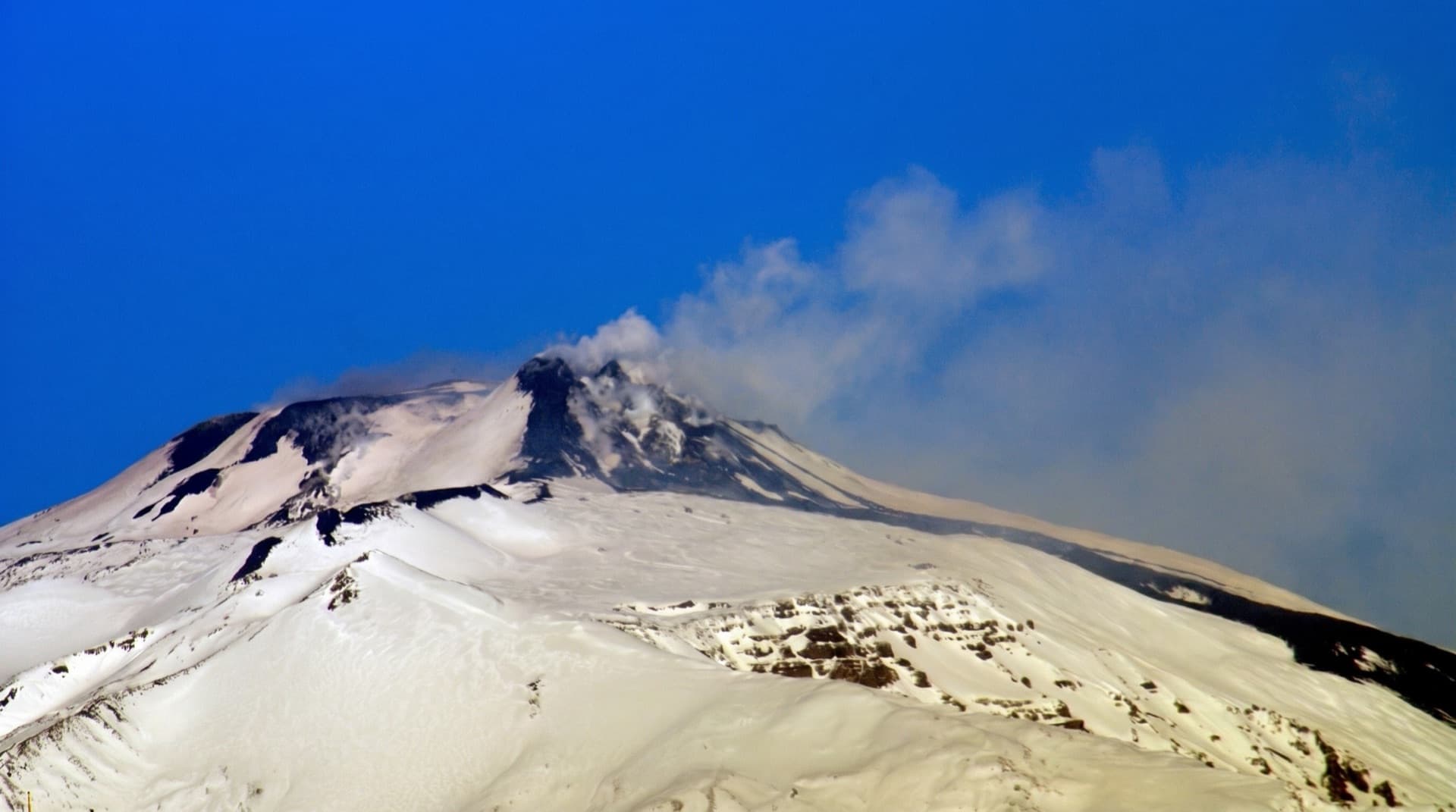
Quick answer — Mount Etna from Taormina, and how high you actually get
- No bus timetable from Taormina we could read. The only Etna service published anywhere we could check leaves from Catania: AST, 08:15 out, 16:30 back, €6.60 return. Plan on driving, a car with a driver, or a place on a tour
- Two sides: south from Rifugio Sapienza above Nicolosi (cable car, 4x4 buses, infrastructure) and north from Piano Provenzana above Linguaglossa (no cable car, guided by ordinance)
- A ticket is sold to 2,500 m: cable car return €54, or €82 with a 4x4 bus and a guide toward 3,000 m — "to the maximum altitude allowed by the authorities". Those are the published terms; no operational notice for 13 August 2026 was published, so phone +39 095 387426 before you drive up
- The top is a permission, not a ticket. Inside the Permanent Hazard Zone you go only with a licensed Alpine or Volcanological guide, helmet on
- On 13 August 2026 Etna is erupting. INGV's last aviation notice was RED, the south-side guides declare the summit craters closed, and the cable car refunds nothing when the volcano closes the mountain
Doing it as a day from the coast? See private transfers from Taormina →
| Way up | Side and start | How high it gets you | Cost and hours |
|---|---|---|---|
| Silvestri Craters | South, off the provincial road | Crater rims at 1,886 m and 1,986 m | €5; daily 08:30–17:00; about 30 min |
| Cable car only ("2500") | South, Rifugio Sapienza, 1,923 m | Upper station, 2,500 m | €54 return; published hours 08:30–16:45, last descent 17:15 |
| Tour 3000 (cable car + 4x4 + guide) | South, same base station | 4x4 to 2,800 m, guided walk toward 3,000 m | €82; open ticket 08:30–15:15; about 2.5 h |
| Guided summit craters | South, Baita delle Guide, 1,910 m | 3,340 m on foot, then down to 2,500 m | €130 adult, €120 age 7–14; 5–6 h; closed 13 Aug 2026 |
| Guided summit trek | North, Piano Provenzana, 1,800 m, 08:30 | 4x4 to 2,800 m, then 1h30 on foot to about 3,300 m | From €120 adult, €110 age 10–13, plus €60 4x4; min 8 people |
| 2002 craters walk | North, Piano Provenzana; Tue, Thu, Sat | The 2002 craters on foot, easy | From €20; 3 h |
| Sunsetna (4x4 + guide) | South, base station, 17:30 | 4x4 with a guide, no cable car | From €78; summer Tue and Thu; about 3 h |
Prices, altitudes and hours checked 13 August 2026 on funiviaetna.com (Tour 3000, Silvestri, Sunsetna), Guide Alpine Etna Sud and Guide Etna Nord. These are the published prices and hours, not a statement that any of it is running on the day you go.
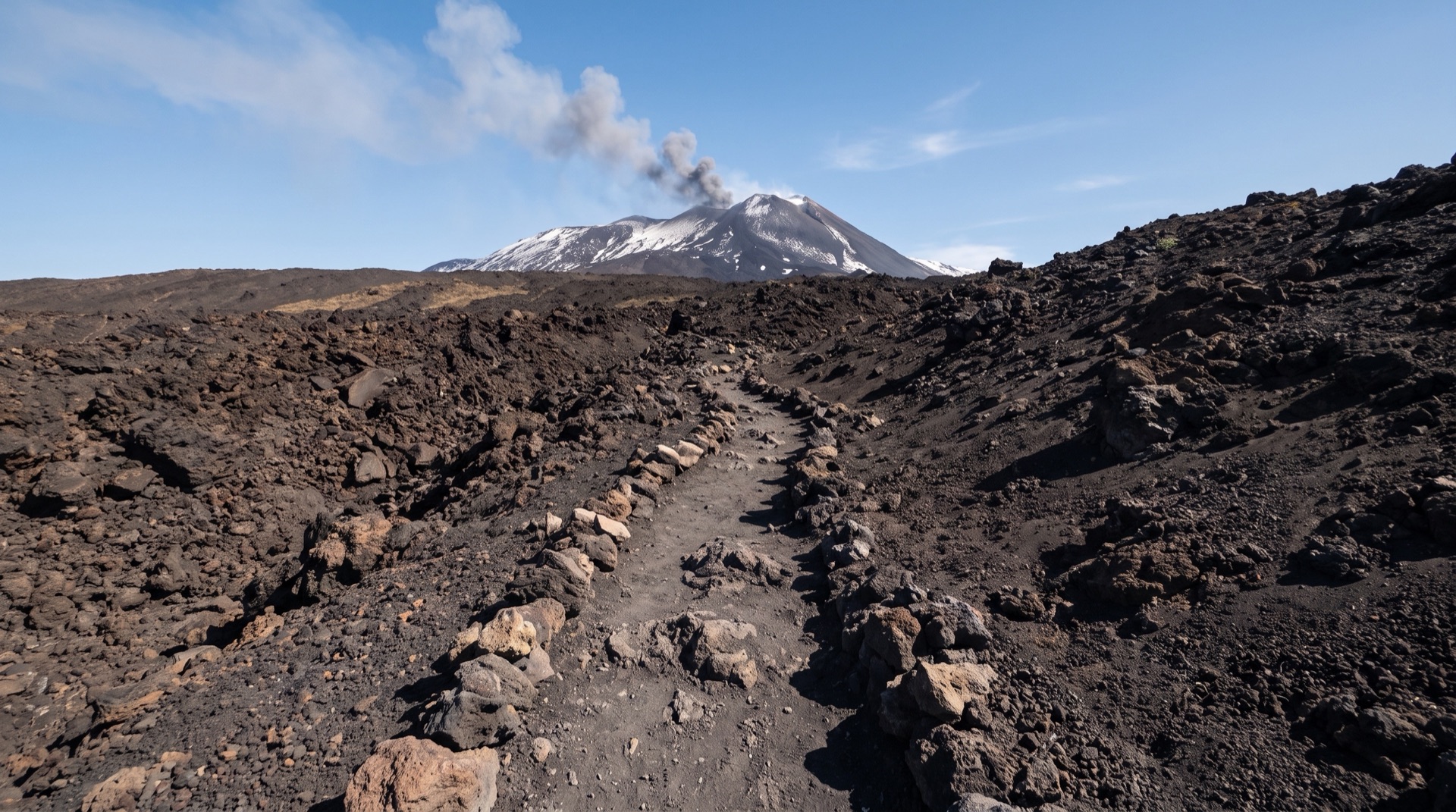
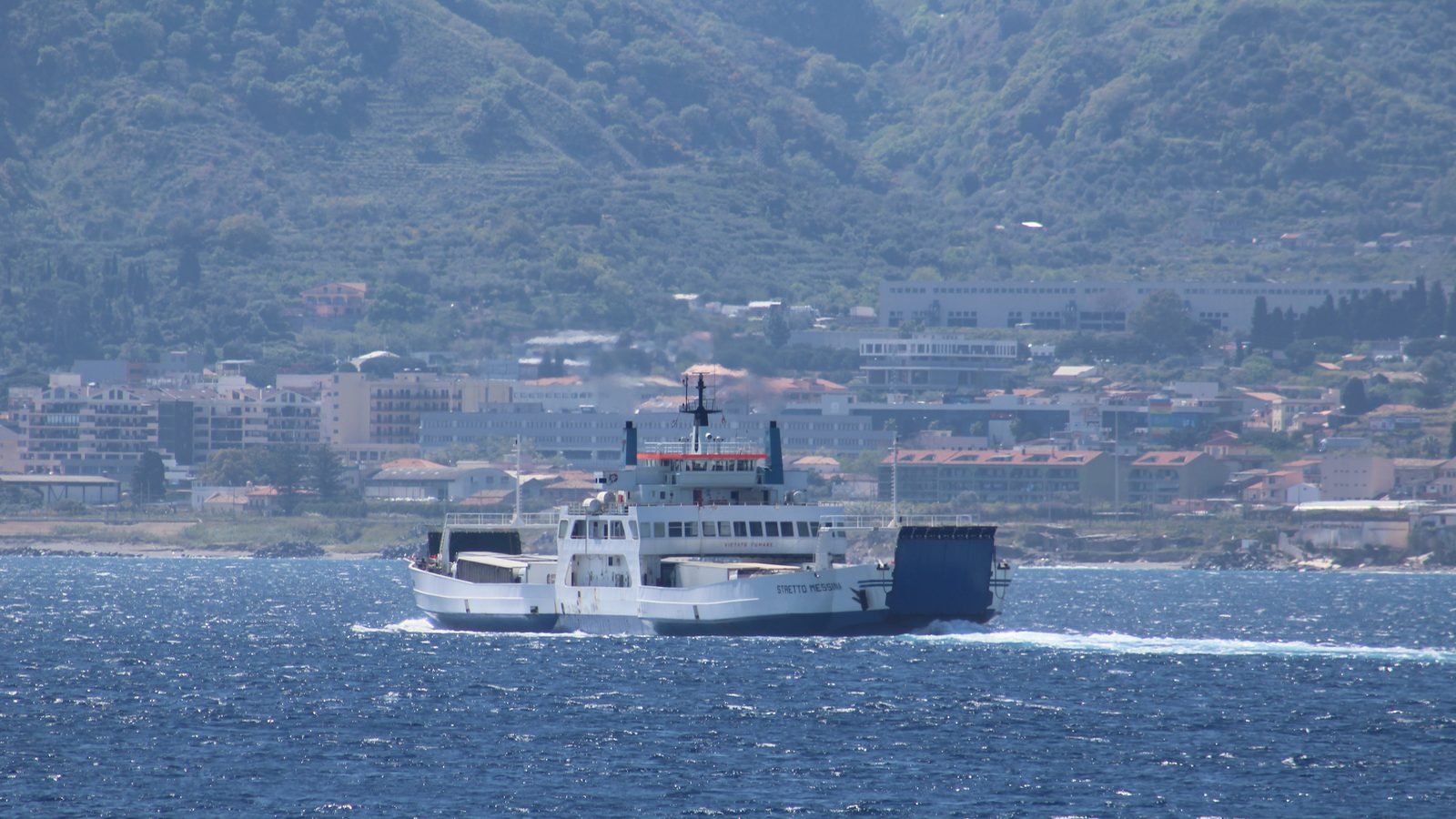
Getting from Taormina to Etna: the part the tour listings skip
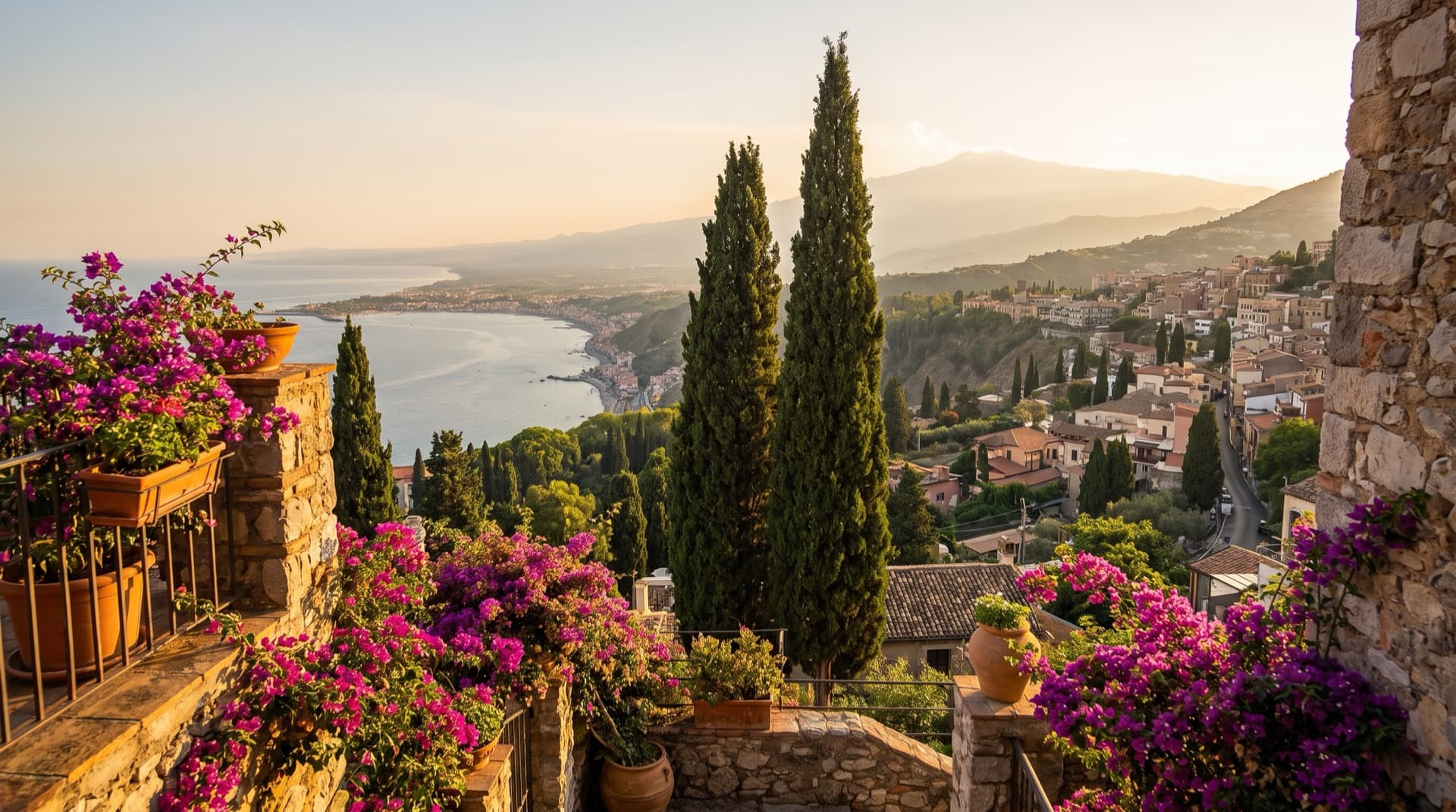
Taormina looks straight at the volcano, and the answer still disappoints. We could not find a single published public bus timetable from Taormina to either base — not from the regional operators, not from the comuni, not from the Park. A service whose timetable you cannot read is not one to plan a day around.
The one properly published public service is AST's Catania line: Piazza Giovanni XXIII at 08:15, Rifugio Sapienza in about two hours, back down at 16:30. The return ticket is €6.60, buyable on board, and buying early is not a seat reservation. It runs daily except 25 December, 1 January, 1 May, 15 August and Easter Sunday — read that list twice if you are here in mid-August.
From Taormina, then: drive, book a car with a driver, or buy a place on an excursion. Using the €6.60 bus means first getting to Catania before 08:15, which usually costs more than the bus saves — basing yourself in the city for a night fixes that, and our Catania airport to city centre guide covers getting in. Nobody publishes a driving time from Taormina, and we will not invent one.
Times, fare and non-service days from AST S.p.A. — Bus Catania-Etna, checked 13 August 2026.
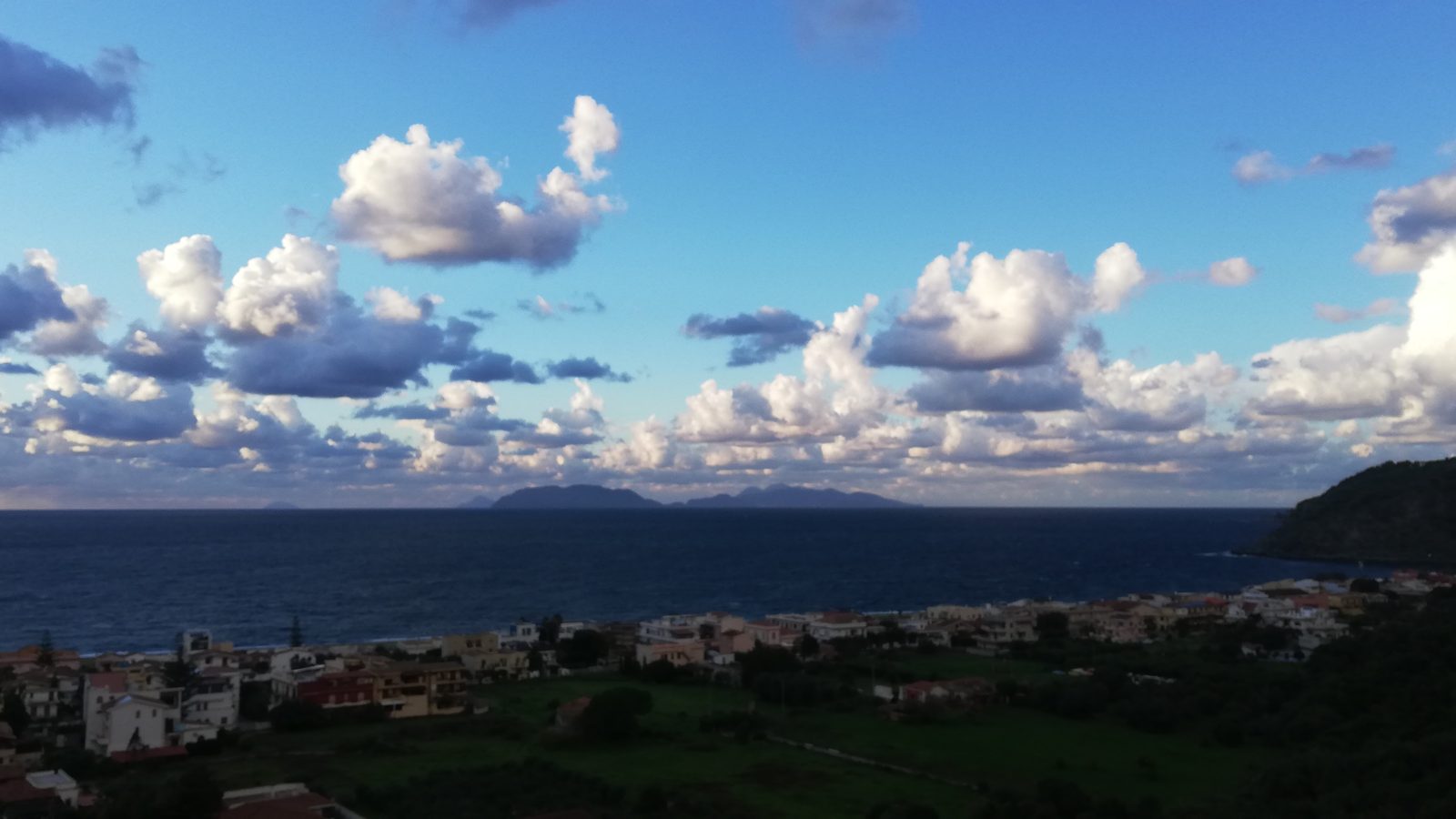
South or north: two different mountains with the same name
Etna Sud — Rifugio Sapienza, above Nicolosi. The side with infrastructure: cable car, 4x4 buses, the guides' hut, the Silvestri Craters entered straight from the provincial road. Where the AST bus and the coaches go, where you go with small children or grandparents, and where the crowds are.
Etna Nord — Piano Provenzana, above Linguaglossa. Base at 1,800 m, no cable car. The way up is the Pista Altomontana, the track to Piano delle Concazze, driven by the off-road vehicles of authorised operators. The Linguaglossa ordinance forbids using it during any fall of ash or lapilli and allows excursions only with qualified authorised guides. Quieter, harder, quicker to close.
One detail tells you how this mountain is administered: the cable car base is 1,923 m on one page of the operator's site, 1,920 m on another and 1,900 m on the official map, and Piano delle Concazze is 2,800 m in one ordinance and 2,850 m in another. Treat every altitude here as approximate, the summit included: the operator publishes 3,403 m, and eruptions rebuild the top anyway.
North-side rules from the Linguaglossa ordinance no. 63/2023; altitudes from the Nicolosi ordinance no. 27/2023 and funiviaetna.com. Checked 13 August 2026.
Etna Sud: what each ticket actually buys
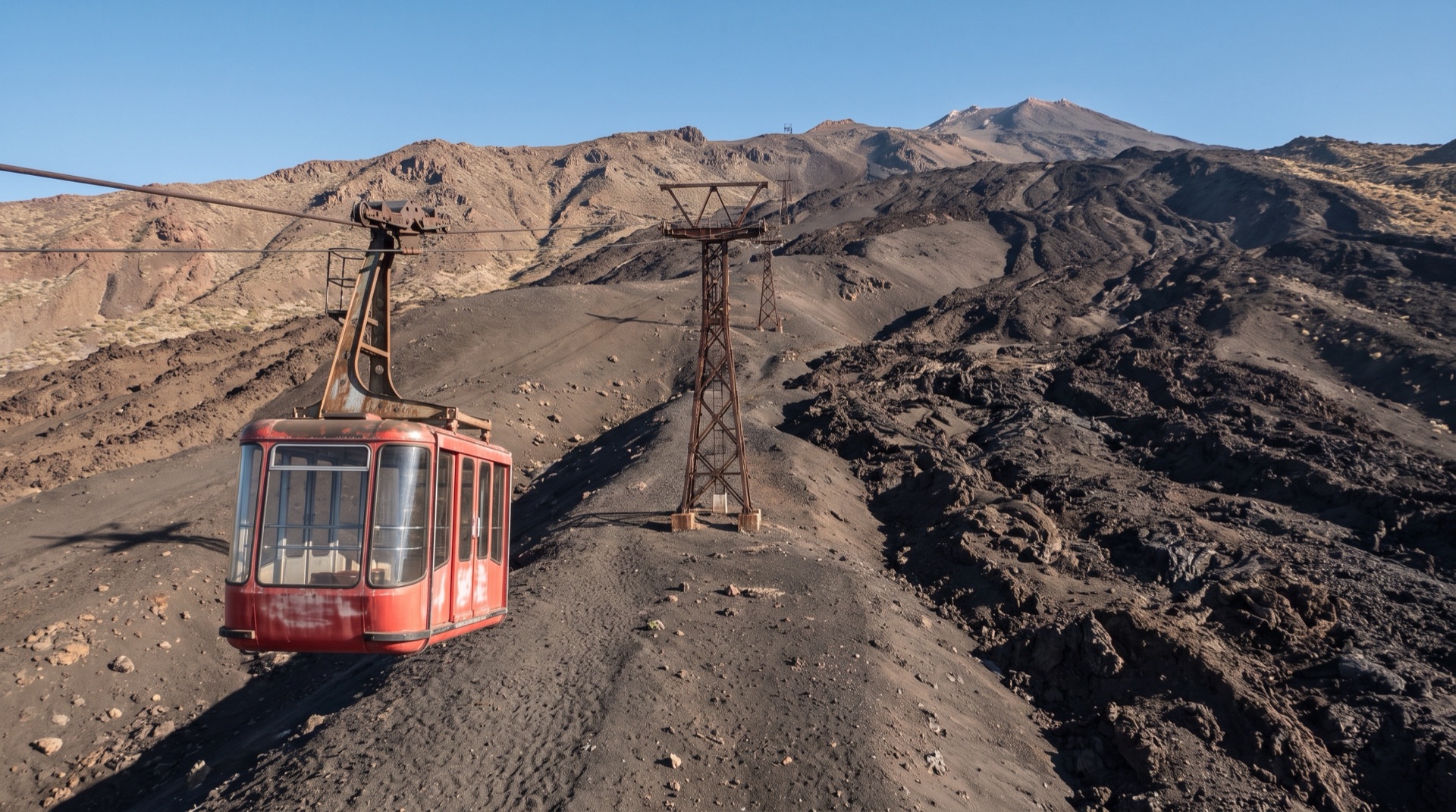
The Funivia dell'Etna is the only cable car on the volcano, from Piazzale Rifugio Sapienza in Nicolosi to the upper station at 2,500 m. The "2500" ticket, €54 return, is the cable car and nothing else, Fast Track included if you buy online, with published hours of 08:30–16:45 daily and the last descent at 17:15, weather permitting.
Read those as the published hours, not as today. With the eruption running and the aviation colour code at RED, funiviaetna.com carried no updated operational notice we could read on 13 August 2026: we cannot tell you the cable car was turning that day, or up to what altitude it was allowed to carry anyone. That is a phone call, not a guess — +39 095 387426, before you leave the coast.
The "Tour 3000" ticket, €82, joins three legs: cable car to 2,500 m, a 4x4 bus (a snowcat in winter) to 2,800 m, then a short trek with a volcanological guide toward 3,000 m, past Torre del Filosofo and — when the mountain allows — the summit craters. Open ticket, usable 08:30 to 15:15, about two and a half hours.
The most useful sentence on the site is in the small print of that leg: the buses climb "to the maximum altitude allowed by the authorities" — not to 2,800 m, not to 3,000 m, but to whatever the ordinance in force that morning permits. Nor can you substitute your own vehicle: the road above the cable car is the only one that exists, it belongs to Funivia dell'Etna, and only its vehicles may use it.
Compare the guides at the same piazzale before defaulting to the ticket window. "Funivia e Fuoristrada" with a guide is €82 adult, €51 for ages 5–10, free 0–4, no booking, bought at the Funivia cash desk between 09:00 and 14:00. "Etna 3.000 metri" is €95 adult, €85 for ages 7–14: cable car to 2,500 m, jeep to 2,850 m, then about 6 km on foot to the Barbagallo crater near 3,000 m. The summit craters excursion is €130 adult, €120 for ages 7–14: up to 3,340 m on foot, boots, jacket and helmet included. The cable car operator answers on +39 095 387426.
Tickets and rules from Funivia dell'Etna and its conditions of sale; guided packages from Guide Alpine Etna Sud. Checked 13 August 2026.
Etna Nord: harder, quieter, more conditional
The Gruppo Guide Etna Nord runs the summit trek from Piano Provenzana at 08:30: 4x4 vehicles to 2,800 m, then about an hour and a half on foot to the summit craters at roughly 3,300 m, descending past the Valle del Leone and the Pizzi Deneri observatory. Five hours, from €120 per adult and €110 for ages 10–13, with the 4x4 return ticket — €60 per person — paid separately, which is what catches people comparing it with the south. Minimum 8 people, no under-10s. The cheap alternative here is the walk to the 2002 eruption craters: Tuesdays, Thursdays and Saturdays, three hours, easy, from €20.
Settle one thing by phone before you drive round the mountain. The Linguaglossa ordinance forbids using the Pista Altomontana during any fall of ash or lapilli, and ash has been falling from the Voragine. Whether the 4x4 leg runs on your morning, and how high it is allowed to stop, is decided by that rule and by the alert phase in force — not by the booking page. Phone the north-side guides first: there is no cable car to fall back on.
How high you can go alone, and where the guide stops being optional
This has a precise legal answer rather than a vibe. The Zona Sommitale covers the summit craters, the upper Valle del Bove up to 1,700 m and broadly everything above 2,500 m on the southern, western and northern flanks, plus a band around any active flow or vent lower down. Inside it sits the Zona a Pericolosità Permanente — the Permanent Hazard Zone — which contains the active summit craters and is dangerous regardless of what the volcano is doing.
Since a civil protection notice of 6 September 2025, Etna has been in the operational phase ATTENZIONE. In this phase:
- Inside the Permanent Hazard Zone you go only with Alpine or Volcanological Guides licensed in the regional or national registers — not a tour leader, not a driver, not a friend who has done it before.
- Each guide takes a maximum of 10 hikers, groups leave at 15-minute intervals, and no more than 300 hikers a day cross.
- Nobody may come within 50 metres of the edge or advancing front of an active lava flow.
- The South-East Crater is off limits: at least 300 metres in a straight line from the base of the cone, at every stage.
- Mountain clothing and an approved protective helmet are compulsory at the high altitudes.
Below that zone the rules are looser than visitors assume — but check the date on the paper before you rely on them. It is Nicolosi's ordinance no. 27 of 13 November 2023 that allows, in ATTENZIONE, free excursions without a guide inside the Summit Zone provided you stay on the marked routes; it is the guided-use zone above that is shut to independent walkers. That 2023 text is still the one the Ente Parco publishes for Nicolosi, and it may have been superseded by something we could not find: Belpasso re-issued its own on 10 August 2026, and every restriction quoted above comes from that newer text. Read the current ordinance for the comune you will stand in before you decide to walk up unaccompanied during an eruption. Going up alone, the 2023 ordinance sets your kit — boots, windproof jacket, hat, food, water, a mobile phone and a torch for altitudes above 2,500 m — and confines you to daylight: sunrise to sunset, no bivouac at altitude.
One more thing nobody mentions: thirteen comuni issue the ordinances governing access — Adrano, Belpasso, Biancavilla, Bronte, Castiglione di Sicilia, Linguaglossa, Maletto, Nicolosi, Piedimonte Etneo, Ragalna, Randazzo, Sant'Alfio and Zafferana Etnea — and the one binding you is the one for the territory you stand on.
Zones, guide obligations and penalties from the Belpasso ordinance no. 135 of 10 August 2026 and the Nicolosi ordinance no. 27/2023, published by the Ente Parco dell'Etna; trails from parcoetna.it/sentieri. Checked 13 August 2026 — Belpasso's is the most recent we could read, so check for a newer one covering your comune.
The three alert levels, and how fast the mountain shuts
Since 1 April 2022 Etna has been covered by ETNAS, the alert system built by INGV's Osservatorio Etneo with the University of Florence. Its codes for lava fountains (F0, F1, F2) and magmatic intrusions (I0, I1) map onto the phases that open or close the mountain.
| Phase | ETNAS code | What is still allowed | Guided groups |
|---|---|---|---|
| ATTENZIONE | F0 / I0 | Guide-only in the Permanent Hazard Zone, helmet compulsory; free walking on marked routes below | Run: 10 hikers per guide, groups every 15 min, 300 a day maximum |
| PREALLARME | F1 lava fountain / I1 intrusion | Access, transit and staying inside the Permanent Hazard Zone forbidden to everyone | Ascents suspended at once, groups taken outside the perimeter |
| ALLARME | F2 | Nothing above 2,500 m in the Summit Zone, nothing in the upper Valle del Bove | Immediate evacuation to the collection points below |
The mechanism is the part to memorise. These prohibitions take effect automatically and immediately when the regional civil protection department or INGV issues the bulletin: no mayor signs anything, no barrier moves, no email reaches ticket holders. The mountain is open at 09:00 and legally shut at 09:20. And not knowing the alert level through your own negligence is not a defence — offenders are reported under article 650 of the penal code.
From the Belpasso ordinance no. 135/2026, articles 1–5, and the Nicolosi ordinance no. 27/2023. Checked 13 August 2026.
The uncomfortable part: the ticket does not buy you the summit
It is written in black and white in the cable car's conditions of sale, and no tour page repeats it. There is no right of withdrawal and no refund — not for bad weather, not for volcanic activity, not for orders from the authorities, not for technical closures, and not if you do not use the ticket on the day you chose. The contract even anticipates the scenario: when INGV or civil protection raise an alert, the operator is obliged to suspend high-altitude activity, and depending on the risk level only the ride to 2,500 m may be permitted. In that case too, nothing is refunded.
Read that as a product description, not boilerplate. What €82 buys is a ride to 2,500 m, plus a 4x4 leg and a guided walk if the mountain agrees. If being turned round at 2,500 m in cloud would feel like theft, buy at the desk on the day, with the INGV bulletin open on your phone.
The guides are more honest about it than the ticketing. On 13 August 2026 the booking page for the south-side summit excursion states plainly that the summit craters are currently closed, and that bookings will be converted to the lower Etna 3000 excursion if they are still inaccessible on the chosen date. That is the correct way to sell a volcano — and a warning about the reviews you are reading, half of which were written in a different geological month.
Refund policy from Funivia dell'Etna, conditions of sale, articles 4 and 6b; closure notice from Guide Alpine Etna Sud. Checked 13 August 2026.
What Etna is doing right now (August 2026)
This is a photograph of 13 August 2026 and it will date fast. Read it for the shape of the thing, then read the current bulletin.
The previous episode was closed by INGV's end-of-phenomenon notice of 2 August at 11:04 UTC. The present eruptive phase opened on 6 August at 01:09 UTC with an impulsive explosion at the summit craters. On 8 August at 09:32 UTC INGV notified a pyroclastic flow reported by field staff between Mt Simone and Mt Rittmann. The last aviation notice, 11 August at 13:00 UTC, carried an Aviation Color Code of RED, the maximum. The bulletin of 12 August describes effusive activity continuing from vents at 2,750 m, 2,090 m and 1,900 m, the fronts reaching 1,365 m near Rocca Capra in the Valle del Bove, with ash from the Voragine drifting south and tremor high and still rising.
Now the proportion, and it comes from INGV rather than from us. The summit eruptions of summer 2026 do not put the population at risk: the vents opened well above 2,500 m and the flows ran into the Valle del Bove and the Valle del Leone, uninhabited desert. The real consequences are ash plumes — dangerous to aviation, hence the red code — and ashfall downwind, as when the fountain of 30 July threw a column roughly 7 km high and dusted Bronte. The vents of the late-June and July episodes all sat in one place: the upper north-eastern flank of the Voragine, between 2,700 and 3,200 m.
The translation for a traveller: your holiday is not at risk, your excursion is. If you fly into Catania while ash is drifting, watch your airline rather than the volcano, and have your ground transport arranged — a private transfer from Catania Airport, or the route in our Catania Airport to Taormina guide.
From INGV — Osservatorio Etneo, 12 August 2026, the VONA notices, the activity notices and INGVvulcani. Checked 13 August 2026.
Kit, children, and who should stay lower
Two things get confused here: what is sensible and what is mandatory. Mandatory in the current ATTENZIONE phase, for everyone at the high altitudes: suitable mountain clothing and an approved protective helmet. That is not theatre — it exists for falling volcanic material. Practically: you are leaving a coastal town in shorts for a place where the wind ignores the month. Arrive underdressed and the 2,500 m station rents jackets, boots and poles, prices unpublished; several guided packages already include boots, jacket and helmet, which is part of the gap between €82 and €130. Drones are banned, and fresh lapilli goes straight through thin soles.
The age rules draw a clear line between the two sides. On the south, the cable car carries under-4s free with a paying adult and charges a reduced fare from 5 to 10, the Silvestri Craters are free for children up to 10 with a paying adult, and the longer guided excursions price children from 7. On the north, the summit trek is closed to under-10s outright — which tells you what sort of day it is.
On health the ordinance is blunter than any operator: anyone with respiratory or cardiac conditions should abstain. If someone in the group is unsteady on their feet, the honest plan is the cable car to 2,500 m and back, or the Silvestri Craters and a long lunch — not a five-hour trek nobody can turn round from halfway.
The €5 day that is enough for most people
We sell transfers, and we would rather be honest than sell you a bigger day than you want. Many people who spend €82 or €130 would have kept the same memory for €5. The Silvestri Craters — Superiore at 1,986 m, Inferiore at 1,886 m — are entered straight from the provincial road, open daily 08:30 to 17:00 and take about half an hour to walk. You stand on a crater rim with Sicily underneath you. What you do not get is the altitude and the guide.
If what you want is to see lava, no ticket on this mountain sells it. If what you want is to stand high on an active volcano with someone who can read the ground for you, the guided options earn their money — on a day the mountain agrees.
Building the day around Taormina
Work backwards from the timings. On the south the Tour 3000 ticket is usable 08:30–15:15 and the last published descent is 17:15; on the north the summit group meets at 08:30, with no second departure. Either way it is an early start — and if you rely on the AST bus, the mountain sends you home at 16:30 whether or not the cloud has lifted.
- Taormina and the hill villages. No published bus, so a car — yours or with a driver — is the realistic route. See Taormina and private transfers from Taormina.
- Giardini Naxos and the beach hotels. Same logic from lower down; our Giardini Naxos guide covers getting there.
- Off a ship at Messina. A fixed all-aboard time and a volcano that closes without notice are a poor combination: with one shore day, make Taormina the plan and Etna the upgrade — see Messina cruise port to Taormina.
- Catania. The cheapest access, thanks to the AST bus, and the reason some people move base for a night — see Catania.
Whichever base you start from, decide the night before whether you are buying the summit or the view. The mountain will decide the rest.
What to check before you go
Everything above was verified on 13 August 2026, on a volcano that erupted from 30 July to 2 August, was declared finished on 2 August, started again on 6 August and produced a pyroclastic flow on 8 August — the dates and their sources are in the section above. Before you commit money, check five things:
- The current INGV bulletin and VONA notice — what the mountain is doing, and whether the summit is legally reachable.
- The ordinance of the comune you will stand in, on the Ente Parco page — the phase can move between booking and arrival.
- The operator's status. The cable car publishes hours but not always an operational notice; a phone call costs nothing.
- The guides' booking page — closures appear there first, in plain language.
- Your own kit, helmet included. Being turned back at 2,500 m in sandals is self-inflicted.
Etna has been on the UNESCO World Heritage List since 21 June 2013, and the Park around it — 59,000 hectares, the first in Sicily, established in 1987 — exists because this is a working volcano, not a monument. Keep a second plan for the morning it says no.
Getting to the mountain, with no bus timetable to plan around
A private transfer from Taormina takes you to Rifugio Sapienza door to door, on your own departure time rather than the 16:30 bus. If you want the driver to wait while you are up there and bring you back down, say so when you book: that is quoted case by case, not included as standard. Arriving by air first? See private transfers from Catania Airport. Fixed price per vehicle, confirmed at booking.
Plan the rest of Sicily
Coming in by air: Catania Airport to Taormina or Catania Airport to Siracusa. Heading south: Siracusa and Noto. Crossing the island: Cefalù and Palermo Airport to Cefalù. The overview: Sicily.